
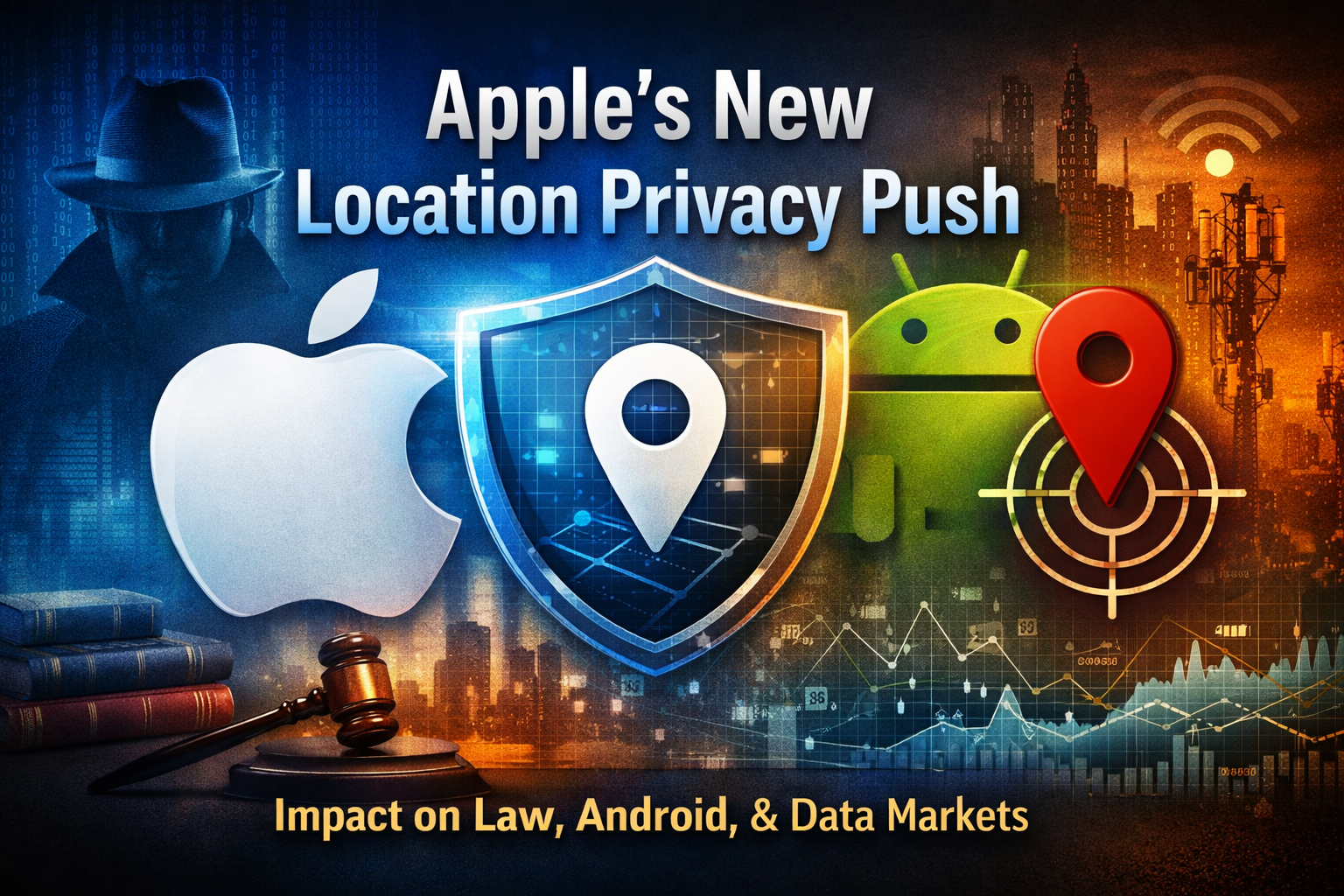
Fig. 1. Apple’s Carrier-Level Location Privacy Infographic. Jeremy Swenson and Open AI Chat GPT. 2026.
In January 2026, Apple quietly introduced a new privacy control in iOS 26.3 that allows users to limit the precision of location data shared with cellular carriers. While the feature’s initial rollout was narrow—restricted to select devices and carriers—it represents a significant shift in how location data is governed at the network level, with implications for legal investigations, platform competition, and data marketing strategies.1
Unlike app-level location permissions, which have been a focal point of mobile privacy debates for more than a decade, this control targets a less visible layer of the data stack: the information that cellular networks inherently collect as devices connect to towers. By allowing users to reduce carrier access to neighborhood-level rather than precise location data, Apple is challenging long-standing assumptions about the inevitability of carrier-side surveillance.
How the Feature Works—and Why It Matters
The new “Limit Precise Location” setting is found within Cellular Data Options on supported devices running iOS 26.3. When enabled, it reduces the granularity of location data available to participating carriers without degrading network performance or interfering with emergency services.2 Apple has emphasized that precise location data remains available to emergency responders and to apps that users have explicitly authorized, underscoring that the control is designed to limit passive collection rather than eliminate functionality.
At launch, the feature applies only to devices equipped with Apple’s newer C-series modems and is supported by a limited number of carriers, including Boost Mobile in the United States and select providers in Europe and Asia.2 This constrained availability reflects Apple’s vertically integrated approach to privacy: by controlling hardware, operating system, and key software layers, Apple can implement privacy protections that are difficult to standardize across more fragmented ecosystems.
Legal Investigation and Carrier Data: A Shifting Boundary
Carrier-level location data has long been a cornerstone of law-enforcement investigations. Historical cell-tower records can be used to infer a person’s movements, corroborate timelines, or establish proximity to crime scenes. As a result, carriers are frequent recipients of subpoenas and lawful data requests.
By limiting the precision of location data available at the carrier level, Apple’s new feature introduces friction into this investigative model. While it does not prevent lawful access to available data, it may reduce the specificity of records in cases where users have enabled the setting. This development raises important legal questions: if a platform offers a user-controlled mechanism that technically limits data collection, what obligations do carriers retain to preserve or disclose information that no longer exists in high-resolution form?
Security researchers and privacy advocates have framed the feature as a defensive response to the growing misuse of carrier data, including cases where location information has been sold, leaked, or exploited by criminal actors.3 From this perspective, the control is less about obstructing legitimate investigations and more about narrowing the attack surface of sensitive personal data.
Platform Strategy: Apple Versus Android
The contrast with Android is instructive. Android has made substantial progress in recent years with fine-grained app permissions, background location alerts, and transparency dashboards. However, it does not currently offer a system-level control that restricts the precision of location data shared directly with carriers.
This difference reflects deeper architectural realities. Android’s ecosystem spans multiple hardware manufacturers, modem vendors, and carrier customizations, making uniform carrier-level privacy controls difficult to deploy. Apple’s ability to design proprietary modems and tightly integrate them with iOS enables a level of privacy enforcement that is harder to replicate in a more open, modular platform.
From a strategic standpoint, this gives Apple a competitive narrative advantage: privacy not merely as policy, but as product design. While Android remains dominant globally in market share, Apple’s approach positions privacy as a premium feature tied to hardware, reinforcing brand trust among users who are increasingly sensitive to data misuse.
Privacy, Data Marketing, and Consumer Trust
Location data is among the most valuable assets in the data economy. It fuels targeted advertising, behavioral analytics, and predictive modeling across industries. Limiting carrier-level access does not eliminate these practices, but it does alter where and how data is collected.
Apple has been careful to frame this feature as part of a broader philosophy of data minimization rather than an absolute shield. App-level data collection, Wi-Fi triangulation, Bluetooth beacons, and other signals can still reveal detailed location information when users grant permission. The new control instead constrains a historically opaque channel of data flow that users rarely considered or understood.1
For consumers, this reinforces a key reality of modern privacy: meaningful control requires layered defenses. Carrier-level protections, app permissions, and informed usage patterns must work together. For data marketers and brokers, the shift signals a gradual tightening of default access to passive location data, encouraging greater reliance on consent-driven and aggregated sources.
Conclusion: Implications and Best Practices
Apple’s decision to limit precise location data shared with carriers marks an incremental but meaningful evolution in mobile privacy architecture. It highlights the growing tension between user autonomy, lawful access, and commercial data practices, while underscoring the strategic power of vertically integrated platforms.
Looking ahead, several implications stand out:
- Legal frameworks may need to adapt to scenarios where high-resolution location data is no longer uniformly available at the carrier level.
- Platform competition will increasingly hinge on architectural control, not just policy promises.
- Data markets will continue shifting toward explicit consent and diversified data sources as passive collection channels narrow.
Best practices for consumers remain straightforward but essential:
- Regularly review system-level and app-level privacy settings.
- Understand the scope and limits of each control.
- Grant precise location access only when it is necessary for functionality.
- Stay informed about how platforms and carriers handle personal data.
Ultimately, Apple’s new feature does not end location tracking, nor does it resolve every privacy concern. What it does accomplish is more subtle—and more consequential: it redraws the boundary of what is considered acceptable default data collection in the mobile ecosystem, setting a precedent that others will be pressured to follow.
Endnotes
- Apple Inc., “Limit precise location from cellular networks,” Apple Support, accessed January 2026, https://support.apple.com/en-euro/126101.
- Chance Miller, “iOS 26.3 Adds New Feature to Limit Location Data Shared With Your Carrier,” 9to5Mac, January 26, 2026, https://9to5mac.com/2026/01/26/ios-26-3-adds-new-feature-to-limit-location-data-shared-with-your-carrier/.
- Suzanne Smalley, “New Apple Feature Will Block Cell Networks From Capturing Precise Location Data,” The Record from Recorded Future News, January 29, 2026, https://therecord.media/new-apple-feature-block-location-data-cell-networks.


 Abstract Forward Consulting