Mark Zuckerberg and the story of Facebook, now Meta, deserve real respect. He beat long odds and reshaped technology, news media, digital marketing, and the organization of commerce on the web. Zuckerberg saw the future of social media before it was imaginable to most people—and no, MySpace does not substantially count.
On August 10, 2026, Zuckerberg published “The Future Is for Everyone,” a philosophy for how superintelligence should be built and governed.[1] Superintelligence, or artificial superintelligence (ASI), is a theoretical form of artificial intelligence that would surpass existing AI—including NLP, generative AI, and agentic AI—with cognitive and potentially emotional capabilities far beyond those demonstrated by humans. We do not know how far away ASI may be, whether it will ever materialize, or whether it will emerge in the form we currently envision. What follows below is my point-by-point response to his fifteen core assertions—where I agree, where I disagree, and how his argument holds up against outside scrutiny—followed by a criticality ranking and my overall conclusion.
Point-by-Point Response:
1.Core philosophy: Zuckerberg frames superintelligence around three pillars: individual empowerment as the source of prosperity, invention as AI’s purpose, and balance of power—not technical alignment—as the foundation of safety. I largely agree, though prosperity means different things to different people and organizations, so “balance of power” would land better reframed as “checks and balances.”
2.Against centralization: He rejects the idea that concentrating superintelligence in a few institutions produces safety, arguing history shows concentrated power rarely stays benevolent. I fully agree—over-centralization tends to increase both abuse and inequality, not reduce them.
3.Historical precedent: He points to electricity, personal computers, and the internet as technologies that sparked fear but ultimately broadened prosperity, crediting individuals over institutions. I only partly agree; most of those individuals still relied on institutional support—national labs, universities, private capital. If “institutions” here means government specifically, I agree more, since government typically receives transformative technology from individuals and their companies, not the other way around.
4.Invention over automation: The essay argues AI’s greatest value is unlimited discovery, not automating existing work. I agree, and would add that automation is largely already here, while true AI invention—new medical, technical, and virtual breakthroughs—is still mostly ahead of us.
5.Distribution as the answer: Meta’s answer to “who controls superintelligence” is to distribute it as widely as possible. I partly agree, but artificial superintelligence does not exist yet, and “distribution” here is really another way of describing the “democratization of technology”—the same dynamic DeepSeek demonstrated by building comparable AI capability with less compute at lower cost.
6.Meta’s product vision: Concrete commitments include personal AI agents with strong privacy, creative and business tools, personalized tutoring, and free or affordable access via a compute auction. I agree with the roadmap in principle, but the company’s own track record on privacy and bias raises a fair question: why should we expect this time to be different? In 2018, Cambridge Analytica improperly harvested data from 87 million Facebook users, and the fallout led to a then-record $5 billion FTC settlement the following year, back when the company still operated as Facebook rather than Meta.[2]
7.Balance-of-power reasoning: Using thought experiments—a superintelligent lawyer, a cybersecurity tool—he argues risk flips from dangerous to beneficial once capability is broadly distributed. I think this overgeneralizes; outcomes depend on the specific use case and the quality of the inputs, not distribution alone. TechCrunch’s Zoë Schäffer made a similar point more bluntly, calling the superintelligent-lawyer example “a loaded example.”[3]
8.Jobs and the economy: He predicts individual capability growth can outpace automation, producing new jobs and more, smaller, entrepreneurial companies rather than mass unemployment. I agree in principle—as people offload basic tasks to AI, their capacity for deeper work should grow in turn. But Bill Gates’s companion essay on the AI transition is far less confident on timing, warning AI could be either “the greatest equalizer ever invented, or the worst source of injustice,”[4] and naming job losses—especially entry-level roles—as an urgent, near-term risk rather than a problem the market will smoothly absorb.
9.Infrastructure and communities: Meta’s “Community Compact” promises local jobs, trade training, low energy prices, and water-positive data centers. I remain neutral to skeptical here, and I’m not alone. Rest of World surveyed AI researchers across Africa, Asia, and Latin America who concluded that “Meta has grossly overstated the economic benefits of its data centers,”[5] noting that construction jobs are temporary while permanent operational staffing stays minimal.
10.Security risks (cyber/bio): Zuckerberg argues defenders need a resource advantage and proposes labs share intermediate model checkpoints with government. I agree; attackers only need to succeed once, while defenders must be right every time—an asymmetry that only grows as infrastructure becomes more complex.
11.Freedom and government power: Personal agents should have private, even Meta-inaccessible modes, while government still gets early technical access through lab collaboration. I think this oversimplifies a genuinely hard problem, but it correctly signals that U.S. citizens’ rights need clearer application in the digital and AI era, particularly around privacy and protection from undue persecution.
12.American leadership: The U.S. must accelerate infrastructure, maintain export controls on rivals, and reduce policy friction so American open-source models can lead. I agree the U.S. leads in infrastructure buildout today, but we cannot afford to underestimate China’s high-tech trajectory.
13.Redefining alignment: Rather than aligning AI to a company’s centralized values, Meta frames alignment as serving each user’s own goals. This needs more research and public discussion before we know what it means in practice, but the underlying principle—that a company shouldn’t override individual values—is sound.
14.Controlling recursive self-improvement: To avoid a single dominant superintelligence, most compute should stay directed toward individual goals, with competing labs providing natural checks and balances. I agree, and note this closely echoes the “People and Planet” component of NIST’s AI Risk Management Framework stakeholder lifecycle.[6]
15.Governance commitments: Meta will route model-release safety decisions through independent board oversight rather than one person’s judgment, and will continue supporting open-source releases. I agree governance like this is necessary for a company like Meta, though it’s worth noting Meta’s own Oversight Board has drawn criticism as underpowered and politicized.
Points Ranked by Criticality:
Table 1. My own ranking, from highest to lowest stakes for society and safety—not Zuckerberg’s own ordering, which follows the structure of his essay rather than relative importance.
Rank
Point
Why It Ranks Here
1
Controlling recursive self-improvement
Existential-level stakes; if mishandled, undermines every other safeguard in the essay.
2
Governance commitments
The actual mechanism for holding Meta accountable to everything else it promises.
3
Security risks (cyber/bio)
Near-term, high-severity risk with a structural attacker/defender asymmetry.
4
Freedom and government power
Core civil-liberties question with no easy technical fix.
5
Balance-of-power reasoning
The central logical claim the rest of the essay depends on.
6
Against centralization
Foundational premise underneath most of the other points.
7
American leadership
Major geopolitical and economic stakes over the medium term.
8
Core philosophy
Sets the interpretive frame for the entire essay.
9
Redefining alignment
Determines whether personal AI agents can be trusted at scale.
10
Distribution as the answer
Practical mechanism, but contingent on superintelligence actually arriving.
11
Jobs and the economy
High real-world impact and the most immediate to most readers’ lives.
12
Meta’s product vision
Concrete and near-term, but company-specific and trust-dependent.
13
Invention over automation
Important framing, but lower near-term risk or controversy.
14
Historical precedent
Mostly rhetorical; interpretation matters more than the underlying facts.
15
Infrastructure and communities
Real impact, but localized rather than systemic.
Overall Conclusion:
Taken as a whole, I think Zuckerberg is right about the diagnosis more than the cure. His central claim—that no single “benevolent” superintelligence can exist because human values genuinely conflict, and that safety is therefore a balance-of-power problem rather than a purely technical one—is the strongest and most defensible idea in the essay. I agree with it fully, and I think it deserves more attention from policymakers than it has received.
The essay is weaker in treating “distribute it to everyone” as a sufficient answer on its own, rather than as the starting point for a harder set of questions about who actually gets meaningful access, on what terms, and under whose governance. TechCrunch’s critique lands here: Zuckerberg keeps “reminding us of all the ways it’s likely to go wrong”[7] even as he argues the future will be fine, and that tension is never fully resolved. The Rest of the World’s reporting adds a second gap: “everyone” in the essay quietly assumes reliable power, connectivity, and functioning regulatory protections—conditions that do not hold for much of the world Meta says it wants to empower.
Gates’s companion essay is the most useful outside check on Zuckerberg’s optimism, precisely because Gates does not disagree that AI could be transformative—he simply thinks the transition will be rockier, more unequal, and more urgent than Zuckerberg’s framing allows for, and that it requires coordinated international action rather than one company’s product roadmap and governance promises.
My overall verdict: Zuckerberg presents a genuinely useful philosophical framework—favoring a balance of power over centralized control—but neither his essay nor Meta’s track record demonstrates that the company’s governance is strong enough to serve as a trusted steward of superintelligence. That concern is particularly difficult to ignore given the timing: as Zuckerberg calls for broader trust in Meta’s vision for superintelligence, the company has agreed to pay up to roughly $17 billion to settle allegations involving harm to young users, privacy, and the design of its social platforms.[8] Meta denies wrongdoing, but the contrast is telling. It is hard not to view the essay, at least in part, as a strategically timed PR effort accompanying the settlement announcement. The idea may be sound, but the messenger still has to prove it—and earn that trust over time, across different communities and through demonstrated governance, transparency, and accountability.
[6] National Institute of Standards and Technology (NIST), AI Risk Management Framework (AI RMF 1.0), NIST AI 100-1 (Gaithersburg, MD: U.S. Department of Commerce, January 2023).
Thirty-one. That is how many unaddressed safety-and-soundness supervisory warnings Silicon Valley Bank was sitting on when it collapsed in March 2023—roughly triple the number carried by comparable banks. The warnings existed. Examiners had written them down. Committees had reviewed them. And the bank failed anyway, in 36 hours, taking $209 billion in assets down with it.[1]
This figure isn’t really just about Silicon Valley Bank; it’s a broader story about how governance can falter right when it was meant to prevent failure. Across modern sectors like finance, healthcare, insurance, and tech—especially under heavy regulation—the structure is quite similar: a First Line managing risks, a Third Line (Internal Audit) independently evaluating effectiveness, and a Second Line acting as an oversight layer to challenge and ensure risk remains within boundaries before issues arise.
The uncomfortable pattern across nearly every major governance failure of the last fifteen years is not that the second line was absent. It was there, busy, and documented—and it still didn’t work.
That is the uncomfortable pattern across nearly every major governance failure of the last fifteen years: the second line of defense (2LOD) was rarely absent. It was there, it was busy, and it was thoroughly documented. JPMorgan’s Chief Investment Office had risk managers. Credit Suisse’s Prime Services division had a dedicated risk team. Wells Fargo had a corporate risk function, a legal department, and an audit group that all reviewed the Community Bank. Danske Bank’s Estonian branch had internal audit and a chief risk officer. In each case, the paperwork existed. The risk did not go away.
This raises the question at the center of this piece, and one that boards, regulators, and chief risk officers are increasingly asking out loud: is the modern second line of defense actually reducing risk—or is it primarily producing evidence that governance activities occurred? The two are not the same thing, and the gap between them is where some of the costliest failures in recent corporate history have lived.
What the Second Line Is Supposed to Do
The three-lines model that underpins risk governance at virtually every large regulated institution was formalized by the Institute of Internal Auditors in 2013 and substantially updated in 2020. The first line is operational management—the traders, lenders, engineers, and business unit leaders who own risk because they create it in the course of doing their jobs. The third line is internal audit, an independent function that reports to the board and periodically tests whether the first two lines are actually working. The second line sits in the middle: risk management, compliance, information security, and similar functions that provide, in the Institute’s own language, “complementary expertise, support, monitoring, and challenge” to the business.[2]
In U.S. banking specifically, this structure is not just best practice—it is regulatory expectation with teeth. The Office of the Comptroller of the Currency’s (OCC) 2014 heightened standards for large national banks explicitly require an independent risk management function, organizationally and financially separate from the business lines it oversees. The Federal Reserve’s 2011 guidance on model risk management, SR 11-7, assigns the second line an independent validation role specifically because business lines have an inherent incentive to trust their own models.[3]
Notably, when the Institute of Internal Auditors rewrote its guidance in 2020, it deliberately dropped the word “defense” from the model’s name, worried that the martial framing had encouraged organizations to treat risk management as purely defensive—blocking and reviewing—rather than as a function that helps an organization take the right risks well. That single word change is a useful preview of this piece’s argument: a second line built entirely around defense metrics—how many reviews were completed, how many policies exist, how many attestations were signed—can satisfy every requirement on paper while missing the actual point.[4]
Where the Model Breaks Down
Strip away the acronyms, and the recurring failure modes of the second line reduce to a short, uncomfortable list. Each one, on its own, sounds like a minor process gap. Together, and when combined with real money and real institutions, they have produced some of the largest corporate governance failures on record.
Documentation Instead of Risk Reduction
The clearest symptom is a second line that measures itself by volume: reviews completed, policies published, attestations collected, meetings held. Every one of those activities can be running at full capacity while the underlying risk grows untouched, because none of them require anyone to verify that a control actually works—only that someone said it does.
Self-Attestation Over Independent Verification
Much of traditional second-line practice depends on the first line telling the second line the truth: attestations, self-assessments, and point-in-time control tests that sample a narrow window and assume it represents the whole. When Danske Bank’s Estonian branch was later examined, the bank’s own lawyers conceded that “major deficiencies in controls and governance made it possible to use Danske Bank’s branch in Estonia for criminal activities such as money laundering,” and that internal reporting simply never reached the people positioned to stop it.[5]
Individual Exceptions Over Systemic Patterns
Second lines are often organized to catch one broken control at a time—a missed reconciliation, a late report, an expired certificate—rather than to notice that dozens of small, individually explainable exceptions are actually one large, systemic problem wearing different clothes.
Compliance Treated as a Proxy for Safety
Perhaps the most persistent conflation in second-line practice is the assumption that a control environment which satisfies a regulation is therefore a control environment that manages the underlying risk. The two frequently travel together. They are not the same claim, and treating them as interchangeable is exactly how organizations end up technically compliant and substantively exposed at once.
A Challenge Function That Doesn’t Actually Challenge
Effective second-line challenge requires two things that are hard to combine: enough independence to say no to a profitable business line, and enough technical and commercial fluency to know when “no” is actually warranted. Many second lines have one without the other—independent enough to be disliked, but not fluent enough in the actual business to be heeded, or so embedded in the business that independence quietly erodes.
Struggling to Govern What It Doesn’t Understand
Every one of the weaknesses above compounds sharply the moment the underlying risk is technical: artificial intelligence models, cloud migrations, third-party data pipelines, or novel cyber threats. A second line built to review loan files and sales scripts is not automatically equipped to evaluate a machine learning model’s training data lineage or a cloud vendor’s shared-responsibility boundary—and regulators are now saying so explicitly. NIST’s AI Risk Management Framework (RMF) and the broader push toward AI-specific governance exist precisely because traditional control catalogs were not written with adaptive, probabilistic systems in mind.[6]
Five Failures, One Pattern
These are not abstractions. They are the documented findings of regulators, board-appointed investigators, and congressional committees—and read together, they describe the same failure recurring in different industries, different countries, and different decades.
1. JPMorgan’s “London Whale” (2012)—When Risk Managers Don’t Know What the Business Is Doing
In 2012, JPMorgan Chase’s Chief Investment Office lost more than $6.2 billion on a series of synthetic credit derivative trades that came to be known as the “London Whale.” The U.S. Senate Permanent Subcommittee on Investigations spent nine months and reviewed more than 90,000 documents before concluding that the unit had mismarked its trading book to hide losses, disregarded multiple indicators of increasing risk, manipulated its own risk models, and evaded regulatory oversight.[7]
The Subcommittee’s report found that JPMorgan’s firm-wide risk managers—the second line—“knew little about” the trading strategy and had no role in approving the positions that produced the loss, even as the bank’s own public statements insisted the trades were consistent with firm-wide risk management. This was a second line that existed on the org chart and was functionally absent from the transaction that mattered most.[8]
2. Wells Fargo’s Sales Practices Scandal (2011–2016)—When Egos and Tenure Silence the Second Line
Between 2011 and 2016, Wells Fargo employees opened millions of unauthorized accounts to meet aggressive sales quotas, ultimately leading to the termination of roughly 5,300 employees and $185 million in regulatory penalties. When the bank’s independent directors released their own 110-page investigation in 2017, the findings went well beyond a rogue sales culture.[9]
The report found that Carrie Tolstedt, the long-tenured head of the Community Bank, and other Community Bank leaders “resisted and impeded scrutiny or oversight from corporate risk management and the Board,” and “minimized the scale and nature of problems” when they were forced to report them. Then-CEO John Stumpf, the report found, relied on “the Bank’s decades of success” and was “too slow to investigate or critically challenge” the sales model—a textbook description of tenure-driven bias, where years of past success become evidence against present-day concerns rather than a reason to look harder.[10]
Just as tellingly, the report found that Wells Fargo’s control functions were structurally weakened by internal politics: risk, legal, HR, and audit were “decentralized” and had “parallel units” embedded inside the Community Bank itself, reporting up through business-aligned structures that deferred to the business rather than challenging it. Audit reviewed the relevant controls and largely found them effective—but, the report notes pointedly, “it did not view its role to include analyzing more broadly the root cause of the improper conduct.” That is the governance-activity trap in a single sentence: the review happened, the box was checked, and the actual problem sailed through untouched.[11]
3. Credit Suisse and Archegos (2021)—When the Second Line Is Afraid to Say No
In March 2021, the collapse of Archegos Capital Management, a lightly regulated family office, cost Credit Suisse $5.5 billion—more than any other bank exposed to the same client. The board-commissioned investigation by Paul, Weiss found no fraud and no missing risk architecture. The controls existed. What failed was the willingness to use them.[12]
The investigation found a “persistent failure” to manage and remediate known risks connected to Archegos, and, more specifically, that Credit Suisse’s risk managers had intended to demand additional margin from Archegos to reflect its mounting credit risk—but were prevented from doing so because the business “deemed” it not to be in the bank’s commercial interest to upset the relationship. One outside review summarized the underlying dynamic bluntly: this was “a business more scared of losing a client than addressing the risks that client was bringing to the bank.” The report also found the Prime Services risk team itself was understaffed, had failed to replace departing senior risk staff, and lacked leadership experience—the second line, quite literally, hollowed out from within.[13]
4. Danske Bank Estonia (2007–2018)—When the Second Line Covers Its Own Mistakes
Danske Bank’s Estonian branch moved an estimated $230 billion in suspicious transactions, much of it linked to Russia, between 2007 and 2015—one of the largest money-laundering cases in European history. It might never have come to light if not for Howard Wilkinson, a British trader who filed four internal whistleblower reports to the bank’s audit unit and Copenhagen management between 2013 and 2014.[14]
Wilkinson later testified before the Danish and European Parliaments that the bank had “deliberately ignored” his warnings and that an Estonia branch executive told him the bank was “not the police.” An internal Danske audit team eventually validated the substance of his concerns, yet the bank still failed to take meaningful action until the money-laundering scandal became public in 2018—four years later. As Wilkinson departed the bank, he was reportedly presented with a nondisclosure agreement. This is the sharpest version of the pattern this piece was asked to examine directly: not a second line that failed to notice a problem, but one that noticed, confirmed it internally, and chose containment over correction—protecting the institution’s narrative rather than fixing the underlying failure.[15]
5. Silicon Valley Bank (2023)—When Periodic Reviews Can’t Keep Up With Real-Time Risk
SVB failed in 36 hours following a bank run, but the vulnerabilities behind it built for years. The Federal Reserve’s own review, led by Vice Chair for Supervision Michael Barr, is remarkable for how directly a regulator indicted its own supervisory process: SVB’s board and management “failed to manage their risks,” Federal Reserve supervisors “did not fully appreciate the extent of the vulnerabilities” as the bank grew, and—critically—even when supervisors did identify problems, they “did not take sufficient steps to ensure that Silicon Valley Bank fixed those problems quickly enough.”[16]
The report also found that SVB itself had changed its own risk-management assumptions specifically to reduce how its interest rate risk was measured, rather than managing the underlying exposure—a second-line control quietly redefined until it stopped producing uncomfortable answers. Barr’s report is also a rare admission that periodic, point-in-time supervisory cycles are structurally too slow for a risk that can move at deposit-run speed; a regulator reaching the same conclusion this piece reaches about the second line more broadly.[17]
What Regulators Learned—And Where Their Own Findings Converge
The most useful evidence that this is a systemic problem, not a string of unrelated scandals, comes from the regulators themselves. On April 28, 2023, the Federal Reserve and the Federal Deposit Insurance Corporation (FDIC) each released their own self-critical report on the same weekend of bank failures—an unusually candid coincidence that let the two reports be read side by side.
The Fed’s report on SVB, discussed above, found that supervisors identified real vulnerabilities but did not escalate forcefully enough once they had. The FDIC’s own report on Signature Bank reached a strikingly similar structural conclusion through a completely separate investigation: the bank’s failure was rooted in poor management, but the report also found that FDIC examiners had downgraded Signature’s liquidity rating as early as 2017 while its overall composite rating stayed at a healthy “2-Satisfactory” for six more years—a gap between what examiners were seeing and what the supervisory rating actually communicated.[18]
The U.S. Government Accountability Office (GAO) took a further step by reviewing both agencies together rather than separately. It concluded that this supports the main argument of this piece concerning federal banking regulation: the Federal Reserve and FDIC “identified numerous concerns at the banks as early as 2018, but did not issue enforcement actions.” Additionally, the GAO pointed out that the Federal Reserve’s “procedures for moving from a lower-level concern to an enforcement action often weren’t clear or specific.” This indicates that a regulator, assessing itself, independently recognizes the same core idea discussed here: identifying a risk is not the same as forcing a change. An institution can recognize risks on a large scale for years without reliably enforcing change.[19]
Read together with the NIST AI Risk Management Framework’s push for governance built around measurable, continuous risk assessment rather than static control catalogs, and the IIA’s 2020 shift away from purely defensive framing, a consistent regulatory direction emerges across otherwise unrelated bodies: less faith in point-in-time review, more emphasis on forcing identified risk into actual remediation, and explicit skepticism that documentation volume is a reliable proxy for safety. None of these bodies coordinated with each other. They arrived at overlapping conclusions anyway, because they were all looking at the same underlying failure pattern from different angles.[20],[21]
Figure 1. Most second-line functions do not lack activity—they sit in the high-activity, low-reduction quadrant, producing evidence of governance without changing risk outcomes.
The Part Nobody Puts in the Org Chart: Tenure, Ego, and Internal Turf Wars
Every case above shares a dynamic that rarely appears in a governance framework diagram but shows up in nearly every post-mortem: the people closest to a mistake are often the ones best positioned to prevent its discovery, and organizational tenure tends to make that worse rather than better.
Long-tenured leaders accumulate something more dangerous than complacency—they accumulate authorship. A risk model, a sales program, a client relationship built over a decade is not just a business asset to the person who built it; it is proof of their own judgment. Wells Fargo’s Board Report describes exactly this pattern in Carrie Tolstedt, who had run the Community Bank for years and treated challenges to the sales model as challenges to her track record, not as useful information. John Stumpf’s decades at the company produced the same effect at the top: reliance on “decades of success” became a reason to discount new evidence rather than investigate it.[22]
Ego compounds this in a specific and predictable way inside the second line itself: once a risk function has signed off on something—approved a model, cleared a client, blessed a control—reversing that judgment later means admitting the earlier review was wrong. The Credit Suisse-Archegos investigation found that risk staff who wanted to tighten margin requirements were overruled by colleagues managing the client relationship, who prioritized the commercial relationship over the escalation. That is not a hypothetical about incentives; it is a documented instance of one part of the organization protecting a prior decision instead of correcting course.[23]
The most direct evidence of internal fighting to cover mistakes is Danske Bank. Wilkinson’s own account describes a bank that did not simply fail to notice a problem—it received internal confirmation that the problem was real, from its own audit function, and chose a non-disclosure agreement and years of silence over disclosure and remediation. That is not a control gap. It is a second line, or the executives who supervise it, actively managing the appearance of the problem rather than the problem itself—the containment instinct that shows up whenever an admission of error threatens a career, a bonus cycle, or a carefully maintained reputation.[24]
A second line that cannot survive telling the truth about its own prior mistakes will eventually stop looking for them.
None of this requires malice to be dangerous. Most of the people in these stories were not villains; they were professionals whose incentives, tenure, and self-image quietly bent the direction of ambiguous judgment calls toward “this is probably fine.” A modern second line has to be designed with the explicit assumption that this bending will happen—through rotation of long-tenured reviewers, external validation of internally cleared decisions, and protected channels for escalation that do not depend on the goodwill of the person whose earlier judgment is being questioned.
Governance Activity Is Not the Same as Risk Reduction
Every case study mentioned earlier successfully passed a compliance test before turning into a scandal. This is the key point repeatedly emphasized here: governance that merely shows evidence of compliance is different from governance that genuinely reduces risk. An organization can generate a lot of documentation proving compliance but still fall short in actually altering risk outcomes.
Evidence-of-compliance governance is legible, defensible in an exam, and relatively cheap to produce: a signed attestation, a completed checklist, a policy that has been “reviewed and approved.” Outcome-based governance is harder and more expensive: independently tested controls, risk metrics tied to actual loss experience, escalation paths that get used even when the news is bad. The first kind of governance protects the organization in an audit. The second kind protects the organization in a crisis. Wells Fargo, Credit Suisse, and Danske Bank all had abundant supplies of the first and a critical shortage of the second.
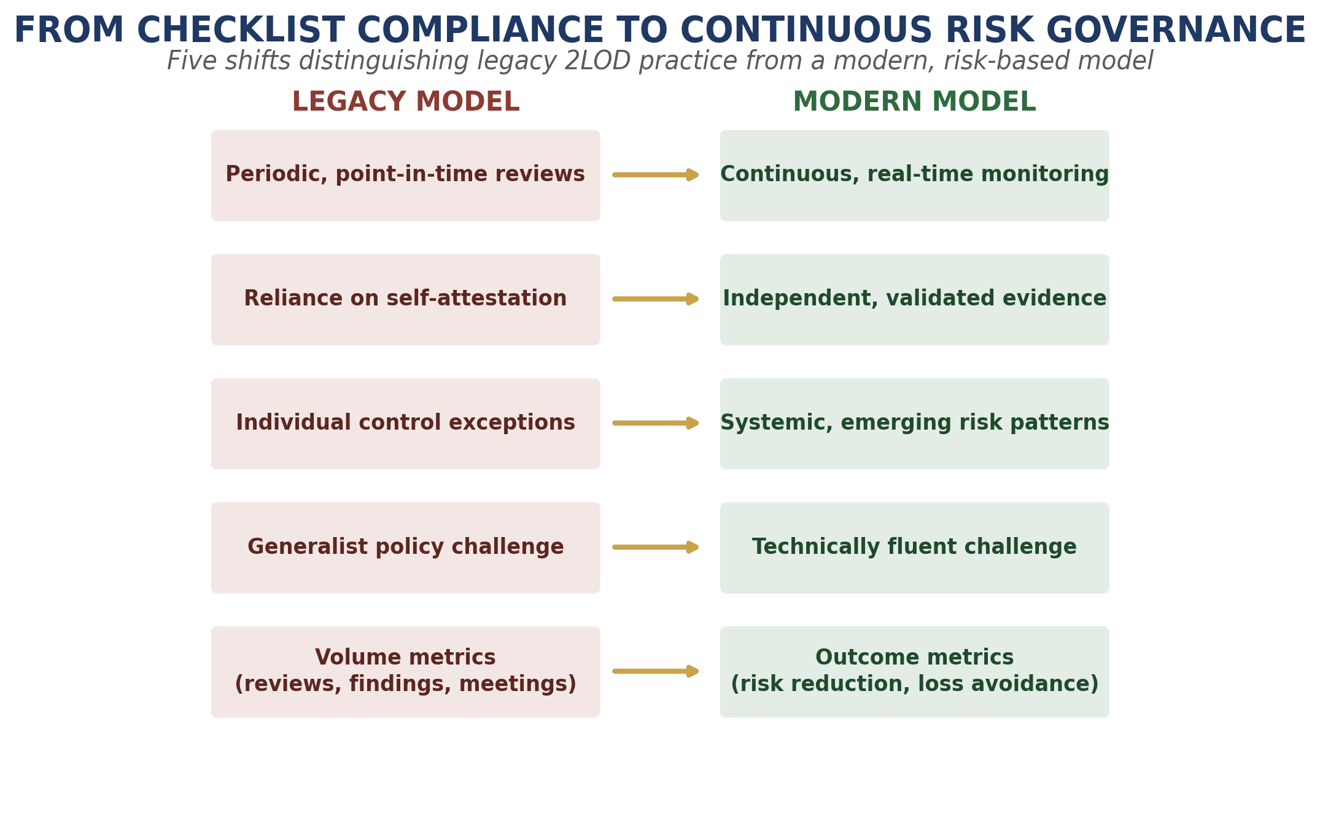
Figure 2. Modernizing the second line means shifting the underlying operating model, not just increasing the volume of existing activity.
What a Modern Second Line Actually Looks Like
None of this argues for a weaker second line—every case study here shows the cost of that. It argues for a fundamentally different operating model, one that a growing body of regulatory guidance and industry practice is already pointing toward.
Risk-Based, Not Checklist-Based
Oversight intensity should scale with actual risk and complexity, not with how many items happen to be on a standard control list. A stable, well-understood process and a novel AI model deployed into a regulated decision workflow should never receive the same depth of review simply because both appear as line items on the same checklist.
Continuous Monitoring, Not Periodic Snapshots
The Barr report on SVB is itself an argument for this shift: point-in-time exams cannot keep pace with risks—interest rate exposure, deposit concentration, model drift—that can move materially between review cycles. Where technology allows it, continuous, automated monitoring should replace calendar-driven review as the default, with periodic deep-dives reserved for the risks continuous monitoring cannot yet see.
Evidence Over Attestation
Self-reported control effectiveness should be treated as a starting hypothesis, not a conclusion. Independent data validation—sampling actual transactions, actual model outputs, actual system logs—is more expensive than collecting a signature, and it is the only version of assurance that would have caught what self-attestation missed at Danske Bank.
Genuine Business and Technology Fluency
A second line cannot challenge what it does not understand. This means recruiting and developing risk professionals with real technical depth—in derivatives, in cloud architecture, in machine learning—rather than treating the second line as a generalist compliance career track. JPMorgan’s risk managers not knowing what the CIO’s synthetic credit portfolio actually did is the clearest cautionary tale on this point.
Escalation That Survives Internal Politics
Escalation paths need to be structurally protected from the relationship dynamics that killed escalation at Credit Suisse and Danske Bank—which means routing serious concerns to a level of the organization with no commercial stake in the outcome, and protecting the people who raise them, not just on paper but in how the organization actually treats them afterward.
Outcome-Based Metrics
A second line’s effectiveness should be measured by risk events avoided, losses prevented, and issues resolved before they compound—not by the number of reviews completed, policies published, or meetings held. Volume metrics are easy to game and easy to satisfy without changing anything; outcome metrics are harder to fake.
Real Oversight of AI, Cloud, and Third Parties
Emerging-technology governance needs its own competency track within the second line, built around frameworks purpose-designed for these risks—NIST’s AI Risk Management Framework, cloud shared-responsibility models, and structured third-party risk programs—rather than an attempt to stretch legacy control catalogs over technology they were never built to evaluate.[25]
Clear Accountability Between the First and Second Lines
Wells Fargo’s decentralized risk structure, with control functions embedded inside and reporting up through the business they were meant to oversee, shows what happens when the line between “owns the risk” and “challenges the risk” blurs. Modern governance requires those roles to remain organizationally and, where possible, financially distinct—precisely what the OCC’s heightened standards were written to enforce.[26]
Constructive Challenge, Not a Permanent Bottleneck
None of the above is a case for more friction everywhere. A second line that slows every decision equally will be resented, routed around, and eventually ignored—which is its own form of failure. The goal is targeted friction: fast, low-touch review for well-understood, lower-risk activity, and genuinely rigorous, well-resourced challenge concentrated on the decisions that could actually sink the institution.
Conclusion: Measuring the Right Thing
Return to Silicon Valley Bank’s 31 unaddressed supervisory warnings. Every one of them was, in a narrow sense, evidence that governance was happening: someone had identified a risk, written it down, and tracked it. And every one of them failed to change what actually happened to the bank. That is the second line’s central modern challenge, in miniature.
None of this is solvable by better metrics alone. Every case study in this piece also involved someone for whom the honest answer was personally expensive—a bonus, a reputation, a decade of authorship over a program now under question. A second line rebuilt around outcome-based measurement but layered on top of the same career incentives that rewarded Carrie Tolstedt’s silence and cost Howard Wilkinson his job will simply produce more sophisticated versions of the same evasions. The measurement has to change. So does the price of telling the truth.
It is also worth taking seriously what the regulators’ own convergence implies about where this is heading. The Federal Reserve, the FDIC, the GAO, NIST, and the IIA did not coordinate their findings—they arrived at the same conclusion independently, from different mandates, within the same few years. Convergence without coordination is usually a sign that a standard is hardening, not that a moment is passing. Institutions that treat this argument as a post-SVB overreaction, rather than the new baseline expectation, are likely to be rereading their own supervisory letters in a few years and wondering how they missed it.
The stakes of getting this right are also rising, not leveling off. Every failure examined here involved a risk that a sufficiently empowered reviewer could, in principle, still understand—a trading book, a sales incentive, a margin call. The AI models now moving into underwriting, claims, and credit decisions will not extend that same courtesy; their behavior can shift with a single retraining cycle in ways no annual attestation was ever built to catch. A second line that could not reliably catch a mismarked trading book will not reliably catch a model that has quietly drifted—not without first becoming the kind of second line this piece has been describing.
The organizations in this piece did not fail because nobody was watching. They failed because watching, on its own, was mistaken for managing. A modern second line has to be judged by a harder, more honest standard than whether the reviews got done: whether the risks that mattered actually got smaller. Everything else—the frameworks, the dashboards, the attestations—is only useful to the extent it serves that one outcome. Where it doesn’t, it is not governance. It is just paperwork with better branding.
[3] Office of the Comptroller of the Currency, OCC Guidelines Establishing Heightened Standards for Certain Large Insured National Banks, Insured Federal Savings Associations, and Insured Federal Branches, 12 C.F.R. Part 30, Appendix D (2014); Board of Governors of the Federal Reserve System, “Supervisory Guidance on Model Risk Management,” SR Letter 11-7 (Washington, DC: Federal Reserve, April 4, 2011).
[6] National Institute of Standards and Technology, Artificial Intelligence Risk Management Framework (AI RMF 1.0) (Gaithersburg, MD: U.S. Department of Commerce, January 26, 2023), https://doi.org/10.6028/NIST.AI.100-1.
[16] Board of Governors of the Federal Reserve System, Review of the Federal Reserve’s Supervision and Regulation of Silicon Valley Bank, i-iii; “Federal Reserve Board Announces the Results from the Review of the Supervision and Regulation of Silicon Valley Bank,” press release, April 28, 2023, https://www.federalreserve.gov/newsevents/pressreleases/bcreg20230428a.htm.
[17] Board of Governors of the Federal Reserve System, Review of the Federal Reserve’s Supervision and Regulation of Silicon Valley Bank, 3.
[19] U.S. Government Accountability Office, Bank Supervision: More Timely Escalation of Supervisory Action Needed, GAO-24-106974 (Washington, DC: GAO, 2024), https://www.gao.gov/products/gao-24-106974.
[20] National Institute of Standards and Technology, Artificial Intelligence Risk Management Framework (AI RMF 1.0) (Gaithersburg, MD: U.S. Department of Commerce, January 26, 2023), https://doi.org/10.6028/NIST.AI.100-1.
[22] Independent Directors of the Board of Wells Fargo & Company, Sales Practices Investigation Report.
[23] “Credit Suisse and the Archegos Collapse,” BDO; “Unpacking the Report on Credit Suisse’s Archegos Disaster,” Euromoney.
[24] “Whistleblower in Danish Banking Scandal: Bank Ignored Me,” Seattle Times; “Howard Wilkinson,” Kohn, Kohn & Colapinto.
[25] National Institute of Standards and Technology, Artificial Intelligence Risk Management Framework (AI RMF 1.0).
[26] Office of the Comptroller of the Currency, OCC Guidelines Establishing Heightened Standards, 12 C.F.R. Part 30, Appendix D; Independent Directors of the Board of Wells Fargo & Company, Sales Practices Investigation Report.
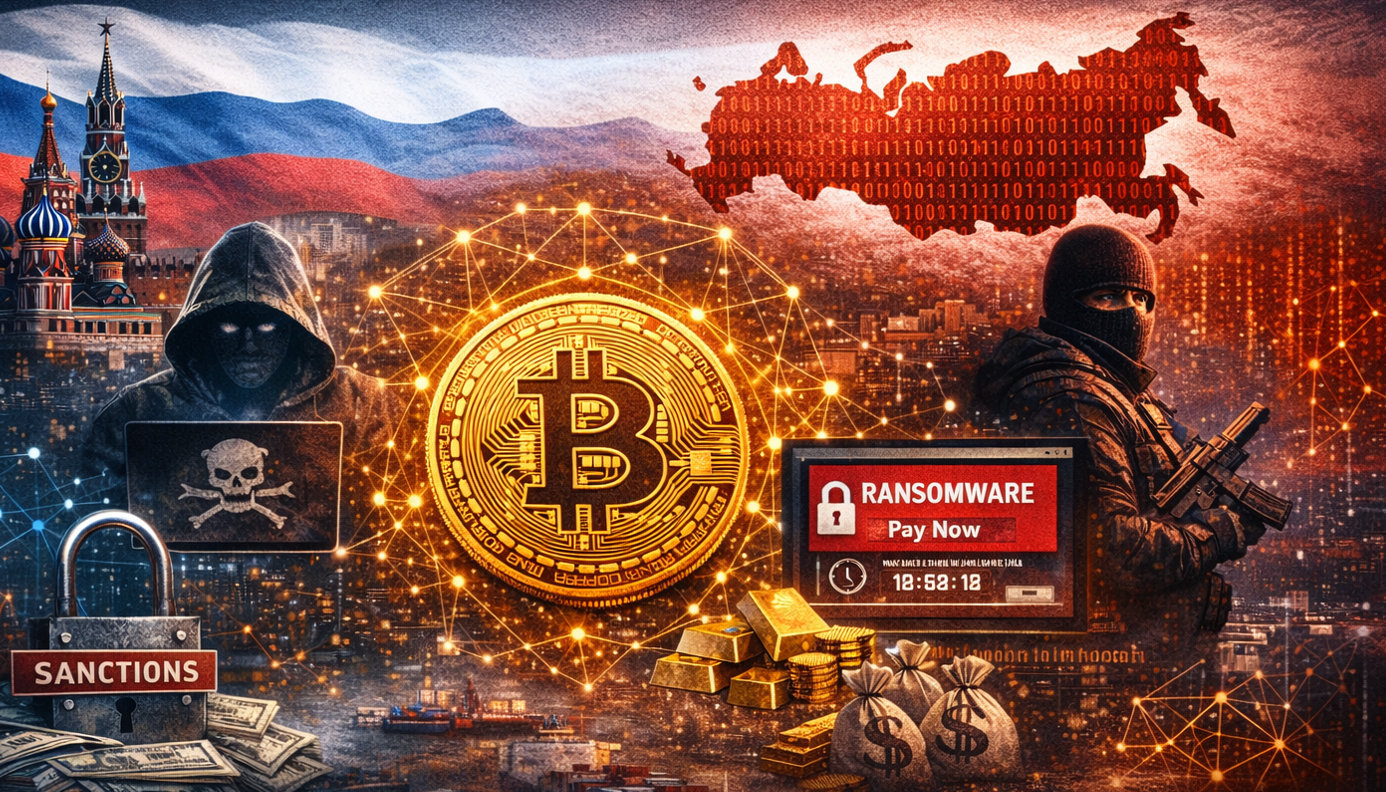
Fig. 1. Russia’s Sanctions-busting Cryptocurrency Empire Infographic, Jeremy Swenson via ChatGPT, 2026.
I. Origins of a Parallel Financial System:
The roots of Russia’s sanctions-busting cryptocurrency ecosystem can be traced to the intersection of geopolitical pressure and technological opportunity. While Russia experimented with cryptocurrency policy ambiguity throughout the 2010s, it was the aftermath of the 2022 invasion of Ukraine—and the subsequent exclusion from key parts of the global financial system, including SWIFT—that triggered a structural change. Lacking dollar liquidity and limited by Western banking restrictions, Russian policymakers and aligned financial actors started rapidly developing alternative methods for cross-border settlement (1).
Early efforts were fragmented, consisting of informal networks of exchanges, darknet markets, and capital flight channels. Platforms such as Garantex, founded in 2019, became foundational nodes in this system, allowing users to convert rubles into stablecoins and move funds internationally while avoiding traditional compliance mechanisms (6). Despite sanctions imposed by the U.S. Treasury in 2022, these platforms adapted rapidly, shifting wallets, rebranding, and integrating with crypto mixers to obscure transaction flows (1).
By 2024, Russia had formally embraced cryptocurrency for international trade, legalizing its use in cross-border transactions while maintaining domestic restrictions. This dual posture—restrict internally, exploit externally—laid the groundwork for a state-tolerated, if not state-enabled, shadow financial architecture that would mature rapidly in the years that followed (9).
II. The Rise of A7A5 and the Industrialization of Evasion:
The emergence of the ruble-backed stablecoin A7A5 marked a turning point from opportunistic evasion to industrial-scale financial engineering. Developed through networks linked to sanctioned Russian financial institutions and offshore intermediaries, A7A5 was designed explicitly to bypass Western oversight by enabling direct conversion from rubles into crypto assets and then into globally usable currencies (6).
Unlike decentralized cryptocurrencies such as Bitcoin, A7A5 represents a hybrid model: centralized issuance combined with decentralized transaction pathways. This design allows Russian actors to maintain monetary control while leveraging blockchain’s opacity and global reach. Within its first year, the token processed tens of billions of dollars in transactions, with some estimates approaching $100 billion in cumulative volume—evidence of rapid adoption across trade networks and sanctions-affected industries (4).
Crucially, this system extended beyond simple financial transfers. It became embedded in supply chain logistics, enabling the procurement of dual-use goods—technology with both civilian and military applications—through intermediaries in regions such as Central Asia and the Middle East. Crypto-enabled payments allowed these transactions to bypass traditional banking scrutiny, effectively creating a parallel trade infrastructure insulated from Western enforcement mechanisms (3).
III. Decentralization as Strategy, Not Ideology:
In Western culture, decentralization is often seen as a libertarian ideal—an escape from centralized power. However, in the Russian sanctions-evasion model, decentralization is not about ideology but strategy. It is used selectively to reduce visibility, make enforcement harder, and spread operational risk.
This system operates as a layered network rather than a single platform. Exchanges such as Bitpapa and others flagged by blockchain intelligence firms function alongside mixers, peer-to-peer marketplaces, and offshore entities, creating a fluid ecosystem in which assets can be rapidly converted, transferred, and obfuscated (7).
Moreover, decentralization enhances resilience. When Western authorities sanction one node—such as Garantex—activity shifts to successor platforms or newly created entities, often staffed by the same personnel. This phenomenon mirrors adaptive systems: disruption leads not to collapse but to evolution. The result is a sanctions-resistant architecture that thrives on redundancy and ambiguity.
Academic research supports this point by showing that sanctions enforcement in crypto is structurally reactive, while illicit actors are fast and adaptive. Studies find that once wallets or platforms are sanctioned, actors quickly shift funds to new addresses, exchanges, or networks—often within hours—well before regulators can complete attribution and enforcement cycles (12). Because blockchain systems allow unlimited address creation and operate across jurisdictions, enforcement actions tend to disrupt specific nodes rather than the broader network. As a result, the research consistently demonstrates that sanctions evasion persists not despite enforcement, but because the system’s design enables rapid migration and continuity.
IV. The Ransomware Nexus: Criminal Infrastructure and State Alignment
At the heart of Russia’s crypto ecosystem lies a symbiotic relationship between cybercriminal groups and financial infrastructure. Ransomware organizations such as REvil and Ryuk-linked networks have long relied on cryptocurrency to receive and launder payments, targeting Western corporations, critical infrastructure, and supply chains (2).
The connection between these groups and sanctioned exchanges is well-documented. Platforms like Garantex have been identified as facilitating transactions tied to ransomware proceeds, effectively serving as financial clearinghouses for cybercrime (5). This relationship extends beyond mere tolerance. Investigations such as Operation Destabilise have uncovered networks in which cryptocurrency exchanges, money laundering operations, and state-linked actors intersect. In some cases, these networks have been used not only for financial gain but also to support espionage activities and strategic objectives aligned with Russian interests (11).
The implication is clear: ransomware is not simply criminal activity but a component of a broader hybrid warfare strategy. By targeting Western institutions and funneling proceeds through crypto networks, these groups generate revenue, disrupt adversaries, and reinforce Russia’s alternative financial ecosystem.
V. Extraction from the West: Mechanisms of Digital Theft:
The Russian crypto-sanctions ecosystem extracts value from the West through multiple channels, blending cybercrime, financial engineering, and trade manipulation. Ransomware attacks represent the most visible vector, with payments often demanded in cryptocurrency and subsequently laundered through exchanges and mixers (2).
However, a less visible but equally significant mechanism is trade-based money laundering facilitated by crypto. Russian entities purchase restricted goods through intermediaries, paying in stablecoins that are difficult to trace. These goods are then re-exported into Russia, effectively bypassing export controls (3).
Additionally, capital flight and asset concealment play a major role. Wealthy individuals and sanctioned entities move funds into crypto assets to protect them from seizure, leveraging decentralized wallets and offshore exchanges. The cumulative effect is a steady outflow of value from regulated Western systems into a shadow economy that operates beyond their reach.
By 2025, illicit cryptocurrency flows had surged dramatically, with tens of billions of dollars linked to sanctions evasion and state-aligned networks (10).
VII. Conclusion: The Future of Financial Warfare:
Russia’s sanctions-busting cryptocurrency empire represents a new phase in the evolution of financial conflict—not simply a workaround, but a scalable model for a decentralized, state-influenced financial system operating beyond traditional controls. What began as a reaction to Western sanctions has matured into a resilient ecosystem that blends state policy, criminal enterprise, and technological innovation. Its strength lies in its hybridity: centralized where control is necessary, decentralized where opacity provides advantage.
For the West, this presents a fundamental challenge. Traditional tools—sanctions, asset freezes, and banking restrictions—are increasingly limited in a world where adversaries can operate outside the formal financial system. Countering this shift requires more than incremental reform; it demands a transition from static enforcement to dynamic, intelligence-driven financial defense.
A central component of this approach is the expansion of blockchain analytics and real-time monitoring. On-chain intelligence has proven effective in tracing illicit flows and identifying high-risk actors, but its true value emerges when integrated into coordinated international enforcement frameworks. Moving beyond periodic sanctions designations toward continuously updated, intelligence-led responses will be critical to keeping pace with adaptive networks (7).
Equally important is targeting the infrastructure that enables liquidity. Cryptocurrency ecosystems depend on exchanges, stablecoin issuers, and fiat on-ramps and off-ramps to function. Coordinated regulation and enforcement against these access points—particularly across jurisdictions that facilitate intermediary flows—can significantly constrain the usability of sanctions-evading assets. While measures such as wallet blacklisting and exchange sanctions have had impact, they must evolve from reactive tools into part of a broader, proactive strategy (1).
At the same time, deterrence must be redefined. Financial penalties alone are insufficient against actors who operate in decentralized and jurisdictionally fragmented environments. Effective deterrence will require a combination of cyber operations, asset seizures, and coordinated disruption of ransomware and illicit financial infrastructure. Public-private collaboration will be essential, as much of the expertise and visibility into these networks resides within the private sector.
Beyond enforcement, the West must also compete. Developing secure, efficient, and transparent alternatives—such as regulated digital payment systems, central bank digital currencies, and compliant stablecoin frameworks—can reduce the relative attractiveness of shadow financial networks. If legitimate systems offer greater speed, cost efficiency, and accessibility, the incentive to rely on illicit alternatives diminishes.
Finally, this issue must be understood in its broader geopolitical context. Russia’s crypto ecosystem is not an isolated case but part of a wider movement toward financial fragmentation, in which states seek parallel systems to reduce dependence on Western institutions. Addressing this trend will require sustained international coordination, including strategic engagement with non-Western jurisdictions that play intermediary roles in these networks (4).
In this evolving landscape, success will not be measured by the elimination of illicit systems, but by the ability to constrain, outpace, and adapt to them. The future of financial warfare will belong to those who can align technological capability with strategic coherence—building financial architectures that are not only secure, but resilient against continuous disruption.
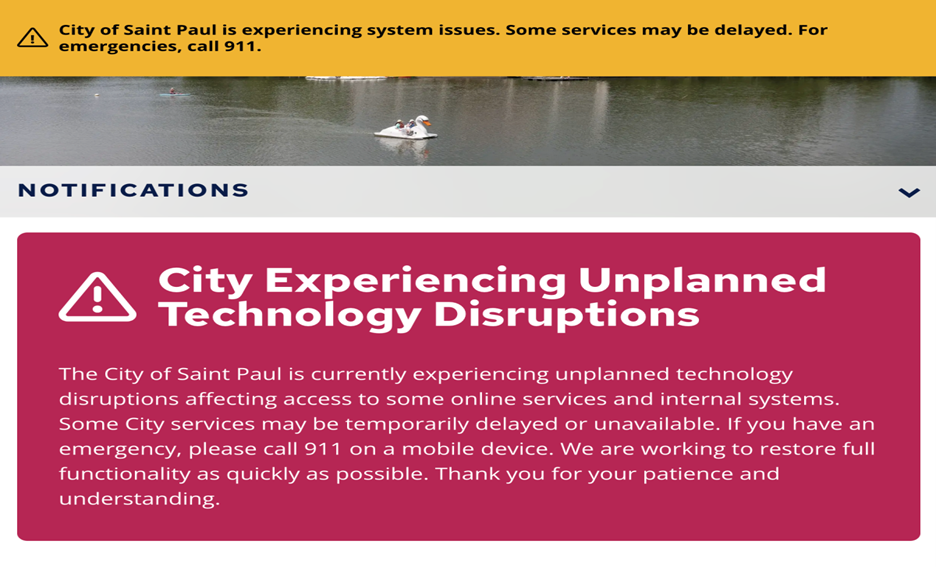
A major cyberattack brought critical systems across the City of St. Paul to a halt this week, prompting Governor Tim Walz to take the rare step of activating the Minnesota National Guard’s 177th Cyber Protection Team through Executive Order 24-25. The breach, which has yet to be fully disclosed in technical detail, forced the shutdown of municipal networks, libraries, payment systems, and internal applications—raising alarms about the fragility of local government infrastructure in the digital age.
This crisis has not only impacted operations but also exposed deeper vulnerabilities—from disruption of city services to potential legal and evidentiary breakdowns, especially concerning the chain of custody for digital evidence and sensitive case management platforms used by law enforcement and legal teams.
“The cyberattack… has resulted in a disruption of city services and operations, and the city has requested assistance from the State of Minnesota in the form of technical expertise and personnel,” Gov. Walz stated in the executive order. “The incident poses a threat to the delivery of critical government services.” (Walz, 2025)
Legal and Infrastructure Ramifications:
One often overlooked consequence of cyberattacks on public systems is the risk to legal integrity. City governments often store digital evidence for court cases, police body cam footage, and case records within networked systems. When such systems are compromised or taken offline, the chain of custody—a legal requirement for maintaining the integrity of evidence—may be broken. This could lead to dismissed charges, delayed court proceedings, or contested verdicts.
Beyond the courts, St. Paul’s systems underpin essential infrastructure. From 911 backend operations to building permits, utility management, and emergency communications, these disruptions ripple into residents’ lives and civic trust. Any delay in fire dispatch systems, real-time weather alerts, or even payroll processing for emergency responders can escalate into broader crisis.
Why Public-Private Partnerships Are Essential:
The attack illustrates the need for stronger collaboration between public entities and private cybersecurity firms. Municipalities often operate with limited budgets, aging infrastructure, and insufficient security staff. In contrast, private-sector vendors—ranging from cloud security providers to endpoint monitoring specialists—offer scalable defenses and expertise that cities can’t always sustain in-house.
Governor Walz’s executive order underscores this reality, stating:
“Cooperation between the Minnesota Department of Information Technology Services (MNIT), the National Guard, and other partners is necessary to protect public assets and respond to cybersecurity threats.” (Walz, 2025)
This partnership must also extend beyond technical vendors. Insurance carriers, legal risk consultants, and incident response firms should be part of proactive city planning, not just post-breach triage.
The Human Factor: Employee Training Matters:
While technical systems are critical, human error remains the top vector for cyberattacks, especially through phishing and social engineering. A well-crafted phishing email clicked by a single city employee can introduce malware into core systems.
St. Paul’s situation shows how cybersecurity education is no longer optional. Ongoing staff training—including:
Simulated phishing attacks
Clear escalation protocols
“Stop and verify” culture for email attachments and access requests
…is essential. Cities should treat their staff as the first line of defense, not just passive users.
The Road Ahead: What Cities Must Do Now:
The cyberattack on St. Paul should serve as a regional and national inflection point. Other cities must take this as a cue to reassess their cyber posture through the following:
Strategic Priorities:
Zero Trust Implementation Limit internal access and require constant authentication, even for trusted users.
Third-Party Risk Audits Review vendors, contractors, and outsourced services for security gaps.
Resilient Backup and Recovery Ensure data is stored offsite and tested regularly for recovery readiness.
Legal and Digital Forensics Planning Build frameworks for protecting the chain of custody in case of breach.
Integrated Public-Private Playbooks Define shared roles between city staff, Guard units, and private partners in cyber response drills.
Community Transparency Proactively inform the public about risks, responses, and what’s being done to rebuild digital trust.
Final Thoughts:
The breach in St. Paul is not just a local IT issue—it is a civic security event that affects courts, emergency services, legal integrity, and public confidence. Governor Walz’s activation of the National Guard is a bold signal that digital defense is now a matter of public safety.
“Immediate action is necessary to provide technical support and ensure continuity of operations,” reads Executive Order 24-25 (Walz, 2025).
Moving forward, public-private partnerships, cybersecurity training, and legal readiness must become foundational to how cities govern in the digital era. The stakes are no longer theoretical—they are real, operational, and deeply human.
Jeremy Swenson is a disruptive-thinking security entrepreneur, futurist/researcher, and senior management tech risk consultant. Over 17 years, he has held progressive roles at many banks, insurance companies, retailers, healthcare organizations, and even government entities. Organizations appreciate his talent for bridging gaps, uncovering hidden risk management solutions, and simultaneously enhancing processes. He is a frequent speaker, podcaster, and a published writer – CISA Magazine and the ISSA Journal, among others. He holds a certificate in Media Technology from Oxford University’s Media Policy Summer Institute, an MBA from Saint Mary’s University of MN, an MSST (Master of Science in Security Technologies) degree from the University of Minnesota, and a BA in political science from the University of Wisconsin Eau Claire. He is an alum of the Cyber Security Summit Think Tank , the Federal Reserve Secure Payment Task Force, the Crystal, Robbinsdale and New Hope Citizens Police Academy, and the Minneapolis FBI Citizens Academy. He also has certifications from Intel and the Department of Homeland Security.


 Abstract Forward Consulting