
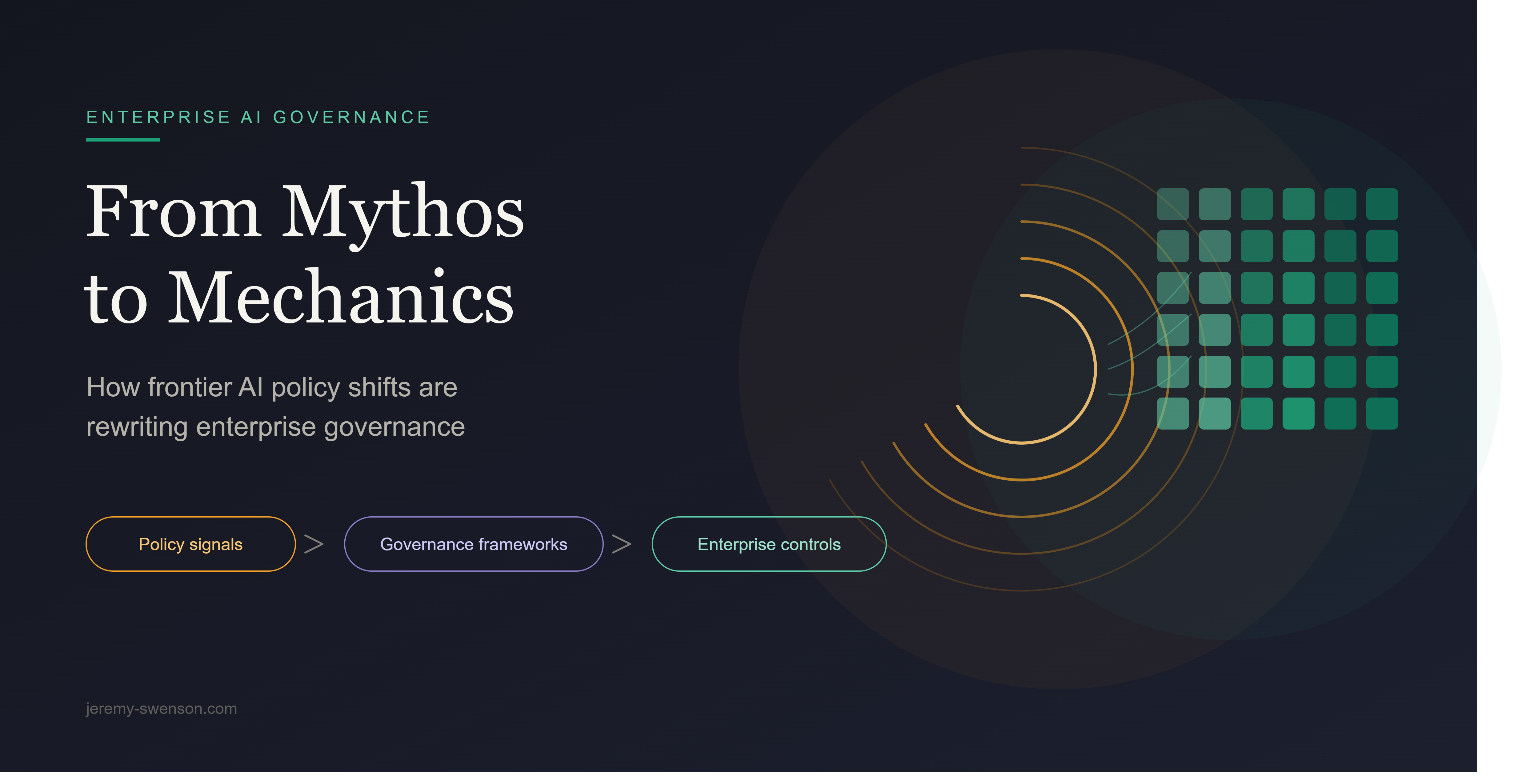
Fig. 1. Infographic Title: From Mythos to Mechanics, Generic/Rights Free, Jeremy Swenson, 2026.
The recent decision to lift restrictions on advanced model deployments from Anthropic represents more than a policy adjustment or regulatory softening. It signals a deeper transition in how frontier AI systems are being treated by governments, enterprises, and oversight bodies: not as static technologies that can be approved or denied once, but as dynamic systems whose behavior, risk profile, and operational impact evolve continuously over time. The significance of this shift is not fully captured in headlines focused on access restoration. Instead, it lies in the subtle but consequential rebalancing of responsibility—from centralized gatekeepers to distributed operators embedded inside enterprise systems.¹
This shift is unfolding alongside a broader geopolitical reclassification of AI systems as controlled strategic infrastructure. As reported by Forbes, the U.S. administration recently lifted export controls on Anthropic’s Mythos 5 and Fable 5 models following a period of heightened national security concern and temporary suspension of access.² Reuters similarly reports that this pattern reflects a new regulatory rhythm: rapid restriction, negotiated mitigation, and conditional restoration rather than permanent prohibition.³ These oscillations are not anomalies—they are becoming the governing structure itself.
At the same time, this policy volatility is occurring against a broader global consolidation of scientific consensus on AI risk. The International AI Safety Report 2026 emphasizes that AI capabilities are advancing faster than safety practices and institutional governance can reliably track.⁴ The report highlights that frontier systems are increasingly autonomous in workflow execution, capable of multi-step reasoning, and difficult to evaluate using static benchmarks alone.⁴ Importantly, it concludes that governance systems are now largely reactive rather than anticipatory, with safety controls lagging behind deployment realities.⁴
More critically, the report identifies a structural mismatch between capability growth and institutional oversight capacity. It notes that frontier AI systems are not improving linearly, but through discontinuous capability jumps driven by scaling, tool use, and inference-time computation.⁴ This creates evaluation blind spots where systems appear safe in testing environments but exhibit materially different behaviors once deployed.
At the core of this transition is a change in what “control” means. Earlier governance models around frontier AI were built on relatively familiar assumptions drawn from software regulation, export controls, and cloud security certification regimes. If a system passed evaluation thresholds, it could be deployed; if it failed, it was restricted or segmented. That logic worked reasonably well when system behavior was stable, deterministic, and tightly scoped. However, frontier AI systems increasingly violate those assumptions. Their outputs are probabilistic, their capabilities shift with prompting techniques, and their risk surfaces expand as they are embedded into broader enterprise ecosystems.⁴
The International AI Safety Report explicitly warns that pre-deployment evaluation alone is insufficient for safety assurance, particularly in systems with tool access, memory, or agentic capabilities.⁴ It recommends continuous post-deployment monitoring as a core governance requirement rather than an optional enhancement.
What emerges instead is a governance posture that resembles continuous assurance rather than static certification. Access becomes conditional, contextual, and dynamic. The report emphasizes the importance of real-world monitoring systems capable of detecting behavioral drift and emergent capabilities after deployment, reinforcing the idea that governance must move into runtime systems rather than remain in pre-release gates.⁴
As these systems return to broader availability, another structural shift becomes visible: the migration of governance responsibility away from regulators and model developers and into enterprise architecture itself. Historically, AI safety and capability constraints were enforced upstream. That separation is eroding rapidly.
Reuters reporting on export control reversals underscores how government decisions are now shaping model availability in near real time, creating a governance environment defined by rapid policy iteration rather than stable regulation.³ Meanwhile, the International AI Safety Report highlights that this instability is mirrored in deployment environments, where inconsistent governance maturity across organizations and jurisdictions creates asymmetric risk exposure.⁴
This downstream shift places new pressure on enterprise functions simultaneously. Cybersecurity teams must model AI behavior as part of threat landscapes. Third-party risk teams must evaluate emergent model behavior, not just vendor controls. Data governance teams must account for indirect leakage pathways through prompts and outputs. Product teams now actively shape risk through interface design, workflow orchestration, and agentic integration choices.
The International AI Safety Report reinforces this transformation by documenting how frontier AI systems are increasingly deployed in agentic configurations, where models execute multi-step tasks, use external tools, and operate with partial autonomy.⁴ These systems blur the line between software and actor, fundamentally altering traditional control assumptions.
Compounding this challenge is the fact that frameworks such as NIST AI RMF and ISO/IEC 42001 assume bounded, testable system behavior. The International AI Safety Report directly challenges this assumption, noting that emergent behaviors often appear only after real-world deployment under complex and shifting conditions.⁴
In cybersecurity contexts, this shift is already visible. The report documents growing evidence of AI systems being used for vulnerability discovery, phishing automation, and large-scale social engineering.⁴ These are not hypothetical risks—they are operational realities emerging in parallel with deployment expansion.
One of the most important but least discussed consequences of this shift is the transformation of AI systems into dynamic or “living” risk surfaces. Unlike traditional software, which changes primarily through version updates, AI systems can change behavior based on context, tool access, and input distribution.⁴ A retrieval-augmented system, for example, may introduce entirely different risk profiles than a base model operating in isolation.
The International AI Safety Report characterizes this as a form of non-stationary risk, where the system being evaluated is not stable over time.⁴ This fundamentally breaks traditional assumptions of static risk modeling. This introduces a shift in security thinking itself. Organizations must move from vulnerability-centric models to behavior-centric models. Weaknesses are no longer purely code-based—they are emergent, interaction-driven, and context-dependent.⁴
From a strategic perspective, the most important implication of expanded frontier model availability is not technical—it is competitive. Organizations that successfully integrate continuous AI governance into operational systems will deploy faster, scale broader, and take more strategic risk safely. Those that treat governance as a bottleneck will slow precisely when speed becomes advantage.
The International AI Safety Report explicitly identifies governance maturity and institutional readiness as key limiting factors in safe AI adoption at scale.⁴ This makes governance capability—not model access—the primary differentiator in enterprise AI maturity.
The next evolution of this landscape is the emergence of an AI control plane architecture: a unified layer that governs model access, routing, policy enforcement, behavioral monitoring, and auditability across environments. In this model, governance becomes infrastructure rather than documentation.
This represents a deeper shift in control theory itself. Static rules give way to continuous negotiation between capability and constraint. Periodic review gives way to continuous observation. Tools become ecosystems.
The lifting of restrictions on advanced models is therefore not an endpoint, but an early signal of a broader transition toward normalized frontier AI deployment under continuous governance conditions. The International AI Safety Report makes clear that this transition is already underway, driven by accelerating capabilities, uneven institutional readiness, and widening oversight gaps.⁴ The organizations that adapt early will not simply comply with this environment—they will define it.
Mitigation & Operational Readiness Playbook:
To translate the governance shift described in this analysis into actionable enterprise capability, organizations must move beyond fragmented controls and toward continuous, behavior-aware AI governance. The first priority is implementing continuous AI behavior monitoring. Rather than treating model evaluation as a pre-deployment checkpoint, enterprises need to track model outputs over time to detect drift, anomalies, and unexpected capability emergence. This effectively reframes AI telemetry as a core security signal, similar in importance to identity logs or network activity, rather than a secondary analytics layer.
In parallel, organizations must establish AI-specific threat modeling practices. Traditional cybersecurity frameworks are insufficient on their own because they assume deterministic system behavior. AI systems introduce new threat vectors such as prompt injection, tool misuse, data exfiltration through outputs, and unintended agentic behavior. These must be explicitly integrated into threat models, extending existing methodologies to account for probabilistic and context-sensitive system responses.
A critical structural requirement is the deployment of an AI control plane architecture. This layer should centralize governance across all models, vendors, and deployment environments. It should enforce consistent policy controls governing access, tool usage, and data exposure while enabling dynamic routing of model requests based on sensitivity, risk tier, and operational context. Without this unified control layer, organizations will struggle to maintain coherent governance across increasingly distributed AI systems.
Data boundary enforcement for large language model interactions also becomes essential. Sensitive information must be prevented from entering prompts unless properly classified and authorized, and all prompt and response flows should be logged to ensure auditability. In practice, this requires extending data loss prevention (DLP) concepts into generative AI pipelines, where the boundary between input, processing, and output is far more fluid than in traditional systems.
Organizations should also adopt post-deployment evaluation frameworks that move beyond static approval cycles. Instead of relying on one-time certification, AI systems must undergo continuous reassessment through red-teaming, adversarial testing, and behavior evaluation in production-like conditions. This allows organizations to identify emergent risks that only appear after models are exposed to real-world inputs, evolving workflows, and integrated toolchains.
Third-party risk management functions must also evolve. Vendor assessment can no longer focus solely on security posture, compliance checklists, or infrastructure controls. It must incorporate behavioral risk—how models actually perform once deployed in dynamic environments. This includes understanding update cycles, tool integrations, and the degree of transparency vendors provide around model behavior and safety limitations.
Agentic workflows represent another critical area of hardening. As models increasingly perform multi-step tasks and interact with external systems, organizations must enforce least-privilege principles on tool access and require human-in-the-loop controls for high-risk actions. These workflows should also be fully logged and treated as security-relevant events, enabling retrospective analysis of autonomous or semi-autonomous decision paths.
At a structural level, AI governance ownership must be elevated to the architectural tier of the enterprise. Responsibility should not be fragmented across cybersecurity, compliance, and product teams, but instead unified within enterprise architecture or security engineering functions that can enforce consistent governance patterns across systems. This alignment is necessary to avoid gaps created by siloed decision-making in highly interconnected AI environments.
Finally, organizations must develop dedicated AI incident response capabilities. These playbooks should define clear escalation paths for model misuse, anomalous behavior, or data leakage events involving AI systems. They should also include operational mechanisms for rapid rollback of model versions, disabling of tool integrations, and containment of affected workflows. In an environment where AI systems are continuously evolving, response speed becomes a critical determinant of organizational resilience.
Endnotes:
- Anthropic, frontier model deployment and safety policy communications, 2026.
- Siladitya Ray, “Trump Administration Lifts Export Controls on Anthropic’s Mythos 5 and Fable 5 AI Models,” Forbes, July 1, 2026, https://www.forbes.com/sites/siladityaray/2026/07/01/trump-administration-lifts-export-controls-on-anthropics-mythos-5-and-fable-5-ai-models/.
- Reuters, “U.S. Lifts Export Controls on Frontier AI Models Following Security Review,” June 2026.
- International AI Safety Report, International AI Safety Report 2026 (London: DSIT and international expert consortium, 2026), https://internationalaisafetyreport.org/.
- Siladitya Ray, Forbes reporting on U.S. frontier AI policy shift and export control reversal, 2026.


 The first version of the NIST Cybersecurity Framework came about in Feb. 2014. In May 2017 President Donald Trump issued an executive order directing all federal agencies to use the framework to manage this risk, including future versions. Conversely, the private sector more so uses it as a non-uniform guide (sometimes in part) when needed. They use other more industry specific frameworks as well. On 04/17/18 NIST released the updated version of this standard-setting framework. We attended the NIST hosted webcast reviewing this on 04/27/18 and my key points are:

