Law enforcement agencies spanning the United States, United Kingdom, and Australia have collectively pinpointed Russian national Dmitry Yuryevich Khoroshev as the suspected architect behind the infamous LockBit ransomware crime gang, operating under the moniker LockBitSupp. The government asserts LockBit victims span a wide array of entities, including individuals, small businesses, multinational corporations, hospitals, schools, nonprofit organizations, critical infrastructure, and government and law enforcement agencies. They are responsible for draining an estimated $500 million from its victims over an extensive hacking spree including:[2]
1) 148 built attacks.
2) 119 engaged in negotiations with victims, meaning they definitely deployed attacks.
3) Of the 119 who began negotiations, there are 39 who appear not to have ever received a ransom payment.
4) 75 did not engage in any negotiation, so also appear not to have received any ransom payments.
The group has long evaded identification, with LockBitSupp shrouded in online anonymity due to multiple VPNs, VMs, and fake pass-through names and entities. He was so bold that he even offered a $10 million reward to anyone that could reveal his identity.[3]
This revelation comes in the wake of a substantial operation by UK law enforcement, which infiltrated LockBit’s systems, executed multiple arrests, dismantled its infrastructure, and intercepted internal communications, effectively reducing LockBit’s criminal operations — but not stopping or deterring them. This was dubbed Operation Cronos and initiated in February 2024.[4]
Details disclosed by the United States Office of Foreign Assets Control (OFAC) reveal Khoroshev, aged 31 and residing in Russia, is under sanction, with his designation including various email and cryptocurrency addresses, alongside details from his Russian passport. Furthermore, the United States has filed a comprehensive indictment against him.[5] He also faces 26 criminal charges, including extortion and hacking, carrying a cumulative maximum penalty of 185 years in prison. The Justice Department has also issued a $10 million bounty for information leading to his arrest.
‘”This identification and charging of Khoroshev mark a significant milestone,” remarked Principal Deputy Assistant Attorney General Nicole Argentieri in a statement on Tuesday. “Through the meticulous efforts of our investigators and prosecutors, we have unveiled the individual behind LockBitSupp.”’[6]
According to the indictment, Khoroshev is alleged to have served as the developer and administrator of the LockBit ransomware group from its inception in September 2019 through May 2024, typically receiving a 20 percent share of each ransom payment extorted from LockBit victims.
Federal authorities utilized LockBit’s existing victim shaming website layout to disseminate press releases and provide free decryption tools. Following the FBI’s intervention, LockBitSupp reassured partners and affiliates via Russian cybercrime forums that the ransomware operation remained fully operational. Additional darknet websites were launched, promising the release of data stolen from several LockBit victims prior to the FBI’s intervention.
Fig. 2. Lockbit Victim Shaming Portal With FBI Takeover.[7]
Despite LockBitSupp’s claims of invincibility, law enforcement efforts have made strides. The group’s modus operandi included “double extortion,” demanding separate ransom payments for both unlocking hijacked systems and promising to delete stolen data. However, the Justice Department asserts LockBit never followed through on deleting victim data, regardless of ransom payments made — all the more reason why you should not pay or trust these types.
Khoroshev marks the sixth individual indicted as an active member of LockBit. Among those indicted are Russian nationals Artur Sungatov and Ivan Gennadievich Kondratyev, alias “Bassterlord,” charged with deploying LockBit against targets in various industries across multiple countries.[8]
Lastly, leading threat intel consultancy Recorded Future facilitated an interview with LockbitSupp over an encrypted app via the dark web, where he said they got the wrong guy, among other things. [9] The interview is linked here thanks to hard work of The Record from Recorded Future News and Dmitry Smilyanets!
Disclaimer:
All citations and statements are from publicly available reports. No private info was disclosed in this article. Feedback is welcome. Attempts to retaliate against or censor my research and/or writing will be reported (you will be blocked). This was drafted with the current info, and future info could change things.
About the Author:
Jeremy Swenson is a disruptive-thinking security entrepreneur, futurist/researcher, and senior management tech risk consultant. He is a frequent speaker, published writer, podcaster, and even does some pro bono consulting in these areas. He holds an MBA from St. Mary’s University of MN, an MSST (Master of Science in Security Technologies) degree from the University of Minnesota, and a BA in political science from the University of Wisconsin Eau Claire. He is an alum of the Federal Reserve Secure Payment Task Force, the Crystal, Robbinsdale and New Hope Citizens Police Academy, and the Minneapolis FBI Citizens Academy.
In today’s digitally interconnected world, the cloud has emerged as a cornerstone of modern business operations, offering scalability, flexibility, and efficiency like never before. Leading vendors like Amazon Web Services (AWS), Microsoft, Oracle, Dell, and Oracle offer public, private, and hybrid cloud formats. However, as businesses increasingly migrate their operations to the cloud, ensuring robust security measures becomes paramount. Here, we delve into seven essential strategies for securing the cloud effectively, emphasizing collaboration between C-suite leaders and IT stakeholders.
1) Understanding the Cloud-Shared Responsibility Model:
The first step in securing the cloud is grasping the nuances of the shared responsibility model (Fig. 1.). While cloud providers manage the security of the infrastructure platform, customers are responsible for securing their data and applications, including who gets access to them and at what level (Fig 1.). This necessitates a clear delineation of responsibilities, ensuring no security gaps exist. CIOs and CISOs must thoroughly educate themselves and their teams on this model to make informed security decisions.
2) Asking Detailed Security Questions:
It is imperative to engage cloud providers in detailed discussions regarding security measures, digging far deeper than boilerplate questions and checkbox forms. C-suite executives should inquire about specific security protocols, compliance certifications, incident response procedures, and data protection mechanisms. Organizations can mitigate risks and build trust in their cloud ecosystem by seeking transparency and understanding the provider’s security posture.
3) Implementing IAM Solutions:
Identity and access management (IAM) lies at the core of cloud security. Robust IAM solutions enable organizations to authenticate, authorize, and manage user access effectively. CIOs and CISOs should invest in IAM platforms equipped with features like multi-factor authentication, role-based access control, least privilege, and privileged access management (PAM) governance. By enforcing the principle of least privilege, businesses can minimize the risk of unauthorized access and insider threats.
4) Establishing Modern Cloud Security Policies:
A proactive approach to security entails the formulation of comprehensive cloud security policies aligned with industry best practices and regulatory requirements. Business leaders must collaborate with security professionals to develop policies covering data classification, incident response, encryption standards, and employee responsibilities. Regularly updating and reviewing these policies are essential to adapting to evolving threats and technologies — can be country specific.
5) Encrypting Data in Motion and at Rest:
Encryption serves as a critical safeguard for data confidentiality and integrity in the cloud. Organizations should employ robust encryption mechanisms to protect data both in transit and at rest. Utilizing encryption protocols such as TLS for network communications and AES for data storage adds an extra layer of defense against unauthorized access. Additionally, implementing reliable backup solutions ensures data resilience in the event of breaches or disasters. Having all key files backed up via the 3-2-1 rule — three copies of files in two different media forms with one offsite — thus reducing ransomware attack damage.
6) Educating Staff Regularly:
Human error remains one of the most significant vulnerabilities in cloud security. Therefore, ongoing employee education and awareness initiatives are indispensable. C-suite leaders must prioritize security training programs to cultivate a security-conscious culture across the organization. By educating staff on security best practices, threat awareness, and incident response protocols, businesses can fortify their defense against social engineering attacks and insider threats. Importantly, this education is far more effective when interactive and gamified to ensure participation and sustained learning outcomes.
7) Mapping and Securing Endpoints:
Endpoints serve as crucial entry points for cyber threats targeting cloud environments. CIOs and CISOs should conduct thorough assessments to identify and secure all endpoints accessing the cloud infrastructure. Visually mapping endpoints is the first step to confirm how many, what type, and where they actually are at present — this can and does change. Implementing endpoint protection solutions, enforcing device management policies, and promptly deploying security patches are essential to mitigate endpoint vulnerabilities. Furthermore, embracing technologies like zero-trust architecture enhances endpoint security by continuously verifying user identities and device integrity.
In conclusion, securing the cloud demands a multifaceted approach encompassing collaboration, diligence, vendor communication and partnership, and innovation. By embracing the principles outlined above, organizations can strengthen their cloud security posture, mitigate risks, and foster a resilient business environment. C-suite leaders, in conjunction with IT professionals, must champion these strategies to navigate the evolving threat landscape and safeguard the future of their enterprises.
About the Author:
Jeremy Swenson is a disruptive-thinking security entrepreneur, futurist/researcher, and senior management tech risk consultant. He is a frequent speaker, published writer, podcaster, and even does some pro bono consulting in these areas. He holds an MBA from St. Mary’s University of MN, an MSST (Master of Science in Security Technologies) degree from the University of Minnesota, and a BA in political science from the University of Wisconsin Eau Claire. He is an alum of the Federal Reserve Secure Payment Task Force, the Crystal, Robbinsdale and New Hope Citizens Police Academy, and the Minneapolis FBI Citizens Academy.
After weeks of denials, AT&T Inc. (NYSE:T), a leading player in the telecommunications sector, has recently unveiled a substantial data breach originating from 2021, leading to the compromise of sensitive information belonging to 73 million users [1]. This data breach has since surfaced on the dark web, exposing a trove of personal data including Social Security numbers, email addresses, phone numbers, and dates of birth, impacting both current and past account holders. The compromised information encompasses names, addresses, phone numbers, and for numerous individuals, highly sensitive data such as Social Security numbers, dates of birth, and AT&T passcodes.
How can you determine if you were impacted by the AT&T data breach? Firstly, ask yourself if you ever were a customer, and do not rely solely on AT&T to notify you. By utilizing services like Have I Been Pwned, you can ascertain if your data has been compromised. Additionally, Google’s Password Checkup tool can notify you if your account details are exposed, especially if you store password information in a Google account. For enhanced security, the premium edition of Bitwarden, a top-rated recommended password manager, offers the capability to scan for compromised passwords across the internet.
One prevalent issue concerning data breaches is the tendency for individuals to overlook safeguarding their data until it’s too late. It’s a common scenario – we often don’t anticipate our personal information falling into the hands of hackers who then sell it to malicious entities online. Regrettably, given the frequency and magnitude of cyber-attacks, the likelihood of your data being exposed has shifted from an “if” to a “when” scenario.
Given this reality, it’s imperative to adopt measures to safeguard your identity and data online, including [2]:
Implementing multi-factor authentication – a crucial step in thwarting hackers’ attempts to infiltrate your accounts, even if your email address is publicly available.
Avoiding password reuse and promptly changing passwords if they are compromised in a data breach – this practice ensures that even if your login credentials are exposed, hackers cannot infiltrate other accounts you utilize, including the one that has experienced a breach.
Investing in identity protection services, either as standalone solutions or as part of comprehensive internet security suites – identity protection software can actively monitor the web for data breaches involving you, enabling you to take proactive measures to safeguard your identity.
AT&T defines a customer’s passcode as a numeric Personal Identification Number (PIN), typically consisting of four digits. Distinguishing it from a password, a passcode is necessary for finalizing an AT&T installation, conducting personal account activities over the phone, or reaching out to technical support, according to AT&T.
How to reset your AT&T passcode:
AT&T has taken steps to reset passcodes for active accounts affected by the data breach. However, as a precautionary measure, AT&T advises users who haven’t altered their passcodes within the last year to do so. Below are the steps to change your AT&T passcode:
Navigate to your myAT&T Profile.
Sign in when prompted. (If additional security measures are in place and sign-in isn’t possible, AT&T suggests opting for “Get a new passcode.”)
Locate “My linked accounts” and select “Edit” for the passcode you wish to update.
Follow the provided prompts to complete the process.
Here is AT&T’s official statement on the matter from 03/03/24 [3]:
“Based on our preliminary analysis, the data set appears to be from 2019 or earlier, impacting approximately 7.6 million current AT&T account holders and approximately 65.4 million former account holders. Currently, AT&T does not have evidence of unauthorized access to its systems resulting in exfiltration of the data set. The company is communicating proactively with those impacted and will be offering credit monitoring at our expense where applicable. We encourage current and former customers with questions to visit http://www.att.com/accountsafety for more information.”
The hackers behind this, allegedly ShiningHacker, endeavored to profit from the pilfered data by listing it for sale on the RaidForums data theft forum, initiating the bidding at $200,000 and entertaining additional offers in increments of $30,000 [4]. Moreover, they demonstrated readiness to promptly sell the data for $1 million, highlighting the gravity and boldness of the cyber offense.
Not surprisingly, AT&T is currently confronting numerous class-action lawsuits subsequent to the company’s acknowledgment of this data breach, which compromised the sensitive information of 73 million existing and former customers [5]. Among the ten lawsuits filed, one is being handled by Morgan & Morgan, representing plaintiff Patricia Dean and individuals in similar circumstances.
The lawsuit levels allegations of negligence, breach of implied contract, and unjust enrichment against AT&T, contending that the company’s deficient security measures and failure to promptly provide adequate notification about the data breach exposed customers to significant risks, including identity theft and various forms of fraud. It seeks compensatory damages, restitution, injunctive relief, enhancements to AT&T’s data security protocols, future audits, credit monitoring services funded by the company, and a trial by jury [6].
About the Author:
Jeremy Swenson is a disruptive-thinking security entrepreneur, futurist/researcher, and senior management tech risk consultant. He is a frequent speaker, published writer, podcaster, and even does some pro bono consulting in these areas. He holds an MBA from St. Mary’s University of MN, an MSST (Master of Science in Security Technologies) degree from the University of Minnesota, and a BA in political science from the University of Wisconsin Eau Claire. He is an alum of the Federal Reserve Secure Payment Task Force, the Crystal, Robbinsdale and New Hope Citizens Police Academy, and the Minneapolis FBI Citizens Academy.
Fig. 1. Zero Trust Components to Orchestration AI Mashup; Microsoft, 09/17/21; and Swenson, Jeremy, 03/29/24.
1. The Zero-Trust Security Model Becomes More Orchestrated via Artificial Intelligence (AI):
The zero-trust model represents a paradigm shift in cybersecurity, advocating for the premise that no user or system, irrespective of their position within the corporate network, should be automatically trusted. This approach entails stringent enforcement of access controls and continual verification processes to validate the legitimacy of users and devices. By adopting a need-to-know-only access philosophy, often referred to as the principle of least privilege, organizations operate under the assumption of compromise, necessitating robust security measures at every level.
Implementing a zero-trust framework involves a comprehensive overhaul of traditional security practices. It entails the adoption of single sign-on functionalities at the individual device level and the enhancement of multifactor authentication protocols. Additionally, it requires the implementation of advanced role-based access controls (RBAC), fortified network firewalls, and the formulation of refined need-to-know policies. Effective application whitelisting and blacklisting mechanisms, along with regular group membership reviews, play pivotal roles in bolstering security posture. Moreover, deploying state-of-the-art privileged access management (PAM) tools, such as CyberArk for password check out and vaulting, enables organizations to enhance toxic combination monitoring and reporting capabilities.
App-to-app orchestration refers to the process of coordinating and managing interactions between different applications within a software ecosystem to achieve specific business objectives or workflows. It involves the seamless integration and synchronization of multiple applications to automate complex tasks or processes, facilitating efficient data flow and communication between them. Moreover, it aims to streamline and optimize various operational workflows by orchestrating interactions between disparate applications in a cohesive manner. This orchestration process typically involves defining the sequence of actions, dependencies, and data exchanges required to execute a particular task or workflow across multiple applications.
However, while the concept of zero-trust offers a compelling vision for fortifying cybersecurity, its effective implementation relies on selecting and integrating the right technological components seamlessly within the existing infrastructure stack. This necessitates careful consideration to ensure that these components complement rather than undermine the orchestration of security measures. Nonetheless, there is optimism that the rapid development and deployment of AI-based custom middleware can mitigate potential complexities inherent in orchestrating zero-trust capabilities. Through automation and orchestration, these technologies aim to streamline security operations, ensuring that the pursuit of heightened security does not inadvertently introduce operational bottlenecks or obscure visibility through complexity.
2. Artificial Intelligence (AI) Powered Threat Detection Has Improved Analytics:
The utilization of artificial intelligence (AI) is on the rise to bolster threat detection capabilities. Through machine learning algorithms, extensive datasets are scrutinized to discern patterns suggestive of potential security risks. This facilitates swifter and more precise identification of malicious activities. Enhanced with refined machine learning algorithms, security information and event management (SIEM) systems are adept at pinpointing anomalies in network traffic, application logs, and data flow, thereby expediting the identification of potential security incidents for organizations.
There will be reduced false positives which has been a sustained issue in the past with large overconfident companies repeatedly wasting millions of dollars per year fine tuning useless data security lakes that mostly produce garbage anomaly detection reports [1], [2]. Literally the kind good artificial intelligence (AI) laughs at – we are getting there. All the while, the technology vendors try to solve this via better SIEM functionality for an increased price at present. Yet we expect prices to drop really low as the automation matures.
With enhanced natural language processing (NLP) methodologies, artificial intelligence (AI) systems possess the capability to analyze unstructured data originating from various sources such as social media feeds, images, videos, and news articles. This proficiency enables organizations to compile valuable threat intelligence, staying abreast of indicators of compromise (IOCs) and emerging attack strategies. Notable vendors offering such services include Dark Trace, IBM, CrowdStrike, and numerous startups poised to enter the market. The landscape presents ample opportunities for innovation, necessitating the abandonment of past biases. Young, innovative minds well-versed in web 3.0 technologies hold significant value in this domain. Consequently, in the future, more companies are likely to opt for building their tailored threat detection tools, leveraging advancements in AI platform technology, rather than purchasing pre-existing solutions.
Artificial intelligence (AI) isn’t just confined to threat detection; it’s increasingly playing a pivotal role in automating response actions within cybersecurity operations. This encompasses a range of tasks, including the automatic isolation of compromised systems, the blocking of malicious internet protocol (IP) addresses, the adjustment of firewall configurations, and the coordination of responses to cyber incidents—all achieved with greater efficiency and cost-effectiveness. By harnessing AI-driven algorithms, security orchestration, automation, and response (SOAR) platforms empower organizations to analyze and address security incidents swiftly and intelligently.
SOAR platforms capitalize on AI capabilities to streamline incident response processes, enabling security teams to automate repetitive tasks and promptly react to evolving threats. These platforms leverage AI not only to detect anomalies but also to craft tailored responses, thereby enhancing the overall resilience of cybersecurity infrastructures. Leading examples of such platforms include Microsoft Sentinel, Rapid7 InsightConnect, and FortiSOAR, each exemplifying the fusion of AI-driven automation with comprehensive security orchestration capabilities.
Microsoft Sentinel, for instance, utilizes AI algorithms to sift through vast volumes of security data, identifying potential threats and anomalies in real-time. It then orchestrates response actions, such as isolating compromised systems or blocking suspicious IP addresses, with precision and speed. Similarly, Rapid7 InsightConnect integrates AI-driven automation to streamline incident response workflows, enabling security teams to mitigate risks more effectively. FortiSOAR, on the other hand, offers a comprehensive suite of AI-powered tools for incident analysis, response automation, and threat intelligence correlation, empowering organizations to proactively defend against cyber threats. Basically, AI tools will help SOAR tools mature so security operations centers (SOCs) can catch the low hanging fruit; thus, they will have more time for analysis of more complex threats. These AI tools will employ the observe, orient, decide, act (OODA) Loop methodology [3]. This will allow them to stay up to date, customized, and informed of many zero-day exploits. At the same time, threat actors will constantly try to avert this with the same AI but with no governance.
With the escalating migration of organizations to cloud environments, safeguarding the security of cloud assets emerges as a paramount concern. While industry giants like Microsoft, Oracle, and Amazon Web Services (AWS) dominate this landscape with their comprehensive cloud offerings, numerous large organizations opt to establish and maintain their own cloud infrastructures to retain greater control over their data and operations. In response to the evolving security landscape, the adoption of cloud security posture management (CSPM) tools has become imperative for organizations seeking to effectively manage and fortify their cloud environments.
CSPM tools play a pivotal role in enhancing the security posture of cloud infrastructures by facilitating continuous monitoring of configurations and swiftly identifying any misconfigurations that could potentially expose vulnerabilities. These tools operate by autonomously assessing cloud configurations against established security best practices, ensuring adherence to stringent compliance standards. Key facets of their functionality include the automatic identification of unnecessary open ports and the verification of proper encryption configurations, thereby mitigating the risk of unauthorized access and data breaches. “Keeping data safe in the cloud requires a layered defense that gives organizations clear visibility into the state of their data. This includes enabling organizations to monitor how each storage bucket is configured across all their storage services to ensure their data is not inadvertently exposed to unauthorized applications or users” [4]. This has considerations at both the cloud user and provider level especially considering artificial intelligence (AI) applications can be built and run inside the cloud for a variety of reasons. Importantly, these build designs often use approved plug ins from different vendors making it all the more complex.
Furthermore, CSPM solutions enable organizations to proactively address security gaps and bolster their resilience against emerging threats in the dynamic cloud landscape. By providing real-time insights into the security status of cloud assets, these tools empower security teams to swiftly remediate vulnerabilities and enforce robust security controls. Additionally, CSPM platforms facilitate comprehensive compliance management by generating detailed reports and audit trails, facilitating adherence to regulatory requirements and industry standards.
In essence, as organizations navigate the complexities of cloud adoption and seek to safeguard their digital assets, CSPM tools serve as indispensable allies in fortifying cloud security postures. By offering automated monitoring, proactive threat detection, and compliance management capabilities, these solutions empower organizations to embrace the transformative potential of cloud technologies while effectively mitigating associated security risks.
About the Author:
Jeremy Swenson is a disruptive-thinking security entrepreneur, futurist / researcher, and senior management tech risk consultant. He is a frequent speaker, published writer, podcaster, and even does some pro bono consulting in these areas. He holds an MBA from St. Mary’s University of MN, an MSST (Master of Science in Security Technologies) degree from the University of Minnesota, and a BA in political science from the University of Wisconsin Eau Claire. He is an alum of the Federal Reserve Secure Payment Task Force, the Crystal, Robbinsdale and New Hope Citizens Police Academy, and the Minneapolis FBI Citizens Academy.
Fig. 1. Swenson, Jeremy, Stock; AI and InfoSec Trade-offs. 2024.
Disruptive technology refers to innovations or advancements that significantly alter the existing market landscape by displacing established technologies, products, or services, often leading to the transformation of entire industries. These innovations introduce novel approaches, functionalities, or business models that challenge traditional practices, creating a substantial impact on how businesses operate (ChatGPT, 2024). Disruptive technologies typically emerge rapidly, offering unique solutions that are more efficient, cost-effective, or user-friendly than their predecessors.
The disruptive nature of these technologies often leads to a shift in market dynamics, digital cameras or smartphones for example. These with new entrants or previously marginalized players gain prominence while established entities may face challenges in adapting to the transformative changes (ChatGPT, 2024). Examples of disruptive technologies include the advent of the internet, mobile technology, and artificial intelligence (AI), each reshaping industries and societal norms. Here are four of the leading AI tools:
1. OpenAI’s GPT:
OpenAI’s GPT (Generative Pre-trained Transformer) models, including GPT-3 and GPT-2, are predecessors to ChatGPT. These models are known for their large-scale language understanding and generation capabilities. GPT-3, in particular, is one of the most advanced language models, featuring 175 billion parameters.
2. Microsoft’s DialoGPT:
DialoGPT is a conversational AI model developed by Microsoft. It is an extension of the GPT architecture but fine-tuned specifically for engaging in multi-turn conversations. DialoGPT exhibits improved dialogue coherence and contextual understanding, making it a competitor in the chatbot space.
3. Facebook’s BlenderBot:
BlenderBot is a conversational AI model developed by Facebook. It aims to address the challenges of maintaining coherent and contextually relevant conversations. BlenderBot is trained using a diverse range of conversations and exhibits improved performance in generating human-like responses in chat-based interactions.
4. Rasa:
Rasa is an open-source conversational AI platform that focuses on building chatbots and voice assistants. Unlike some other models that are pre-trained on large datasets, Rasa allows developers to train models specific to their use cases and customize the behavior of the chatbot. It is known for its flexibility and control over the conversation flow.
Here is a list of the pros and cons of AI-based infosec capabilities.
Pros of AI in InfoSec:
1. Improved Threat Detection:
AI enables quicker and more accurate detection of cybersecurity threats by analyzing vast amounts of data in real-time and identifying patterns indicative of malicious activities. Security orchestration, automation, and response (SOAR) platforms leverage AI to analyze and respond to security incidents, allowing security teams to automate routine tasks and respond more rapidly to emerging threats. Microsoft Sentinel, Rapid7 InsightConnect, and FortiSOAR are just a few of the current examples
2. Behavioral Analysis:
AI can perform behavioral analysis to identify anomalies in user behavior or network activities, helping detect insider threats or sophisticated attacks that may go unnoticed by traditional security measures. Behavioral biometrics, such as analyzing typing patterns, mouse movements and ram usage, can add an extra layer of security by recognizing the unique behavior of legitimate users. Systems that use AI to analyze user behavior can detect and flag suspicious activity, such as an unauthorized user attempting to access an account or escalate a privilege.
3. Enhanced Phishing Detection:
AI algorithms can analyze email patterns and content to identify and block phishing attempts more effectively, reducing the likelihood of successful social engineering attacks.
4. Automation of Routine Tasks:
AI can automate repetitive and routine tasks, allowing cybersecurity professionals to focus on more complex issues. This helps enhance efficiency and reduces the risk of human error.
5. Adaptive Defense Systems:
AI-powered security systems can adapt to evolving threats by continuously learning and updating their defense mechanisms. This adaptability is crucial in the dynamic landscape of cybersecurity.
6. Quick Response to Incidents:
AI facilitates rapid response to security incidents by providing real-time analysis and alerts. This speed is essential in preventing or mitigating the impact of cyberattacks.
Cons of AI in InfoSec:
1. Sophistication of Attacks:
As AI is integrated into cybersecurity defenses, attackers may also leverage AI to create more sophisticated and adaptive threats, leading to a continuous escalation in the complexity of cyberattacks.
2. Ethical Concerns:
The use of AI in cybersecurity raises ethical considerations, such as privacy issues, potential misuse of AI for surveillance, and the need for transparency in how AI systems operate.
3. Cost and Resource Intensive:
Implementing and maintaining AI-powered security systems can be resource-intensive, both in terms of financial investment and skilled personnel required for development, implementation, and ongoing management.
4. False Positives and Negatives:
AI systems are not infallible and may produce false positives (incorrectly flagging normal behavior as malicious) or false negatives (failing to detect actual threats). This poses challenges in maintaining a balance between security and user convenience.
5. Lack of Human Understanding:
AI lacks contextual understanding and human intuition, which may result in misinterpretation of certain situations or the inability to recognize subtle indicators of a potential threat. This is where QA and governance come in case something goes wrong.
6. Dependency on Training Data:
AI models rely on training data, and if the data used is biased or incomplete, it can lead to biased or inaccurate outcomes. Ensuring diverse and representative training data is crucial to the effectiveness of AI in InfoSec.
About the author:
Jeremy Swenson is a disruptive-thinking security entrepreneur, futurist / researcher, and senior management tech risk consultant. He is a frequent speaker, published writer, podcaster, and even does some pro bono consulting in these areas. He holds an MBA from St. Mary’s University of MN, an MSST (Master of Science in Security Technologies) degree from the University of Minnesota, and a BA in political science from the University of Wisconsin Eau Claire. He is an alum of the Federal Reserve Secure Payment Task Force, the Crystal, Robbinsdale and New Hope Citizens Police Academy, and the Minneapolis FBI Citizens Academy.
Backing up data is one of the best things you can do to improve your response to ransomware, a data breach, an infrastructure failure, or another type of cyber-attack. Without a good comprehensive backup method that works and is tested, you likely will not be able to recover from where you left off thereby harming your business and customers.
The 3-2-1 backup method requires saving multiple copies of data on different device types and in different locations. More specifically, the 3-2-1 method follows these three requirements:
3 Copies of Data: Have three copies of data—the original, and at least two copies.
2 Different Media Types: Use two different media types for storage. This can help reduce any impact that may impact one specific storage media type more than the other.
1 Copy Offsite: Keep one copy offsite to prevent the possibility of data loss due to a site-specific failure.
Here are some pointers to make your backup more effective:
Select the right data to back up: Critical data includes word processing documents, electronic spreadsheets, databases, financial files, human resources files, and accounts receivable/payable files. Not everything is worth backing up as it’s a waste of space. For example, data that is 8 years old with no business use is not worth backing up.
Backup on a schedule: Backup data automatically on a repeatable schedule, if possible, bi-weekly, weekly, or even daily if needed. Pick a day or time range when the backup will run, say Thursdays at 10:00 p.m. CST (when most users are not working.
Have backup test plans and follow them: Your backup plan must be written down in a clear and detailed way describing the backup process, roles, interconnections, and milestones which can gauge if it’s working, as well as the service time to recovery expected. Then of course test the backup at least every six months or after a key infrastructure change happens.
Automate backups: Use software automation to execute the backups to save user time, and to reduce the risk of human error.
About the Author:
Jeremy Swenson is a disruptive-thinking security entrepreneur, futurist/researcher, and senior management tech risk consultant. Over 17 years he has held progressive roles at many banks, insurance companies, retailers, healthcare orgs, and even governments including being a member of the Federal Reserve Secure Payment Task Force. Organizations relish in his ability to bridge gaps and flesh out hidden risk management solutions while at the same time improving processes. He is a frequent speaker, published writer, podcaster, and even does some pro bono consulting in these areas. As a futurist, his writings on digital currency, the Target data breach, and Google combining Google + video chat with Google Hangouts video chat have been validated by many. He holds an MBA from St. Mary’s University of MN, an MSST (Master of Science in Security Technologies) degree from the University of Minnesota, and a BA in political science from the University of Wisconsin Eau Claire.
1) Educate Employees About Cyber Threats and Hold Them Accountable:
Educate your employees about online threats and how to protect your business’s data, including safe use of social networking sites. Depending on the nature of your business, employees might be introducing competitors to sensitive details about your firm’s internal business. Employees should be informed about how to post online in a way that does not reveal any trade secrets to the public or competing businesses. Use games with training and hold everyone accountable to security policies and procedures. This needs to be embedded in the culture of your company. Register for free DHS cyber training here and/or use the free DHS SMB cyber resource toolkit. Most importantly, sign up for DHS CISA e-mail alerts specific to your company and industry needs and review the alerts – Sign up here. Use the free DHS developed CSET (Cybersecurity Evaluation Tool) to assess your security posture – High, Med, or Low. CSET is downloadable here.
2) Protect Against Viruses, Spyware, and Other Malicious Code:
Make sure each of your business’s computers are equipped with antivirus software and antispyware and updated regularly. Such software is readily available online from a variety of vendors. All software vendors regularly provide patches and updates to their products to correct security problems and improve functionality. Configure all software to install updates automatically. Especially watch out for freeware that contains malvertising. Make sure submission forms can block spam and can block code execution (cross-side scripting attacks).
3) Secure Your Networks:
Safeguard your Internet connection by using a firewall and encrypting information. If you have a Wi-Fi network, make sure it is secure and hidden – not publicly broadcasted. To hide your Wi-Fi network, set up your wireless access point or router so it does not broadcast the network name, known as the Service Set Identifier (SSID). Also, have a secure strong password to protect access to the router. (xbeithyg18695843%&*&RELxu75IGO) — example. Lastly, use a VPN (virtual private network) to encrypt data in transit, especially when working from home.
4) Control Physical Access to Computers and Network Components:
Prevent access or use of business computers by unauthorized individuals. Laptops can be particularly easy targets for theft or can be lost, so lock them up when unattended. Make sure a separate user account is created for each employee and require strong passwords. Administrative privileges should only be given to trusted IT staff and key personnel — with approval records.
5) Create A Mobile Device Protection Plan:
Require users to password-protect their devices, encrypt their data, and install security apps to prevent criminals from stealing information while the phone is on public networks. Use a containerization application to separate personal data from company data. Be sure to set reporting procedures for lost or stolen equipment.
6) Establish Security Practices and Policies to Protect Sensitive Information:
Establish policies on how employees should handle and protect personally identifiable information and other sensitive data. Clearly outline the consequences of violating your business’s cybersecurity policies and who is accountable. Base your security strategy significantly on the NIST Cybersecurity Framework 1.1: Identify, Detect Defend, Respond, and Recover — a respected standard that easy to understand (Fig. 1).The NIST Cybersecurity Framework Small Business Resources are linked here.
Fig. 2. NIST CSF Domains and Sub Areas, NIST, 2022.
7) Employ Best Practices on Payment Cards:
Work with your banks or card processors to ensure the most trusted and validated tools and anti-fraud services are being used. You may also have additional security obligations related to agreements with your bank or processor. Isolate payment systems from other, less secure programs and do not use the same computer to process payments and surf the internet. Outsource some or all of it and know where your risk responsibility ends.
8) Make Backup Copies of Important Business Data and Use Encryption When Possible:
Regularly backup the data on all computers. Critical data includes word processing documents, electronic spreadsheets, databases, financial files, human resources files, and accounts receivable/payable files. Back up data automatically if possible, or at least weekly, and store the copies either offsite or on the cloud. Having all key files backed up via the 3-2-1 rule — three copies of files in two different media forms with one offsite — thus reducing ransomware attack damage.
9) Use A Password Management Tool and Strong Passwords:
Another way to stay safe is by setting passwords that are longer, complex, and thus hard to guess. Additionally, they can be stored and encrypted for safekeeping using a well-regarded password vault and management tool. This tool can also help you to set strong passwords and can auto-fill them with each login — if you select that option. Yet using just the password vaulting tool is all that is recommended. Doing these two things makes it difficult for hackers to steal passwords or access your accounts.
10) Use Only Whitelisted Sites Not Blacklisted Ones or Ones Found Via the Dark Web:
Use only approved whitelisted platforms and sites that do not expose you to data leakages or intrusion on your privacy. Whitelisting is the practice of explicitly allowing some identified websites access to a particular privilege, service, or access. Backlisting is blocking certain sites or privileges. If a site does not assure your privacy, do not even sign up let alone participate.
About the Author:
Jeremy Swenson is a disruptive-thinking security entrepreneur, futurist/researcher, and senior management tech risk consultant. Over 17 years he has held progressive roles at many banks, insurance companies, retailers, healthcare orgs, and even governments including being a member of the Federal Reserve Secure Payment Task Force. Organizations relish in his ability to bridge gaps and flesh out hidden risk management solutions while at the same time improving processes. He is a frequent speaker, published writer, podcaster, and even does some pro bono consulting in these areas. As a futurist, his writings on digital currency, the Target data breach, and Google combining Google + video chat with Google Hangouts video chat have been validated by many. He holds an MBA from St. Mary’s University of MN, an MSST (Master of Science in Security Technologies) degree from the University of Minnesota, and a BA in political science from the University of Wisconsin Eau Claire.
Fig. 1. 2022 Cyber Year in Review Mashup; Stock, 2023.
The pandemic continues to be a big part of the catalyst for digital transformation in tech automation, identity and access management (IAM), big data, collaboration tools, artificial intelligence (AI), and increasingly the supply chain. Disinformation efforts morphed and grew last year with stronger crypto tie ins challenging data and culture; Twitter hype pump and dumps for example. Additionally, cryptocurrency-based money laundering, fraud, and Ponzi schemes increased partly due to weaknesses in the fintech ecosystem around compliance, coin splitting/mixing fog, and IAM complexity. This requires better blacklisting by crypto exchanges and banks to stop these illicit transactions erroring on the side of compliance, and it requires us to pay more attention to knowing and monitoring our own social media baselines.
The Costa Rican Government was forced to declare a national emergency on 05/08/22 because the Conti Ransomware intrusion had extended to most of its governmental entities. This was a more advanced and persistent ransomware with Russian gang ties (Associated Press; NBC News, 06/17/22). This highlights the need for smaller countries to better partner with private infrastructure providers and to test for worst-case scenarios.
We no longer have the same office due to mass work from home (WFH) and the mass resignation/gig economy. This infers increased automated zero-trust policies and tools for IAM with less physical badge access required. The security perimeter is now more defined by data analytics than physical/digital boundaries. Education and awareness around the review and removal of non-essential mobile apps grows as a top priority as mobile apps multiply. All the while, data breaches, and ransomware reach an all-time high while costing more to mitigate. Lastly, all these things make the Google acquisition of Mandiant more relevant and plausibly one of the most powerful security analytics and digital investigation entities in the world rivaling nation-state intelligence agencies.
Intro:
Every year I like to research and commentate on the most impactful security technology and business happenings from the prior year. This year is unique since crypto money laundering via splitting/mixing, disinformation, the pandemic, and mass resignation/gig economy continue to be a large part of the catalyst for most of these trends. All these trends are likely to significantly impact small businesses, government, education, high-tech, and large enterprise in big and small ways.
1) The Main Purpose of Cryptocurrency Mixer and/or Splitter Services is Fraud and Money Laundering.
Cryptocurrency mixer and/or splitter services serve no valid “real-world” ethical business use case considering the relevant fintech and legal options open. Even in the very rare case when you are a refugee fleeing a financially abusive government regime or a terrorist organization is seeking to steal your assets while the national currency is failing, like in Venezuela, which I wrote about in my 2014 article, “Thought$ On The Future of Digital Curren¢y For A Better World” – that is about political revolution and your personal safety more than anything else. Although cases like this give a valid reason why you might want to mix and/or split your crypto assets, that is not fully the same use case we’re talking about here with the recent uptick of ill-intended crypto mixer and/or splitter service use. Therefore, it’s only fair that we discuss the most likely and common use case, which is trending up, and not the few rare edge cases. This use case would be fraud, Ponzi schemes, and money laundering.
The evidence does not support that a regular crypto exchange is the same thing as a mixer and/or splitter service. For definition’s sake, I am not defining mixing and/or splitting cryptocurrency as the same thing as selling, buying, or converting it – all of this can be done on one or more of the crypto exchanges which is why they are called exchanges. If they are the same or even considerably similar, then why are people and orgs using the mixer and/or splitter services at all? They use them because they offer a considerably different service. Using a mixer and/or splitter service assumes you have gotten some crypto beforehand, from a separate exchange – a step or more before in the daisy chain. This can be done via legal or illegal means. Moreover, why are people paying repeated and hugely excessive fees for these services? The fees are out of line with anything possibly comparable because there is higher compliance and legal risk for the operators of them in that they could get sanctioned like Blender-IO, FTX, Coinbase, Gemini, and others.
You can still have privacy if that is what you are seeking via a semblance of legal moves such as a trust tied to a separate legal entity, family office entity, converting to real estate, and marriage entity – if you have time to do the paperwork. Legally savvy people have anonymity over their assets often to avoid fraudsters, sales reps, and just privacy for privacy’s sake – but again still not the same use case. Even when people/orgs use these legal instruments for privacy, they still have compliance reporting and tax obligations – some disclosure. Keep in mind some disclosure serves to protect you, that you in fact own the assets you say you own. Using these legal instruments with the right technical security including an encrypted VPN and multifactor authentication serves to sustain privacy, and you will then not need a crypto mixer and/or splitter.
Yet if you had cryptocurrency and wanted strong privacy to protect your assets, why would you not at least use some of the aforementioned legal instruments or the like? Mostly because any attorney worth anything would be obligated to report this blatant suspected fraud, and would not want to tarnish their name on the filings, etc. Specifically, the attorney would have to see and know where and what entities the crypto was coming from and going to, under what contexts, and that could trigger them to report or refuse to work with them – a fraudster would want to avoid getting detected.
Specifically, the use of multiple legal entities in different countries in a daisy chain of crypto coin mixing and/or splitting tends to be the pattern for persistent fraud and money laundering. That was the case in the $4.5-billion-dollar crypto theft out of NY (Crocodile of Wall Street), the Blender mixing fraud, and many other cases.
“Blended.io (Blender) is a virtual currency mixer that operates on the Bitcoin blockchain and indiscriminately facilitates illicit transactions by obfuscating their origin, destination, and counterparties. Blender receives a variety of transactions and mixes them together before transmitting them to their ultimate destinations. While the purported purpose is to increase privacy, mixers like Blender are commonly used by illicit actors. Blender has helped transfer more than $500 million worth of Bitcoin since its creation in 2017. Blender was used in the laundering process for DPRK’s Axie Infinity heist, processing over $20.5 million in illicit proceeds.”
Fig 2. U.S. Treasury Dept; Blener.io Crypto Mixer Fraud, 2022.
The question we as a society should be thinking about is tech ethics. What design feature crosses the line to enable fraud too much such that it is not pursued? For example, Silk Road crossed the line, selling illegal drugs, extortion, and other crime. Hacker networks cross the line when they breach companies and steal their credit card data and put it for sale on the dark web. Facebook crossed the line when it enabled bias and undue favor to impact policy outcomes.
Crypto mixer and/or splitter services (not mere crypto exchanges) are about as close to “money laundering as a service” as it gets – relative to anything else technically available excluding the dark web where there are far worse things available technically. Obviously, the developers, product owners, and project managers behind the crypto mixer and/or splitter services like this are serving the fraud and money laundering use case more than anything else. Some semblance of the organized crime rings is very likely giving them money and direction to this end.
If you are for and use mixer and/or splitter services then you run the risk of having your digital assets mixed with dirty digital assets, you have extortion high fees, you have zero customer service, no regulatory protection, no decedent Terms of Service and/or Privacy Policy if any, and you have no guarantee that it will even work the way you think it will.
In fact, you have so much decentralized “so-called” privacy that it could work against you. For example, imagine you pay the high fees to mix and split your crypto multiple times, and then your crypto is stolen by one of the mixing and/or splitting services. This is likely because they know many of their customers are committing fraud and money laundering; yet even if they are not these platforms are associated with that. Therefore, if the platform operators steal their crypto in this process, the victims have little incentive to speak up. Moreover, the mixing and/or splitting service companies have a nice cover to steal it, privacy. They won’t admit that they stole it but will say something like “everything is private and so we can’t see or know but you are responsible for what private assets you have or don’t have”. They will say something like “stealing it is impossible” which of course is a complete lie.
In sum, what reason do you have to trust a crypto mixing and/or splitting service with your digital assets as outlined above as they are hardly incentivized to protect them or you and operate in the shadows of antiquated non-western fintech regulation. So what really do you get besides likely fraud? What is the business rationale behind using these services as outlined above considering no solid argument or evidence can support it is privacy alone, and what net benefit do you get besides business-enabling money laundering and fraud?
Now there are valid use cases for crypto and blockchain technology generally and here are five of them:
1. Innovative tech removing the central bank for peer-to-peer exchange that is faster and more global, especially helping the underbanked countries.
2. Smart contracts can be built on blockchain.
3. Blockchain can be used for crowdfunding.
4. Blockchain can be used for decentralized storage.
5. The traditional cash and coin supply chain is burdensomely wasteful, costly, dirty, and counterfeiting is a real issue. Why do you need to carry ten dollars in quarters or a wad of twenty-dollar bills or even have that be a nation’s economic backing in today’s tech world?
Here are six tips to identify crypto-related scams:
1. With most businesses, it should be easy to find out who the key operators are. If you can’t find out who is running a cryptocurrency or exchange via LinkedIn, Medium, Twitter, a website, or the like be very cautious.
2. Whether in cash or cryptocurrency, any business opportunity promising free money is likely to be fake. If it sounds too good to be true it likely is. Multi-level marketing is one old example of this scam.
3. Never mix online dating and investment/financial advice. If you meet someone on a dating site or social media app, and then they want to show you how to invest in crypto or they ask you to send them crypto. No matter what sob story and huge return they are claiming it’s a scam (FTC).
4. Watch out for scammers who pretend to be celebrities who can multiply any cryptocurrency you send them. If you click on an unexpected link they send or send cryptocurrency to a so-called celebrity’s QR code, that money will go straight to a scammer, and it’ll be gone. Celebrities don’t have time to contact random people on social media, but they are easily impersonated (FTC).
5. Celebrities are however used to pump crypto prices via social media, so they get a windfall, and everyone else takes a hit. Watch out for crypto like Dogecoin which is heavily tied to celebrity pumps with no real-world business value. If you are lucky enough to get ahead, get out then.
6. Watch out for scammers who make big claims without details, white papers, filings, or explanations at all. No matter what the investment, find out how it works and ask questions about where your money is going. Honest investment managers or advisors want to share that information and will back it up with details in many documents and filings (FTC).
2) Disinformation Efforts Are Further Exposed:
Disinformation has not slowed down any in 2022 due to sustained advancements in communications technologies, the growth of large social media networks, and the “appification” of everything thereby increasing the ease and capability of disinformation. Disinformation is defined as incorrect information intended to mislead or disrupt, especially propaganda issued by a government organization to a rival power or the media. For example, governments creating digital hate mobs to smear key activists or journalists, suppress dissent, undermine political opponents, spread lies, and control public opinion (Shelly Banjo; Bloomberg, 05/18/2019).
Today’s disinformation war is largely digital via platforms like Facebook, Twitter, Instagram, Reddit, WhatsApp, Yelp, Tik-tok, SMS text messages, and many other lesser-known apps. Yet even state-sponsored and private news organizations are increasingly the weapon of choice, creating a false sense of validity. Undeniably, the battlefield is wherever many followers reside.
Bots and botnets are often behind the spread of disinformation, complicating efforts to trace and stop it. Further complicating this phenomenon is the number of app-to-app permissions. For example, the CNN and Twitter apps having permission to post to Facebook and then Facebook having permission to post to WordPress and then WordPress posting to Reddit, or any combination like this. Not only does this make it hard to identify the chain of custody and original source, but it also weakens privacy and security due to the many authentication permissions involved. The copied data is duplicated at each of these layers, which is an additional consideration.
We all know that false news spreads faster than real news most of the time, largely because it is sensationalized. Since most disinformation draws in viewers which drives clicks and ad revenues; it is a money-making machine. If you can significantly control what’s trending in the news and/or social media, it impacts how many people will believe it. This in turn impacts how many people will act on that belief, good or bad. This is exacerbated when combined with human bias or irrational emotion.
In 2022 there were many cases of fake crypto initial coin offerings (ICOs) and related scams including the Titanium Blockchain where investors lost at least $21 million (Dept of Justice; Press Release, 07/25/22). The Celsius’ crypto lending platform also came tumbling down largely because it was a social media-hyped Ponzi scheme (CNBC; Arjun Kharpal, 07/08/22). This negatively impacts culture by setting a misguided example of what is acceptable.
Elon Musk’s controversial purchase of Twitter for $44 billion in October 2022 resulted in a big management shakeup and strategy change (New York Times; Kate Conger and Lauren Hirsch, 10/27/22). The goal was to reduce bias and misinformation in the name of free and fair speech. To this end, the new Twitter under Musk’s direction produced “The Twitter Files” which are a set of internal Twitter, Inc documents made public beginning in December 2022. This was done with the help of independent journalists Matt Taibbi, Bari Weiss, Lee Fang, and authors Michael Shellenberger, David Zweig and Alex Berenson.
“Twitter granted great deference to government agencies and select outside organizations. While any Twitter user can report a tweet for removal, officials at the platform provided more direct and expedited channels for select organizations, raising obvious ethical questions about the government’s non-public efforts at censorship. It also captured the degree to which law enforcement requested information – from the physical location of users to foreign influence – from social platforms outside of formal court orders, raising important questions of due process and accountability.”
With the help of Twitter’s misinformation, huge swaths of confused voters and activists aligned more with speculation and emotion/hype than unbiased facts, and/or project themselves as fake commentators. This dirtied the data in terms of the election process and only begs the question – which parts of the election information process are broken? This normalizes petty policy fights, emotional reasoning, lack of unbiased intellectualism – negatively impacting western culture. All to the threat actor’s delight. Increased public-to-private partnerships, more educational rigor, and enhanced privacy protections for election and voter data are needed to combat this disinformation.
3) Identity and Access Management (IAM) Scrutiny Drives Zero Trust Orchestration:
The pandemic and mass resignation/gig economy has pushed most organizations to amass work from home (WFH) posture. Generally, this improves productivity making it likely to become the new norm. Albeit with new rules and controls. To support this, 51% of business leaders started speeding up the deployment of zero trust capabilities in 2020 (Andrew Conway; Microsoft, 08/19/20) and there is no evidence to suggest this is slowing down in 2022 but rather it is likely increasing to support zero trust orchestration.
Orchestration is enhanced automation between partner zero trust applications and data, while leaving next to no blind spots. This reduces risk and increases visibility and infrastructure control in an agile way. The quantified benefit of deploying mature zero trust capabilities including orchestration is on average $ 1.51 million dollars less in breach response costs when compared to an organization who has not rolled out zero trust capabilities (IBM Security; Cost of A Data Breach Report, 2022).
Fig. 4. Zero Trust Components to Orchestration; Microsoft, 09/17/21
Zero trust moves organizations to a need-to-know-only access mindset with inherent deny rules, all the while assuming you are compromised. This infers single sign-on at the personal device level and improved multifactor authentication. It also infers better role-based access controls (RBAC), firewalled networks, improved need-to-know policies, effective whitelisting and blacking listing of apps, group membership reviews, and state of the art privileged access management (PAM) tools for the next year. In the future more of this is likely to better automate and orchestrate (Fig. 4.) zero trust abilities so that one part does not hinder another part via complexity fog.
4) Security Perimeter is Now More Defined by Data Analytics than Physical/Digital Boundaries:
This increased WFH posture blurs the security perimeter physically and digitally. New IP addresses, internet volume, routing, geolocation, and virtual machines (VMs) exacerbate this blur. This raises the criticality of good data analytics and dashboarding to define the digital boundaries in real time. Therefore, prior audits, security controls, and policies may be ineffective. For instance, empty corporate offices are the physical byproduct of mass WFH, requiring organizations to set default disable for badge access. Extra security in or near server rooms is also required. The pandemic has also made vendor interactions more digital, so digital vendor connection points should be reduced and monitored in real time, and the related exception policies should be re-evaluated.
New data lakes and machine learning informed patterns can better define security perimeter baselines. One example of this includes knowing what percent of your remote workforce is on what internet providers and what type? For example, Google fiber, Comcast cable, CenturyLink DSL, ATT 5G, etc. There are only certain modems that can go with each of these networks and that leaves a data trail. Of course, it could be any type of router. What type of device do they connect with MAC, Apple, VM, or other, and if it is healthy – all can be determined in relation to security perimeter analytics.
5) Cyber Firm Mandiant Was Purchased by Google Spawning Private Sector Security Innovation.
Google completed its acquisition of security and incident response firm Mandiant for $5.4 billion dollars in Sept 2022 (Google Cloud; Thomas Kurian CEO – Google Cloud, 09/12/22). This acquisition positions the search and advertising leader with better cloud security infrastructure, better market appeal, and more diversification. With a more advanced and integrated security foundation, Google Cloud can compete better against market leader Amazon Web Services (AWS) and runner-up Microsoft Azure. They will do this on more than price because features will likely grow to leverage their differentiating machine learning and analytical abilities via clients throughout the industry.
Other benefits of integrating Mandiant include improved automated breach response logic. This is because security teams can now gather the required data and then share it across Google customers to help analyze ransomware threat variants. Many of Google’s security related products will also be enhanced by Mandiant’s threat intelligence and incident response capabilities. Some of these products include Google’s security orchestration, automation and response (SOAR) tool which is described this way, “Part of Chronicle Security Operations, Chronicle SOAR enables modern, fast and effective response to cyber threats by combining playbook automation, case management and integrated threat intelligence in one cloud-native, intuitive experience” (Google; Google Cloud, 01/16/23).
According to Dave Cundiff, CISO at Cyvatar, “if Google, as one of the leaders in data science, can progress and move forward the ability to prevent the unknown vectors of attack before they happen based upon the mountains of data available from previous breaches investigated by Mandiant, there could truly be a significant advancement in cybersecurity for its cloud customers” (SC Media; Steve Zurier, 04/15/22). This results in a strong focus on prevention vs. response, which is greatly needed. Lastly, since AWS and Microsoft will be unlikely to hire Mandiant directly because Google owns them, they will likely look to acquire another security services player soon.
6) Data Breaches Have Increased in Number and Cost but Are Generally Identified Faster.
The pandemic has continued to be a part of the catalyst for increased lawlessness including fraud, ransomware, data theft, and other types of profitable hacking. Cybercriminals are more aggressively taking advantage of geopolitical conflict and legal standing gaps. For example, almost all hacking operations are in countries that do not have friendly geopolitical relations with the United States or its allies – and all their many proxy hops would stay consistent with this. These proxy hops are how they hide their true location and identity.
Moreover, with local police departments extremely overworked and understaffed with their number one priority being responding to the huge uptick in violent crime in most major cities, white-collar cybercrimes remain a low priority. Additionally, local police departments have few cyber response capabilities depending on the size of their precinct. Often, they must sheepishly defer to the FBI, CISA, and the Secret Service, or their delegates for help. Yet not unsurprisingly, there is a backlog for that as well with preference going to large companies of national concern that fall clearly into one of the 16 critical infrastructures. That is if turf fights and bureaucratic roadblocks don’t make things worse. Thus, many mid and small-sized businesses are left in the cold to fend for themselves which often results in them paying ransomware, and then being a victim a second time all the while their insurance carrier denes their claims, raises their rate, and/or drops them.
Further complicating this is lack of clarity on data breach and business interruption insurance coverage and terms. Keep in mind most general business liability insurance policies and terms were drafted before hacking was invented so they are by default behind the technology. Most often general liability business insurance covers bodily injuries and property damage resulting from your products, services, or operations. Please see my related article “10 Things IT Executives Must Know About Cyber Insurance” to understand incident response and to reduce the risk of inadequate coverage and/or claims denials.
Data breaches are more expensive than ever. IBM’s 2022 Annual Cost of a Date Breach Report revealed increased costs associated with the average data breach at an estimated $4.35 million per organization. This is a $110,000 year-over-year increase at 2.6% and the highest in the reports history (Fig. 5). However, the average time to identify and contain a data breach decreased both decreased by 5 days (Fig 6). This is a total decrease of 10 days or 3.5%. Yet this is for general data breaches and not ransomware attacks.
Fig 5. Cost of A Data Breach Increases 2021 to 2022 (IBM Security, 2022).
Fig. 6. Average Time To Identify and Contain a Data Breaches Decreases 2021 to 2022, (IBM Security, 2022).
Lastly, this is a lot of money for an organization to spend on a breach. Yet this amount could be higher when you factor in other long-term consequence costs such as increased risk of a second breach, brand damage, and/or delayed regulatory penalties that were below the surface – all of which differs by industry. In sum, it is cheaper and more risk prudent to spend even $4.35 million or a relative percentage at your organization on preventative zero trust capabilities than to deal with the cluster of a data breach.
7) The Costa Rican Government was Heavily Hacked and Encrypted by the Conti Ransomware.
The Costa Rican Government was forced to declare a national emergency on 05/08/22 because the Conti Ransomware intrusion had extended to most of its governmental entities. Conti is an advanced and persistent ransomware as a service attack platform. The attackers are believed to the Russian cybercrime gang Wizard Spider (Associated Press; NBC News, 06/17/22). “The threat actor entry point was a system belonging to Costa Rica’s Ministry of Finance, to which a member of the group referred to as ‘MemberX’ gained access over a VPN connection using compromised credentials” (Bleeping Computer; Ionut Ilascu, 07/21/22). Phishing is a common way to get in to monitor for said credentials but in this case it was done “Using the Mimikatz post-exploitation tool for exfiltrating credentials, the adversary collected the logon passwords and NTDS hashes for the local users, thus getting “plaintext and bruteable local admin, domain and enterprise administrator hashes” (Bleeping Computer; Ionut Ilascu, 07/21/22).
Fig. 7. Costa Rica Conti Ransomware Attack Architecture; AdvIntel via (Bleeping Computer; Ionut Ilascu, 07/21/22).
This resulted in 672GB of data leaked and dumped or 97% of what was stolen (Bleeping Computer; Ionut Ilascu, 07/21/22). Some believe Costa Rica was targeted because they supported Ukraine against Russia. This highlights the need for smaller countries to better partner with private infrastructure providers and to test for worst-case scenarios.
Take-Aways:
The pandemic remains a catalyst for digital transformation in tech automation, IAM, big data, collaboration tools, and AI. We no longer have the same office and thus less badge access is needed. The growth and acceptability of mass WFH combined with the mass resignation/gig economy remind employers that great pay and culture alone are not enough to keep top talent. Signing bonuses and personalized treatment are likely needed. Single sign-on (SSO) will expand to personal devices and smartphones/watches. Geolocation-based authentication is here to stay with double biometrics likely. The security perimeter is now more defined by data analytics than physical/digital boundaries, and we should dashboard this with machine learning and AI tools.
Education and awareness around the review and removal of non-essential mobile apps is a top priority. Especially for mobile devices used separately or jointly for work purposes. This requires a better understanding of geolocation, QR code scanning, couponing, digital signage, in-text ads, micropayments, Bluetooth, geofencing, e-readers, HTML5, etc. A bring your own device (BYOD) policy needs to be written, followed, and updated often informed by need-to-know and role-based access (RBAC) principles. Organizations should consider forming a mobile ecosystem security committee to make sure this unique risk is not overlooked or overly merged with traditional web/IT risk. Mapping the mobile ecosystem components in detail is a must.
IT and security professionals need to realize that alleviating disinformation is about security before politics. We should not be afraid to talk about it because if we are then our organizations will stay weak and insecure and we will be plied by the same political bias that we fear confronting. As security professionals, we are patriots and defenders of wherever we live and work. We need to know what our social media baseline is across platforms. More social media training is needed as many security professionals still think it is mostly an external marketing thing. Public-to-private partnerships need to improve and app to app permissions need to be scrutinized. Enhanced privacy protections for election and voter data are needed. Everyone does not need to be a journalist, but everyone can have the common sense to identify malware-inspired fake news. We must report undue bias in big tech from an IT, compliance, media, and a security perspective.
Cloud infra will continue to grow fast creating perimeter and compliance complexity/fog. Organizations should preconfigure cloud-scale options and spend more on cloud-trained staff. They should also make sure that they are selecting more than two or three cloud providers, all separate from one another. This helps staff get cross-trained on different cloud platforms and add-ons. It also mitigates risk and makes vendors bid more competitively.
In regard to cryptocurrency, NFTs, ICOs, and related exchanges – watch out for scammers who make big claims without details, white papers, filings, or explanations at all. No matter what the investment, find out how it works and ask questions about where your money is going. Honest investment managers or advisors want to share that information and will back it up with details in many documents and filings (FTC).
Moreover, better blacklisting by crypto exchanges and banks is needed to stop these illicit transactions erroring on the side of compliance, and it requires us to pay more attention to knowing and monitoring our own social media baselines. If you are for and use crypto mixer and/or splitter services then you run the risk of having your digital assets mixed with dirty digital assets, you have extortion high fees, you have zero customer service, no regulatory protection, no decent Terms of Service and/or Privacy Policy if any, and you have no guarantee that it will even work the way you think it will.
About the Author:
Jeremy Swenson is a disruptive-thinking security entrepreneur, futurist/researcher, and senior management tech risk consultant. Over 17 years he has held progressive roles at many banks, insurance companies, retailers, healthcare orgs, and even governments including being a member of the Federal Reserve Secure Payment Task Force. Organizations relish in his ability to bridge gaps and flesh out hidden risk management solutions while at the same time improving processes. He is a frequent speaker, published writer, podcaster, and even does some pro bono consulting in these areas. As a futurist, his writings on digital currency, the Target data breach, and Google combining Google + video chat with Google Hangouts video chat have been validated by many. He holds an MBA from St. Mary’s University of MN, an MSST (Master of Science in Security Technologies) degree from the University of Minnesota, and a BA in political science from the University of Wisconsin Eau Claire.
Use the free DHS developed CSET (Cybersecurity Evaluation Tool) to assess your security posture – High, Med, or Low. CSET is downloadable here.
Educate Employees About Cyber Threats and Hold Them Accountable:
Educate your employees about online threats and how to protect your business’s data, including safe use of social networking sites. Depending on the nature of your business, employees might be introducing competitors to sensitive details about your firm’s internal business.
Employees should be informed about how to post online in a way that does not reveal any trade secrets to the public or competing businesses.
Use games with training and hold everyone accountable to security policies and procedures.
This needs to be embedded in the culture of your company.
Protect Against Viruses, Spyware, and Other Malicious Code:
Make sure each of your business’s computers are equipped with antivirus software and antispyware and updated regularly. Such software is readily available online from a variety of vendors. All software vendors regularly provide patches and updates to their products to correct security problems and improve functionality. Configure all software to install updates automatically. Especially watch freeware which contains malvertising.
Secure Your Networks:
Safeguard your Internet connection by using a firewall and encrypting information. If you have a Wi-Fi network, make sure it is secure and hidden. To hide your Wi-Fi network, set up your wireless access point or router so it does not broadcast the network name, known as the Service Set Identifier (SSID).
Have a secure strong password to protect access to the router (xeeityyg18695845%&*&RELxu78IGO) — example.
Lastly, use a VPN (virtual private network).
Control Physical Access to Computers and Network Components:
Prevent access or use of business computers by unauthorized individuals. Laptops can be particularly easy targets for theft or can be lost, so lock them up when unattended. Make sure a separate user account is created for each employee and require strong passwords.
Administrative privileges should only be given to trusted IT staff and key personnel.
Create A Mobile Device Protection Plan:
Require users to password-protect their devices, encrypt their data, and install security apps to prevent criminals from stealing information while the phone is on public networks.
Use a containerization application to separate personal data from company data.
Be sure to set reporting procedures for lost or stolen equipment.
Protect All Pages on Your Public-Facing Webpages, Not Just the Checkout and Sign-Up Pages:
Make sure submission forms can block spam and can block code execution (cross-side scripting attacks).
Establish Security Practices and Policies to Protect Sensitive Information:
Establish policies on how employees should handle and protect personally identifiable information and other sensitive data. Clearly outline the consequences of violating your business’s cybersecurity policies and who is accountable.
Base Your Security Strategy Significantly on the NIST Cybersecurity Framework 1.1: Identify, Detect Defend, Respond, and Recover:
The NIST Cybersecurity Framework Small Business Resources are linked here.
Fig. 2. NIST Cyber Security Framework Sub Tasks, NIST, 2022:
Require Employees to Use Strong Passwords and to Change Them Often:
Consider implementing multifactor authentication that requires additional information beyond a password to gain entry. Check with your vendors that handle sensitive data, especially financial institutions, to see if they offer multifactor authentication for your account. Smart card plus passcode for example.
Employ Best Practices on Payment Cards:
Work with your banks or card processors to ensure the most trusted and validated tools and anti-fraud services are being used. You may also have additional security obligations related to agreements with your bank or processor. Isolate payment systems from other, less secure programs and do not use the same computer to process payments and surf the Internet.
Outsource some or all of it and know where your risk responsibility ends.
Make Backup Copies of Important Business Data and Use Encryption When Possible:
Regularly backup the data on all computers. Critical data includes word processing documents, electronic spreadsheets, databases, financial files, human resources files, and accounts receivable/payable files. Backup data automatically if possible, or at least weekly, and store the copies either offsite or on the cloud.
Having all key files backed up via the 3-2-1 rule — three copies of files in two different media forms with one offsite — thus reducing ransomware attack damage.
Make Sure Your Vendors Have the Required Security Compliance Attestations and Insurance:
SOC 2, PCI, and HIPAA for example.
Cyber/data breach insurance should be separate from general business liability, and you should know the exclusions and sub-limits.
Use A Password Management Tool and Strong Passwords:
Another way to stay safe is by setting passwords that are longer, complex, and thus hard to guess. Additionally, they can be stored and encrypted for safekeeping using a well-regarded password vault and management tool. This tool can also help you to set strong passwords and can auto-fill them with each login — if you select that option. Yet using just the password vaulting tool is all that is recommended. Doing these two things makes it difficult for hackers to steal passwords or access your accounts.
Use Only Whitelisted Sites Not Blacklisted Ones or Ones Found Via the Dark Web:
Use only approved whitelisted platforms and sites that do not expose you to data leakages or intrusion on your privacy. Whitelisting is the practice of explicitly allowing some identified websites access to a particular privilege, service, or access. Backlisting is blocking certain sites or privileges. If a site does not assure your privacy, do not even sign up let alone participate.
Mimic Your Likely Threats with a Threat Modeling Methodology that works for your Industry:
Every year I like to research and commentate on the most impactful security technology and business happenings from the prior year. This year is unique since the pandemic and mass resignation/gig economy continues to be a large part of the catalyst for most of these trends. All these trends are likely to significantly impact small businesses, government, education, high tech, and large enterprise in big and small ways.
The pandemic continues to be a big part of the catalyst for digital transformation in tech automation, identity and access management (IAM), big data, collaboration tools, artificial intelligence (AI), and increasingly the supply chain. Disinformation efforts morphed and grew last year challenging data and culture. This requires us to put more attention on knowing and monitoring our own social media baselines. We no longer have the same office due to mass work from home (WFH) and the mass resignation/gig economy. This infers increased automated zero-trust policies and tools for IAM with less physical badge access required. The security perimeter is now more defined by data analytics than physical/digital boundaries.
The importance of supply chain cyber security was elevated by the Biden Administration’s Executive Order 1407 in response to hacks including SolarWinds and Colonial Pipeline. Education and awareness around the review and removal of non-essential mobile apps grows as a top priority as mobile apps multiply. All the while, data breaches, and ransomware reach an all-time high while costing more to mitigate.
1) Disinformation Efforts Accelerate Challenging Data and Culture:
Disinformation has not slowed down any in 2021 due to sustained advancements in communications technologies, the growth of large social media networks, and the “appification” of everything thereby increasing the ease and capability of disinformation. Disinformation is defined as incorrect information intended to mislead or disrupt, especially propaganda issued by a government organization to a rival power or the media. For example, governments creating digital hate mobs to smear key activists or journalists, suppress dissent, undermine political opponents, spread lies, and control public opinion (Shelly Banjo; Bloomberg, 05/18/2019).
Today’s disinformation war is largely digital via platforms like Facebook, Twitter, Instagram, Reddit, WhatsApp, Yelp, Tik-tok, SMS text messages, and many other lesser-known apps. Yet even state-sponsored and private news organizations are increasingly the weapon of choice, creating a false sense of validity. Undeniably, the battlefield is wherever many followers reside.
Bots and botnets are often behind the spread of disinformation, complicating efforts to trace and stop it. Further complicating this phenomenon is the number of app-to-app permissions. For example, the CNN and Twitter apps having permission to post to Facebook and then Facebook having permission to post to WordPress and then WordPress posting to Reddit, or any combination like this. Not only does this make it hard to identify the chain of custody and original source, but it also weakens privacy and security due to the many authentication permissions involved. The copied data is duplicated at each of these layers which is an additional consideration.
We all know that false news spreads faster than real news most of the time, largely because it is sensationalized. Since most disinformation draws in viewers which drives clicks and ad revenues; it is a money-making machine. If you can significantly control what’s trending in the news and/or social media, it impacts how many people will believe it. This in turn impacts how many people will act on that belief, good or bad. This is exacerbated when combined with human bias or irrational emotion. For example, in late 2021 there were many cases of fake COVID-19 vaccines being offered in response to human fear (FDA; 09/28/2021). This negatively impacts culture by setting a misguided example of what is acceptable.
There were several widely reported cases of political disinformation in 2021 including misleading texts, e-mails, mailers, Facebook censorship, and robocalls designed to confuse American voters amid the already stressful pandemic. Like a narcissist’s triangulation trap, these disinformation bursts riled political opponents on both sides in all states creating miscommunication, ad hominin attacks, and even derailed careers with impacts into the future (PBS; The Hinkley Report, 11/24/20 and Daniel Funke; USA Today, 12/23/21).
Facebook is significantly involved in disinformation as one recent study stated, “Globally, Facebook made the wrong decision for 83 percent of those ads that had not been declared as political by their advertisers and that Facebook or the researchers deemed political. Facebook both overcounted and undercounted political ads in this group” (New York University; Cybersecurity For Democracy, 2021). Of course, Facebook disinformation whistleblower Frances Haugen who testified before Congress in 2021 is only more evidence of these and related Facebook failings. Specifically that “Facebook executives, including CEO Mark Zuckerberg, misstated and omitted key details about what was known about Facebook and Instagram’s ability to cause harm” (Bobby Allyn; NPR, 10/05/21).
Fig. 2. Facebook Gaps in Ad Transparency (IMEC-DistriNet KU Leuven and NYU Cyber Security for Democracy, 2021).
With the help of Facebook’s misinformation, huge swaths of confused voters and activists aligned more with speculation and emotion/hype than unbiased facts, and/or project themselves as fake commentators. This dirtied the data in terms of the election process and only begs the question – which parts of the election information process are broken? This normalizes petty policy fights, emotional reasoning, lack of unbiased intellectualism – negatively impacting western culture. All to the threat actor’s delight. Increased public to private partnerships, more educational rigor, and enhanced privacy protections for election and voter data are needed to combat this disinformation.
2) Identity and Access Management (IAM) Scrutiny Drives Zero Trust Orchestration:
The pandemic and mass resignation/gig economy has pushed most organizations to amass work from home (WFH) posture. Generally, this improves productivity making it likely to become the new norm. Albeit with new rules and controls. To support this, 51% of business leaders started speeding up the deployment of zero trust capabilities in 2020 (Andrew Conway; Microsoft, 08/19/20) and there is no evidence to suggest this is slowing down in the next year but rather it is likely increasing to support zero trust orchestration. Orchestration is enhanced automation between partner zero trust applications and data, while leaving next to no blind spots. This reduces risk and increases visibility and infrastructure control in an agile way. The quantified benefit of deploying mature zero trust capabilities including orchestration is on average $ 1.76 million dollars less in breach response costs when compared to an organization who has not rolled out zero trust capabilities (IBM Security, Cost of A Data Breach Report, 2021).
Fig. 3. Zero Trust Components to Orchestration (Microsoft, 09/17/21).
Zero trust moves organizations to a need-to-know-only access mindset with inherent deny rules, all the while assuming you are compromised. This infers single sign-on at the personal device level and improved multifactor authentication. It also infers better role-based access controls (RBAC), firewalled networks, improved need-to-know policies, effective whitelisting and blacking listing of apps, group membership reviews, and state of the art PAM (privileged access management) tools for the next year. In the future more of this is likely to better automate and orchestrate (Fig. 3.) zero trust abilities so that one part does not hinder another part via complexity fog.
3) Security Perimeter is Now More Defined by Data Analytics than Physical/Digital Boundaries:
This increased WFH posture blurs the security perimeter physically and digitally. New IP addresses, internet volume, routing, geolocation, and virtual machines (VMs) exacerbate this blur. This raises the criticality of good data analytics and dashboarding to define the digital boundaries in real-time. Therefore, prior audits, security controls, and policies may be ineffective. For instance, empty corporate offices are the physical byproduct of mass WFH, requiring organizations to set default disable for badge access. Extra security in or near server rooms is also required. The pandemic has also made vendor interactions more digital, so digital vendor connection points should be reduced and monitored in real-time, and the related exception policies should be re-evaluated.
New data lakes and machine learning informed patterns can better define security perimeter baselines. One example of this includes knowing what percent of your remote workforce is on what internet providers and what type? For example, Google fiber, Comcast cable, CenturyLink DSL, ATT 5G, etc. There are only certain modems that can go with each of these networks and that leaves a data trail. Of course, it could be any type of router. What type of device do they connect with MAC, Apple, VM, or other, and if it is healthy can all be determined in relationship to security perimeter analytics.
4) Supply Chain Risk and Attacks Increase Prompting Government Action:
Every organization has a supply chain big or small. There are even subcomponents of the supply chain that can be hard to see like third/fourth-party vendors. A supply chain attack works by targeting a third/fourth party with access to an organization’s systems instead of hacking their networks directly.
In 2021 cybercriminals focused their surveillance on key components of the supply chain including hacking DNS servers, switches, routers, VPN concentrators and services, and other supply chain connected components at the vendor level. Of note was the massive Colonial Gas Pipeline hack that spiked fuel prices this last summer. This was caused by one compromised VPN account informed by a leaked password from the dark web (Turton, William; and Mehrotra, Kartikay; Bloomberg, 06/04/21). The SolarWinds hack was another supply chain-originated attack in that they got into SolarWinds IT management product Orien which in turn got them into the networks of most of the customers of that product (Lily Hay Newman; Wired, 12/19/21). The research consensus unsurprisingly ties this attack to Russian affiliated threat actors and there is no evidence contracting that.
In response to these and related attacks the U.S. Presidential Administration issued Executive Order 14017, the heart of which requires those who manufacture and distribute software a new awareness of their supply chain to include what is in their products, even open-source software (White House; 05/12/21). This in addition to more spending on CISA hiring and public relations efforts for vulnerabilities and NIST framework conformance. Time will tell what this order delivers as it is dependent on what private sector players do.
5) Data Breaches Have Greatly Increased in Number and Cost:
The pandemic has continued to be a part of the catalyst for increased lawlessness including fraud, ransomware, data theft, and other types of profitable hacking. Cybercriminals are more aggressively taking advantage of geopolitical conflict and legal standing gaps. For example, almost all hacking operations are in countries that do not have friendly geopolitical relations with the United States or its allies – and all their many proxy hops would stay consistent with this. These proxy hops are how they hide their true location and identity.
Moreover, with local police departments extremely overworked and understaffed with their number one priority being responding to the huge uptick in violent crime in most major cities, white-collar cybercrimes remain a low priority. Additionally, local police departments have few cyber response capabilities depending on the size of their precinct. Often, they must sheepishly defer to the FBI, CISA, and the Secret Service, or their delegates for help. Yet not unsurprisingly, there is a backlog for that as well with preference going to large companies of national concern that fall clearly into one of the 16 critical infrastructures. That is if turf fights and bureaucratic roadblocks don’t make things worse. Thus, many mid and small-sized businesses are left in the cold to fend for themselves which often results in them paying ransomware, and then being a victim a second time all the while their insurance carrier drops them.
Further complicating this is lack of clarity on data breach and business interruption insurance coverage and terms. Keep in mind most general business liability insurance policies and terms were drafted before hacking was invented so they are by default behind the technology. Most often general liability business insurance covers bodily injuries and property damage resulting from your products, services, or operations. Please see my related article 10 Things IT Executives Must Know About Cyber Insurance to understand incident response and to reduce the risk of inadequate coverage and/or claims denials.
According to the Identity Theft Resource Center (ITRC)’s 2021Q3 Data Breach Report, there was a 17% year-over increase as of 09/30/21. This means that by the time they finish their Q4 2021 report it’s likely to be above a 30% year-over-year increase. Breaches are also more costly for organizations suffering them according to the IBM Security Cost of Data Breach Report (Fig 5).
Fig 5. Cost of A Data Breach Increases 2020 to 2021 (IBM Security, 2021).
From 2020 to 2021 the average cost of a data breach in U.S. dollars rose to $4.24 million from $3.86 million. This is almost a 10% increase at 9.1%. In contrast, the preceding 4 years were relatively flat (Fig 5). The pandemic and policing conundrum is a considerable part of this uptick.
Lastly, this is a lot of money for an organization to spend on a breach. Yet this amount could be higher when you factor in other long-term consequence costs such as increased risk of a second breach, brand damage, and/or delayed regulatory penalties that were below the surface – all of which differs by industry. In sum, it is cheaper and more risk prudent to spend even $4.24 million or a relative percentage at your organization on preventative zero trust capabilities than to deal with the cluster of a data breach.
Take-Aways:
COVID-19 remains a catalyst for digital transformation in tech automation, IAM, big data, collaboration tools, and AI. We no longer have the same office and thus less badge access is needed. The growth and acceptability of mass WFH combined with the mass resignation/gig economy remind employers that great pay and culture alone are not enough to keep top talent. Signing bonuses and personalized treatment are likely needed. Single sign-on (SSO) will expand to personal devices and smartphones/watches. Geolocation-based authentication is here to stay with double biometrics likely. The security perimeter is now more defined by data analytics than physical/digital boundaries, and we should dashboard this with machine learning and AI tools.
Education and awareness around the review and removal of non-essential mobile apps is a top priority. Especially for mobile devices used separately or jointly for work purposes. This requires a better understanding of geolocation, QR code scanning, couponing, digital signage, in-text ads, micropayments, Bluetooth, geofencing, e-readers, HTML5, etc. A bring your own device (BYOD) policy needs to be written, followed, and updated often informed by need-to-know and role-based access (RBAC) principles. Organizations should consider forming a mobile ecosystem security committee to make sure this unique risk is not overlooked or overly merged with traditional web/IT risk. Mapping the mobile ecosystem components in detail is a must.
IT and security professionals need to realize that alleviating disinformation is about security before politics. We should not be afraid to talk about it because if we are then our organizations will stay weak and insecure and we will be plied by the same political bias that we fear confronting. As security professionals, we are patriots and defenders of wherever we live and work. We need to know what our social media baseline is across platforms. More social media training is needed as many security professionals still think it is mostly an external marketing thing. Public-to-private partnerships need to improve and app to app permissions need to be scrutinized. Enhanced privacy protections for election and voter data are needed. Everyone does not need to be a journalist, but everyone can have the common sense to identify malware-inspired fake news. We must report undue bias in big tech from an IT, compliance, media, and a security perspective.
Cloud infra will continue to grow fast creating perimeter and compliance complexity/fog.Organizations should preconfigure cloud-scale options and spend more on cloud-trained staff. They should also make sure that they are selecting more than two or three cloud providers, all separate from one another. This helps staff get cross-trained on different cloud platforms and add-ons. It also mitigates risk and makes vendors bid more competitively.
The increase in number and cost of data breaches was in part attributed to vulnerabilities in supply chains in a few national data breach incidents in 2021. Part of this was addressed in President Biden’s Executive Order 1407 on supply chain security. This reminds us to replace outdated routers, switches, repeaters, controllers, and to patch them immediately. It also reminds us to separate and limit network vendor access points to strictly what is needed and for a limited time window. Last but not least, we must have up-to-date thorough business interruption / cyber insurance with detailed knowledge of what it requires for incident response with breach vendors pre-selected.
About the Author:
Jeremy Swenson is a disruptive thinking security entrepreneur, futurist/researcher, and senior management tech risk consultant. Over 17 years he has held progressive roles at many banks, insurance companies, retailers, healthcare orgs, and even governments including being a member of the Federal Reserve Secure Payment Task Force. Organizations relish in his ability to bridge gaps and flesh out hidden risk management solutions while at the same time improving processes. He is a frequent speaker, published writer, podcaster, and even does some pro bono consulting in these areas. As a futurist, his writings on digital currency, the Target data breach, and Google combining Google + video chat with Google Hangouts video chat have been validated by many. He holds an MBA from St. Mary’s University of MN, a MSST (Master of Science in Security Technologies) degree from the University of Minnesota, and a BA in political science from the University of Wisconsin Eau Claire.



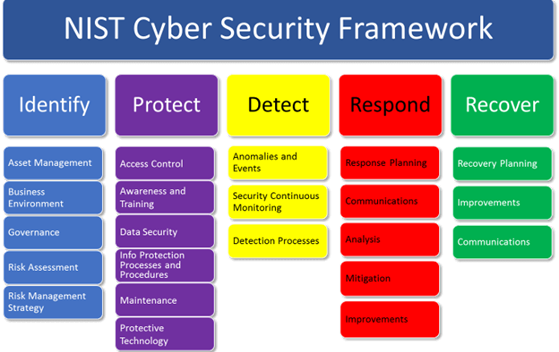


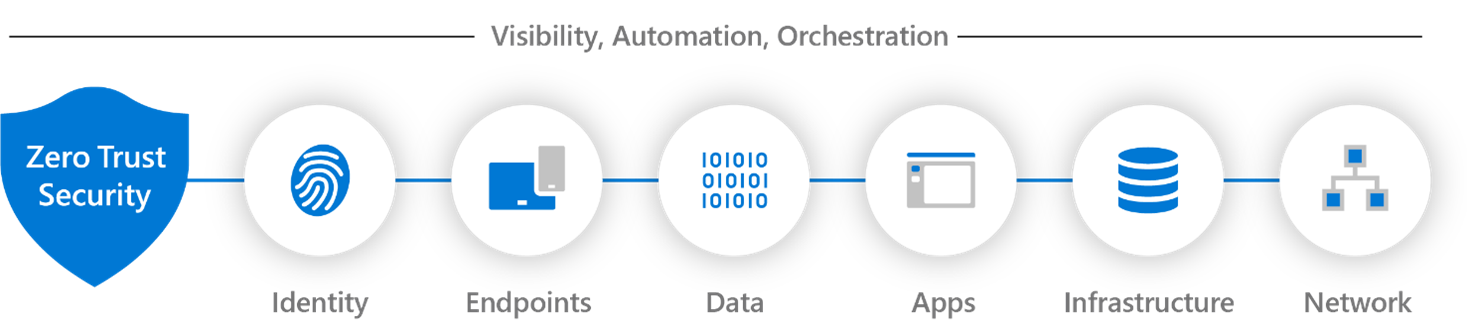

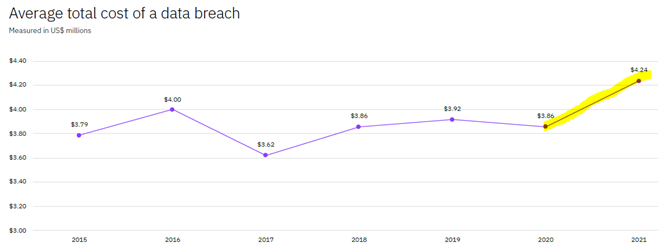
 Abstract Forward Consulting
