Leadership is about enabling the potential in others and getting out of the way so their dreams can enable something bigger. Having people paid to report to you does not mean you are a leader but more likely a manager, which is a very respectable and worthwhile career path but it is not leadership. It is not even close to leadership! When people choose to follow you without money or title, that is leadership. In this context, the title is derived from results and action first. As a leader, you are responsible for incubating synergies to get three out of two. Leadership is about influence, not title. Title is a mostly meaningless word that constantly changes in todays amorphous corporate culture.
Title without great external influence is not title at all. How can you move someone’s cheese when you can’t even move your community. Leadership STARTS at the community level and its nuclear power resides there. Community based leadership has overthrown a lot of ruthless dictators, leading scammers, and corporate bullies. Real leaders understand the value of academic inquiry (formal or informal), history, change, and that these things together are the precursor to innovation. They also understand that innovation is a team thing and they don’t seek to steal the spotlight.
Former H.P. CEO and Presidential candidate Carly Fiorina said it best this way, “leadership is about changing the order of things”. Changing the order of things is dangerous because it has many unknowns and it ruffles the feathers of those presently holding power. If you are truly a leader or aspire to be one, get ready to be attacked multiple times. All TRUE leaders are different and DO NOT FIT IN with most people or the status quo, and they are bullied, harassed and attacked, and that is the life they know. They can lead in times of great stress and controversy while the vast vast majority of people in the world could never even get close, and would break like a generic toothpick at the sign of light criticism.
Carly Fiorina On Management Vs. Leadership – Stanford Univ. 2007.
Although a lot of executives say or believe they are leaders, their actions contradict that. All too often, they can’t handle the criticism that comes with true leadership and they are very often afraid of change, or people with abstract cultural personas. In many parts of their personal lives, they could not even pass the simplest leadership test of helping someone less fortunate than them when nobody else will in a disaster situation. Very often they insulate themselves with simple minded yes-sayers, fire people who question them, and are more often concerned with the superficial status that comes with being wined and dined by vendors that serve their vertical. Types like these are fools masquerading as leaders but there is plenty of them.
The real life of a leader is lonely and some think you’re crazy. The people (mostly fools) who think you’re crazy don’t understand diversity, the evolution of culture, true creativity, and they most likely could never connect the dots to realize any type of noteworthy synergy. Yet they often hype up all kinds of useless nonsense to promote their fallacious status:
1) You can’t argue with me, I am a Director, therefore I am right. Truth: Delusional.
2) I am a VP, therefore, my ideas are innovative. Truth: No one credible declares innovation.
3) I am a 27-year-old director and won’t make time for you because I am in a leader development program. Truth: Leader development programs have next to no track record and teach corporate conformity. A leader development program would not have helped Bill Gates, Martin Luther King Jr., or Mark Zuckerberg.
With great respect for everyone, in my experience, the people making these types of arguments are the biggest fools of all and they are usually one trick ponies – good at one or two things only and for a short period of time. If you fall for them you have been scammed.
Examples of true leaders include Billy Corgan (alternative rock music pioneer), The Wright Brothers (building and flying the first airplane) William Kunstler (landmark civil rights attorney), John McAfee (anti-virus pioneer), and Steve Jobs (computer pioneer). These people were all criticized in their early years and pushed many people away from their inner circle. Although this criticism and isolation may have broken some people it did not break them.
Most often, real leaders don’t fit in with most people and unless they get fame or money they are ostracized. So many in our society are overly focused on fame, media hype, and money. Yet real leaders are not distracted by these immoral fallacies for they have nothing to do with life satisfaction, moral progress, or any type of synergy. Real leaders undeniably inspire movements, better people, processes, and with their vision and advocacy – society, business, and/or technology gets to heights never dreamed possible. Very few people see this at the time, though many are happy to jump on the bandwagon decades after its validated as cool by the masses.
Martin Luther King Jr. was one such leader and he paid the ultimate price but inspired a civil rights revolution that redefined America – William Kunstler defended him. Philosopher and teacher Socrates was unjustly condemned to death for questioning the current status quo of Athenian politics and society and for teaching students to do the same thing for a better world. Today his ideologies and approach have proven to be the foundation for much of Western philosophy and education. His name is associated with the Socratic Method, which means questioning everything. It is the hallmark of how law schools teach students throughout most of the world and it is a methodology that has proven to save the lives of thousands.
Yet some corporate leaders do not like to be questioned by even the most validated intellectuals. Case in point, when credible writer and analyst Bethany Mclean was questioning Enron CEO Jeff Skilling in 2001 about Enron’s public financials, he blew her off and created a smoke screen to cover up large scale fraud. It’s no surprise that Enron is now defunct, Skilling is in prison, and Mclean has been proven as the real leader. Having met her, having read her works, and having correspondence with her, I know she is everything that makes up a great leader. Great leaders have no problem taking questions from validated individuals of all walks and ranks because they have nothing to hide (including insecurities) and they can use the dialogue to advance their innovative mission. In the data-centric democracy of the United States, business and technology fads come and go, and now is about the new – false leadership will be short lived.
Socrates Condemned to Death Speech – 399 B.C.
I will take the person with the best ideas and passionate followers over someone who gloats about how prior titles prove anything. Titles by themselves and even with experience do not prove much at all. In the evolving and constantly changing landscape of technology, titles, for the most part, do not matter. Results, creativity, and inspirational empathetic leadership are what matter – emphasis added!!
If you focus too much on title, the guy or girl with the right idea will run you out of business and you and your whole team with be left with little money and no title. Please think long and hard about this, if you are claiming to be a leader. You don’t want to be like Kodak and fail to see digital cameras are the future, and you don’t want to be the leader who failed to see a data breach. You don’t want to be an overconfident leader who self-declares your morality over subordinate objections but who years and perhaps decades later is deemed as greatly immoral. You don’t want to be that executive whose peers support you only because they are paid to but really don’t respect you, and are not at all inspired by you. This happens a lot and this faulty leadership under good governance will be short lived.
Lastly, to that person who gloats about their V.P., Director, SVP title, or the like, ask them how many people would follow them passionately without money in times of great challenge while others criticize them. Likely, they will be confused, because most leaders are below the surface working to make the world a better place while the above fakers seek status and “yes” cliques. They know nothing about leadership or moral courage. To think that titles are a right-of-passage to leadership is one of the most dangerous fallacies in society to date. It has caused wars to be lost, inspired political violence, caused elections to be lost, technologies to be missed, and it is a solvable irony for a society as advanced and gifted as the human race. What are you doing to be your own best leader for the greater good of others? I assure you it has nothing to do with title.
If you want to talk more about these and related concepts, please contact me here.

 3) A.I. has the potential to close the gap between the lesser developed world and the developed world. The technology behind A.I. is not limited to big companies like IBM or Microsoft for the long term. We may be surprised with tech start-ups out of the lesser developed world who are very creative. Lack of fiber optic cable connectivity has forced many lesser developed nations to rely heavily on cell tower smartphone based internet communications. This has inspired a mobile app growth wave in parts of Africa as described here; “the use of smartphones and tablets within the country has led to a mobile revolution in Nigeria. Essentially, people now tend to seek mobile solutions more often and thus, enhance the growth of the mobile app development industry” (
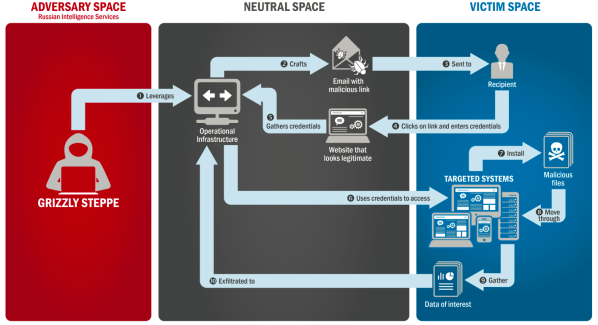
 Interestingly, one of the people expelled, Alisa Shevchenko, was praised a year before by the United States which does not speak well for U.S. intelligence agencies. Specifically, The Department of Homeland Security said “Alisa Shevchenko had helped prevent cyber crime under a program for information sharing between the public and private sector. Ms. Shevchenko was also said to have assisted a French company, Schneider Electric, in identifying vulnerabilities in its software” (Andrew E Kramer,
  Simply put, the market is starting to catch up to Tesla.





 This article reviews the 2014 Sony hack from a strengths and weaknesses standpoint based on select parts of the SysAdmin, Audit, Network and Security (SANS) and National Institute of Standards in Technology (NIST) frameworks. Although an older hack, the lessons learned here are still relevant today.



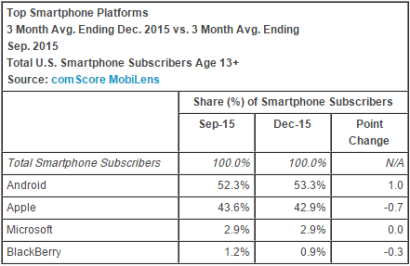 Last time Cassem and I commentated on this situation was August of last year when Microsoft was high on the release of Windows 10, arguably their best operating system in a decade but not without risk. In our last piece we valued many aspects of Microsoft’s products including the Cloud, SharePoint, and Windows 10 for business users, but we only began to address the full story. Yet our prior conclusion that Microsoft as a company is undervalued is unchanged because they have so many successful products including Server, Exchange, Visual Studio, System Center, Dynamics, and SharePoint, in spite of their phones weaknesses.
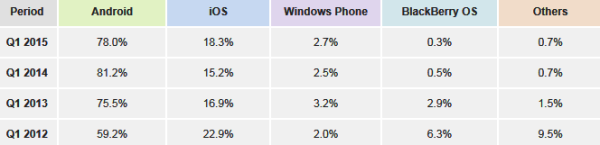
 With 53.3% (Fig. 1.) of the phone OS market share there are a few things that Android got right. The integration of Google Calendar is easy, useful, and free. Conversely, on a Windows phone, the integration of Microsoft Outlook is awkward, overly optimized for a traditional PC, and it’s not free for the full version. As an owner of many Android phones I can see how the many OS updates have proved to make the platform much better with more efficiency and less bugs, especially on the Lollipop release of Android.

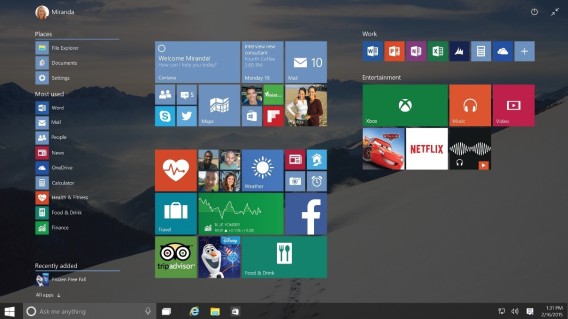 Windows 10 also introduces a function that allows you to utilize multiple desktops not just screen extensions, and this is a lot like Mission Control from Apple OS X. This will be a big benefit for business users, creative users, students, and people who do a lot of multitasking. The hot key shortcut to open a virtual desktop is: Windows key + Ctrl +D. Windows 10 also adds something new for gamers and graphics focused users, direct X12, which is a Microsoft proprietary graphics card decoder that communicates with and optimizes the many different graphics chips on thousands of computer models. It is the industry standard and that is why it’s used on the hugely popular X-Box. Windows 7 and 8.1 will not get access to direct X12 so graphics will be better on Windows 10. A creative person could even game in one desktop while they work in another assuming they have the RAM and CPU power needed for those specific applications – this is pretty cool. Another interesting visual add is the Windows Snap feature which allows you to split your screen into two, three or four separate areas and the hotkey shortcuts for this are:
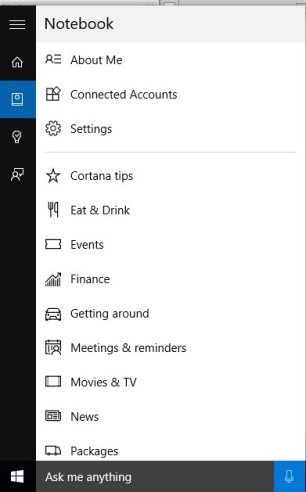 After upgrading to Window’s 10, we weren’t sure if we would use Cortana, but the more we use it the more we like it. In playing around with Cortana, you can provide feedback with screenshots that go right back to the teams at Microsoft. To prepare for the 10 release Microsoft was using an estimated five million external testers known as “insiders” to get this type of bug feedback. This impressive number is a considerable increase from prior releases. Cortana is easy to locate in the bottom left of the screen next to the start menu. We find that if the user types a question in the search bar it will add tips and give you interesting facts each and every day, if you let it. Cortana starts out giving you information on the weather, finance, and sports but you can customize this under notebook settings (Fig. 3). Cortana is very intuitive and can track things for you. If you’re receiving a package, it will tell you the progress or details of that package. Say you’re picking someone up at the airport, Cortana will tell you if the flight is on time.