
🛡️ Cyberattack on St. Paul Disrupts Systems, Triggers National Guard Response: A Wake-Up Call for City Infrastructure and Public-Private Security

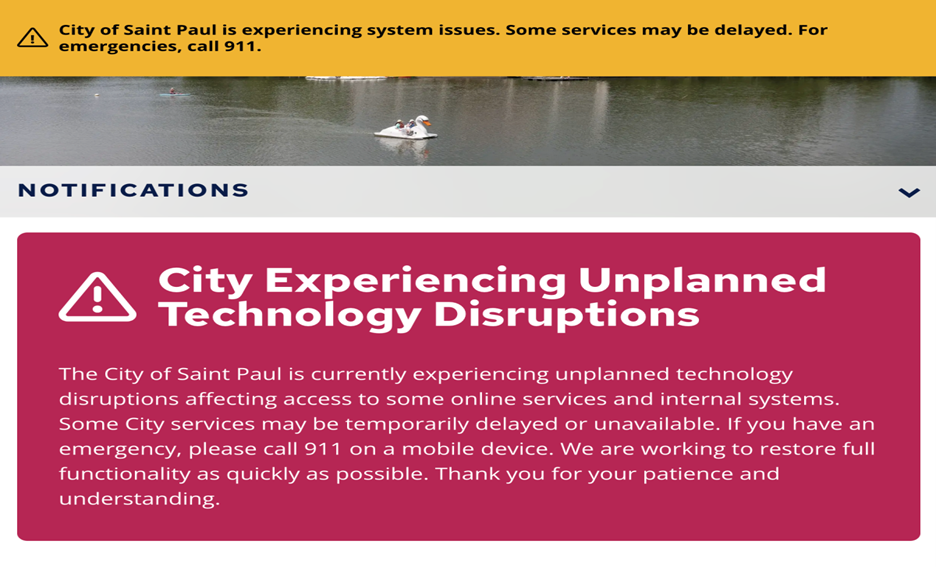
Fig. 1. St. Paul Cyber Attack, St. Paul, 2025.

A major cyberattack brought critical systems across the City of St. Paul to a halt this week, prompting Governor Tim Walz to take the rare step of activating the Minnesota National Guard’s 177th Cyber Protection Team through Executive Order 24-25. The breach, which has yet to be fully disclosed in technical detail, forced the shutdown of municipal networks, libraries, payment systems, and internal applications—raising alarms about the fragility of local government infrastructure in the digital age.

This crisis has not only impacted operations but also exposed deeper vulnerabilities—from disruption of city services to potential legal and evidentiary breakdowns, especially concerning the chain of custody for digital evidence and sensitive case management platforms used by law enforcement and legal teams.

“The cyberattack… has resulted in a disruption of city services and operations, and the city has requested assistance from the State of Minnesota in the form of technical expertise and personnel,” Gov. Walz stated in the executive order. “The incident poses a threat to the delivery of critical government services.” (Walz, 2025)


Legal and Infrastructure Ramifications:

One often overlooked consequence of cyberattacks on public systems is the risk to legal integrity. City governments often store digital evidence for court cases, police body cam footage, and case records within networked systems. When such systems are compromised or taken offline, the chain of custody—a legal requirement for maintaining the integrity of evidence—may be broken. This could lead to dismissed charges, delayed court proceedings, or contested verdicts.

Beyond the courts, St. Paul’s systems underpin essential infrastructure. From 911 backend operations to building permits, utility management, and emergency communications, these disruptions ripple into residents’ lives and civic trust. Any delay in fire dispatch systems, real-time weather alerts, or even payroll processing for emergency responders can escalate into broader crisis.


Why Public-Private Partnerships Are Essential:

The attack illustrates the need for stronger collaboration between public entities and private cybersecurity firms. Municipalities often operate with limited budgets, aging infrastructure, and insufficient security staff. In contrast, private-sector vendors—ranging from cloud security providers to endpoint monitoring specialists—offer scalable defenses and expertise that cities can’t always sustain in-house.

Governor Walz’s executive order underscores this reality, stating:

“Cooperation between the Minnesota Department of Information Technology Services (MNIT), the National Guard, and other partners is necessary to protect public assets and respond to cybersecurity threats.” (Walz, 2025)

This partnership must also extend beyond technical vendors. Insurance carriers, legal risk consultants, and incident response firms should be part of proactive city planning, not just post-breach triage.


The Human Factor: Employee Training Matters:

While technical systems are critical, human error remains the top vector for cyberattacks, especially through phishing and social engineering. A well-crafted phishing email clicked by a single city employee can introduce malware into core systems.

St. Paul’s situation shows how cybersecurity education is no longer optional. Ongoing staff training—including:

  • Simulated phishing attacks
  • Clear escalation protocols
  • “Stop and verify” culture for email attachments and access requests

…is essential. Cities should treat their staff as the first line of defense, not just passive users.


The Road Ahead: What Cities Must Do Now:

The cyberattack on St. Paul should serve as a regional and national inflection point. Other cities must take this as a cue to reassess their cyber posture through the following:

Strategic Priorities:

  1. Zero Trust Implementation Limit internal access and require constant authentication, even for trusted users.
  2. Third-Party Risk Audits Review vendors, contractors, and outsourced services for security gaps.
  3. Resilient Backup and Recovery Ensure data is stored offsite and tested regularly for recovery readiness.
  4. Legal and Digital Forensics Planning Build frameworks for protecting the chain of custody in case of breach.
  5. Integrated Public-Private Playbooks Define shared roles between city staff, Guard units, and private partners in cyber response drills.
  6. Community Transparency Proactively inform the public about risks, responses, and what’s being done to rebuild digital trust.

Final Thoughts:

The breach in St. Paul is not just a local IT issue—it is a civic security event that affects courts, emergency services, legal integrity, and public confidence. Governor Walz’s activation of the National Guard is a bold signal that digital defense is now a matter of public safety.

“Immediate action is necessary to provide technical support and ensure continuity of operations,” reads Executive Order 24-25 (Walz, 2025).

Moving forward, public-private partnerships, cybersecurity training, and legal readiness must become foundational to how cities govern in the digital era. The stakes are no longer theoretical—they are real, operational, and deeply human.


References:

  1. FOX 9. (2025, July 29). Gov. Walz activates National Guard after cyberattack on city of St. Paul. https://www.fox9.com/news/gov-walz-activates-national-guard-after-cyberattack-st-paul
  2. KSTP. (2025, July 29). City of St. Paul experiencing unplanned technology disruptions. https://kstp.com/kstp-news/top-news/city-of-st-paul-experiencing-unplanned-technology-disruptions/
  3. League of Minnesota Cities. (2024, October). Cybersecurity Incident Reporting Requirements for Cities. https://www.lmc.org/news-publications/news/all/fonl-cybersecurity-incident-reporting-requirements/
  4. Reddit. (2025, July 29). Minnesota National Guard activated after city cyberattack [Discussion threads]. https://www.reddit.com/r/minnesota
  5. Walz, T. (2025, July 29). Executive Order 24-25: Activating the Minnesota National Guard Cyber Protection Team. Office of the Governor, State of Minnesota. https://mn.gov/governor/assets/EO-24-25_tcm1055-621842.pdf

About the Author:

Jeremy Swenson is a disruptive-thinking security entrepreneur, futurist/researcher, and senior management tech risk consultant. Over 17 years, he has held progressive roles at many banks, insurance companies, retailers, healthcare organizations, and even government entities. Organizations appreciate his talent for bridging gaps, uncovering hidden risk management solutions, and simultaneously enhancing processes. He is a frequent speaker, podcaster, and a published writer – CISA Magazine and the ISSA Journal, among others. He holds a certificate in Media Technology from Oxford University’s Media Policy Summer Institute, an MBA from Saint Mary’s University of MN, an MSST (Master of Science in Security Technologies) degree from the University of Minnesota, and a BA in political science from the University of Wisconsin Eau Claire. He is an alum of the Cyber Security Summit Think Tank , the Federal Reserve Secure Payment Task Force, the Crystal, Robbinsdale and New Hope Citizens Police Academy, and the Minneapolis FBI Citizens Academy. He also has certifications from Intel and the Department of Homeland Security.

The 9/11 Terrorist Attacks: Lessons Learned for Security and Investigation

On September 11, 2001, the United States faced one of its darkest days. Today, we remember the lives lost and the lessons learned. Nineteen terrorists, linked to the extremist group al-Qaeda, executed a coordinated series of attacks on American soil. Four commercial airplanes were hijacked: two were flown into the Twin Towers of the World Trade Center in New York City, one crashed into the Pentagon in Washington, D.C., and the fourth, United Airlines Flight 93, was downed in a field in Pennsylvania after passengers fought the hijackers.[1]

The tragic events unfolded over the span of just a few hours, forever changing the course of U.S. history. Nearly 3,000 people lost their lives, including civilians, first responders, and passengers on the hijacked planes. The attack had devastating human and emotional costs, along with far-reaching economic and geopolitical consequences. Today, a memorial stands at Ground Zero in New York City, honoring the victims and reminding future generations of the impact of terrorism.

Timeline of the Attack:

  • 8:46 AM: American Airlines Flight 11 crashes into the North Tower of the World Trade Center.
  • 9:03 AM: United Airlines Flight 175 crashes into the South Tower.
  • 9:37 AM: American Airlines Flight 77 crashes into the Pentagon.
  • 9:59 AM: The South Tower collapses.
  • 10:03 AM: United Airlines Flight 93 crashes in Pennsylvania.
  • 10:28 AM: The North Tower collapses.

The 9/11 Commission Report:[2]

The aftermath of 9/11 spurred a comprehensive investigation into how the attacks occurred and what failures enabled them. The 9/11 Commission Report, released in 2004, outlined critical lessons and provided recommendations to prevent future attacks. It focused on three key areas: the importance of collaboration, the need for enhanced information sharing, and the role of private sector innovation in improving national security.

1. The Power of Collaboration

Before 9/11, U.S. intelligence and law enforcement agencies operated in silos. The FBI, CIA, and other entities each managed their own investigations without significant interagency coordination. This fragmented approach hindered their ability to piece together warning signs that, in hindsight, could have potentially foiled the attacks. One of the most important lessons learned was the need for stronger collaboration across all government agencies.

Post-9/11, the creation of the Department of Homeland Security (DHS) and the Director of National Intelligence (DNI) was designed to foster better collaboration. DHS now coordinates efforts across different agencies, while the DNI serves as the head of the U.S. Intelligence Community, overseeing the work of multiple intelligence organizations. This structure has strengthened unity across federal and local government institutions.

2. Information Sharing as a Security Best Practice

Prior to the attacks, there was a critical failure in sharing information. Multiple agencies had pieces of intelligence about suspicious activities by some of the hijackers, but these data points weren’t shared in time to create a clear threat picture.

The 9/11 Commission Report emphasized the need for robust information sharing among agencies. The report also led to the creation of fusion centers where federal, state, and local agencies can share intelligence in real time. This collaborative approach has drastically improved the ability to detect and respond to potential threats, highlighting the importance of breaking down institutional silos and fostering a culture of openness among government bodies.

The USA PATRIOT Act, enacted shortly after 9/11, further addressed this issue by expanding the sharing of information between law enforcement and intelligence agencies, though it has also sparked ongoing debates about privacy and civil liberties. Yet it was abused in some cases, resulting in the overreach of phone and internet data surveillance by the NSA, which was rolled back during the Obama administration after Edward Snowed leaked these abuses.

3. Private Sector Innovation in Security

The private sector plays a crucial role in national security, particularly in areas such as cybersecurity, surveillance technologies, and aviation security. The 9/11 Commission Report acknowledged that the private sector has the ability to innovate quickly and provide cutting-edge solutions to address security threats. In response to 9/11, the Transportation Security Administration (TSA) was created to oversee airport security, with significant input from private companies on how to better screen passengers and cargo.

In the years following the attacks, advancements in biometric technology, data encryption, and surveillance systems have all stemmed from public-private partnerships. Companies have also played a role in developing cybersecurity frameworks to protect critical infrastructure from potential digital attacks, reflecting the growing interdependence between national security and technological innovation.

Memorial and Remembrance:

The legacy of 9/11 continues through memorials and acts of remembrance. The National September 11 Memorial & Museum was built at Ground Zero, featuring two large reflecting pools where the Twin Towers once stood, with the names of the victims inscribed in bronze. It serves as a place for reflection and remembrance, while the museum educates visitors on the events of that day and the lives lost.

Conclusion:

The 9/11 terrorist attacks were a defining moment in modern history. They highlighted vulnerabilities in U.S. national security, but the response led to transformative changes in how the nation collaborates, shares information, and innovates to protect itself. The lessons learned from the 9/11 Commission Report continue to shape security and investigation best practices, with collaboration, information sharing, and private sector innovation standing at the core of these efforts. These changes honor the memory of the lives lost and aim to prevent such a tragedy from ever happening again. The private sector is critical to all of this.

About the Author:

Jeremy A. Swenson is a disruptive-thinking security entrepreneur, futurist/researcher, and seasoned senior management tech risk and digital strategy consultant. He is a frequent speaker, published writer, podcaster, and even does some pro bono consulting in these areas. He holds a certificate in Media Technology from Oxford University’s Media Policy Summer Institute, an MSST (Master of Science in Security Technologies) degree from the University of Minnesota’s Technological Leadership Institute, an MBA from Saint Mary’s University of Minnesota, and a BA in political science from the University of Wisconsin Eau Claire. He is an alum of the Federal Reserve Secure Payment Task Force, the Crystal, Robbinsdale, and New Hope Community Police Academy (MN), and the Minneapolis FBI Citizens Academy. You can follow him on LinkedIn and Twitter.

References:


[1] U.S. Gov’t.” The 9/11 Commission Report: Final Report of the National Commission on Terrorist Attacks Upon the United States (9/11 Report)”. 2004.

[2] U.S. Gov’t.” The 9/11 Commission Report: Final Report of the National Commission on Terrorist Attacks Upon the United States (9/11 Report)”. 2004.