
A Quarter Century Later: Minnesota, September 11, and the Unfinished Work of Keeping Faith With Liberty

Twenty-five years have now passed since nearly three thousand people were killed in a single morning of coordinated attacks on the World Trade Center, the Pentagon, and a field outside Shanksville, Pennsylvania.[1] A quarter century is long enough that the day has moved from lived memory into something closer to inherited history for a large share of the country, making the discipline of remembering more important, not less. Marking this anniversary well means doing more than reciting the toll of the dead. It means being honest about what the country got right in response, what it got wrong, and what still has to be relearned before the next crisis tests whether those lessons have taken hold.

Fig. 1. 9/11: 25 Years Later Title Infographic, stock, rights free, 2026.

Minnesota holds an outsized, if underappreciated, place in that story. In August 2001, staff at a flight school in Eagan reported a foreign national named Zacarias Moussaoui who had paid cash to train on a 747 simulator and showed no interest in learning to take off or land.[2] Agents out of the FBI’s Minneapolis field office arrested him on a visa violation within days and grew convinced he was tied to a larger plot, but their repeated requests to search his laptop and belongings were slow-walked and ultimately blocked by superiors at FBI headquarters.[3] Minneapolis chief division counsel Coleen Rowley later laid out that breakdown in a detailed memo to Director Robert Mueller, arguing that headquarters’ caution, not any shortage of raw intelligence, had closed off a real chance to catch part of the plot before it happened.[4]

That episode did not end with the memo. Minnesota’s National Guard units deployed repeatedly to Afghanistan and Iraq over the two decades that followed, a burden carried disproportionately by families in Brainerd, Rochester, and the Twin Cities suburbs rather than in Washington.[5] Closer to home, Minneapolis–St. Paul International Airport served as one of the initial testing grounds for a comprehensive redesign of communication among domestic security agencies. This approach adopted the fusion-center model that expanded nationwide from the breakdown at the Minneapolis headquarters that Rowley had described.

Nowhere did daily American life change more visibly than at the airport gate, and that change has a specific legislative birthday. On November 19, 2001, just seventy days after the attacks, Congress passed and President Bush signed the Aviation and Transportation Security Act, creating the Transportation Security Administration (TSA) and federalizing a screening job that had previously been handled by low-bid private contractors working for the airlines.[6] Before that law, passengers could walk a companion straight to the gate, carry a four-inch blade on board without a second look, and clear a checkpoint without removing a single shoe or belt.[7] Within two years, TSA itself had been folded into the newly formed Department of Homeland Security (DHS), consolidating aviation, border, and disaster response functions that had previously sat in more than twenty different agencies.[8] The TSA remains one of the most visible daily reminders of September 11 a quarter century on—for better and for worse, since the same federal apparatus that closed a real vulnerability has also become a byword for security theater whenever its procedures seem to trade convenience for the appearance of safety rather than the substance of it.

The less visible but arguably more consequential shift happened not at the airport but in the nation’s surveillance law. Six weeks after the attacks, a Congress under enormous public pressure passed the USA PATRIOT Act with almost no debate, expanding the government’s ability to obtain Americans’ phone, banking, and internet records through National Security Letters that required no judge’s sign-off and came with a lifelong gag order attached.[9] The same law loosened the wall between criminal investigations and foreign intelligence gathering, letting agencies obtain wiretap-style authority under the more permissive Foreign Intelligence Surveillance Act standard so long as intelligence collection was merely a significant, rather than the primary, purpose of the request.[10] Defenders argued these were narrow, sunset-limited tools needed to close exactly the kind of interagency blind spot that had let the Minneapolis warning go unheeded; critics countered that the country had traded a specific counterterrorism failure for a permanent expansion of surveillance power over ordinary citizens who were never suspected of anything. Both things can be true at once, and the country is still litigating the balance: as recently as this year, members of Congress have introduced fresh legislation aimed at reining in the surveillance authorities that trace directly back to that October 2001 law.[11]

Strip away the specific policies, and two lessons sit underneath all of it. The first is that the September 11 failure was fundamentally a failure to move information from the people who had it to the people who could act on it—the Moussaoui case in miniature.[12] Every structural reform that followed, from the creation of a Director of National Intelligence to the fusion centers built in states like Minnesota, was an attempt to fix that plumbing problem, and every one of today’s harder threats, whether foreign-directed terrorism, homegrown radicalization, or an attack on a power grid or water system, depends on that same plumbing working under pressure.

The second lesson is about restraint, and it cuts the other way. A security state built in a hurry, under maximum fear, with minimal oversight, tends to overcorrect—which is exactly what Coleen Rowley herself argued a decade later, when the whistleblower who had warned that the FBI acted too cautiously in 2001 became a public critic of a surveillance apparatus she believed had grown too unaccountable by 2013.[13] A country that measures its national security only by the threats it stops, and never by how honestly its own tools can be questioned, ends up building exactly the kind of institutional blind spot that failed Minneapolis’s field agents in the first place, just pointed in a different direction.

None of this is only a job for Congress or the intelligence community. Citizens have a real, if modest, role to play in closing the gap between vigilance and overreach, and it does not require choosing between safety and freedom. It means treating routine civic habits—reporting genuinely suspicious activity through official channels rather than staying silent or, at the other extreme, profiling neighbors based on appearance—as a serious responsibility rather than a slogan.[14] It means showing up to the parts of government that quietly decide how much power agencies get and for how long: city councils setting local police surveillance policy, state legislatures reauthorizing fusion-center funding, and the congressional committees that periodically vote on whether to renew or rein in FISA and Patriot Act-descended authorities, rather than assuming those fights are settled once and for all. It means supporting the inspectors general, journalists, and whistleblowers, in the tradition of Coleen Rowley, who make institutional failure visible in the first place, since neither a missed warning nor an unaccountable surveillance program stays fixed once the public stops paying attention.[15] And it means resisting the impulse, twenty-five years on, to treat this as settled history: the same balance between watchfulness and liberty that Minnesota’s field agents and, later, its own whistleblower were fighting over in 2001 is still being negotiated today, and it will be negotiated again the next time fear makes speed feel more urgent than accuracy. Getting that balance right, deliberately and in public view, is the clearest way to honor what was lost a quarter century ago.

Endnotes


[1] National Commission on Terrorist Attacks Upon the United States, The 9/11 Commission Report (Washington, DC: U.S. Government Printing Office, 2004), 311–15.

[2] U.S. Department of Justice, Office of the Inspector General, A Review of the FBI’s Handling of Intelligence Information Related to the September 11 Attacks (Washington, DC: DOJ OIG, 2004), chap. 4.

[3] Coleen Rowley, memorandum to FBI Director Robert Mueller, May 21, 2002, reproduced in Time, June 3, 2002.

[4] Elaine Shannon and Michael Weisskopf, “How the FBI Blew the Case,” Time, May 27, 2002.

[5] Minnesota National Guard, “History of Minnesota National Guard Deployments Since 2001,” accessed September 2026, https://minnesotanationalguard.ng.mil.

[6] Aviation and Transportation Security Act of 2001, Public Law 107–71, 115 Stat. 597 (November 19, 2001); Transportation Security Administration, “TSA History,” accessed September 2026, https://www.tsa.gov/history.

[7] Transportation Security Administration, “This Day in TSA History: November 19, 2001,” accessed September 2026, https://www.tsa.gov/about/employee-stories/day-tsa-history-november-19-2001.

[8] U.S. Government Accountability Office, Aviation Security: Progress Since September 11, 2001, and the Challenges Ahead, GAO-03-1150T (Washington, DC: GAO, 2003), 1–2.

[9] American Civil Liberties Union, “Surveillance Under the Patriot Act,” accessed September 2026, https://www.aclu.org/surveillance-under-the-patriot-act.

[10] Electronic Privacy Information Center, “PATRIOT Act,” accessed September 2026, https://epic.org/issues/surveillance-oversight/patriot-act/.

[11] Government Surveillance Reform Act of 2026, S. 4082, 119th Cong. (2026), https://www.congress.gov/bill/119th-congress/senate-bill/4082/text.

[12] National Commission on Terrorist Attacks Upon the United States, The 9/11 Commission Report, 399–428.

[13] Coleen Rowley, “Open Letter on Civil Liberties and Security,” published remarks, 2013.

[14] U.S. Department of Homeland Security, “See Something, Say Something,” accessed September 2026, https://www.dhs.gov/see-something-say-something.

[15] National Whistleblower Center, “Coleen Rowley,” accessed September 2026, https://www.whistleblowers.org/members/coleen-rowley/.
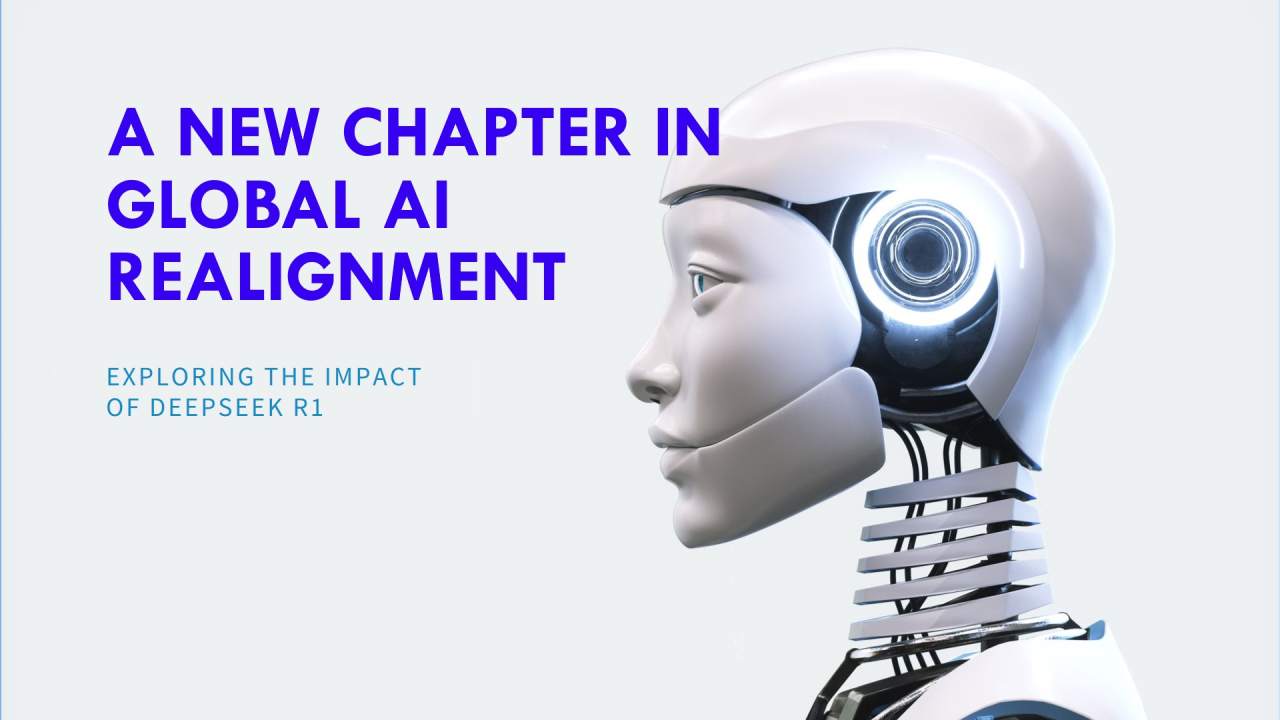
DeepSeek R1: A New Chapter in Global AI Realignment

Fig. 1. DeepSeek and Global AI Change Infographic, Jeremy Swenson, 2025.

Minneapolis—

DeepSeek, the Chinese artificial intelligence company founded by Liang Wenfeng and backed by High-Flyer, has continued to redefine the AI landscape since the explosive launch of its R1 model in late January 2025. Emerging from a background in quantitative trading and rapidly evolving into a pioneer in open-source LLMs, DeepSeek now stands as a formidable competitor to established systems like OpenAI’s ChatGPT and Microsoft’s proprietary models available on Azure AI. This article provides an expanded analysis of DeepSeek R1’s technical innovations, detailed comparisons with ChatGPT and Microsoft Azure AI offerings, and the broader economic, cybersecurity, and geopolitical implications of its emergence.


Technical Innovations and Architectural Advances:

Novel Training Methodologies DeepSeek R1 leverages a cutting-edge combination of pure reinforcement learning and chain-of-thought prompting to achieve human-like reasoning in tasks such as advanced mathematics and code generation. Unlike traditional LLMs that rely heavily on supervised fine-tuning, DeepSeek’s R1 is engineered to autonomously refine its reasoning steps, resulting in greater clarity and efficiency. In early benchmarking tests, R1 demonstrated the ability to solve multi-step arithmetic problems in approximately three minutes—substantially faster than ChatGPT’s o1 model, which typically required five minutes (Sayegh, 2025).

Cloud Integration and Open-Source Deployment One of R1’s key strengths lies in its open-source availability under an MIT license, a stark contrast to the closed ecosystems of its Western counterparts. Major cloud platforms have rapidly integrated R1: Amazon has deployed it via the Bedrock Marketplace and SageMaker, and Microsoft has incorporated it into its Azure AI Foundry and GitHub model catalog. This wide accessibility not only allows for extensive external scrutiny and customization but also enables enterprises to deploy the model locally, ensuring that sensitive data remains under domestic control (Yun, 2025; Sharma, 2025).


Detailed Comparison with ChatGPT:

Performance and Reasoning Clarity ChatGPT’s o1 model has been widely recognized for its robust reasoning capabilities; however, its closed-source nature limits transparency. In direct comparisons, DeepSeek R1 has shown parity—and in some cases superiority—with respect to reasoning clarity. Independent tests by developers indicate that R1’s intermediate reasoning steps are more comprehensible, facilitating easier debugging and iterative query refinement. For example, in complex multi-step problem-solving scenarios, R1 not only delivered correct solutions more rapidly but also provided detailed, human-like explanations of its thought process (Sayegh, 2025).

Cost Efficiency and Accessibility While premium access to ChatGPT’s capabilities can cost users upwards of $200 per month, DeepSeek R1 offers its advanced functionalities free of charge. This dramatic reduction in cost is achieved through efficient use of computational resources. DeepSeek reportedly trained R1 using only 2,048 Nvidia H800 GPUs at an estimated cost of $5.6 million—an expenditure that is a fraction of the resources typically required by U.S. competitors (Waters, 2025). Such cost efficiency democratizes access to high-performance AI, providing significant advantages for startups, academic institutions, and small businesses.


Detailed Comparison with Microsoft Azure AI:

Integration with Enterprise Platforms Microsoft has long been a leader in providing enterprise-grade AI solutions via Azure AI. Recently, Microsoft integrated DeepSeek R1 into its Azure AI Foundry, offering customers an additional open-source option that complements its proprietary models. This integration allows organizations to leverage R1’s powerful reasoning capabilities while enjoying the benefits of Azure’s robust security, compliance, and scalability. Unlike some closed-source models that require extensive licensing fees, R1’s open-access nature under Azure enables organizations to tailor the model to their specific needs, maintaining data sovereignty and reducing operational costs (Sharma, 2025).

Performance in Real-World Applications In practical applications, users on Azure have reported that DeepSeek R1 not only matches but sometimes exceeds the performance of traditional models in complex reasoning and mathematical problem-solving tasks. By deploying R1 locally via Azure, enterprises can ensure that sensitive computations are performed in-house, thereby addressing critical data privacy concerns. This localized approach is particularly valuable in regulated industries, where strict data governance is paramount (FT, 2025).


Market Reactions and Economic Implications:

Immediate Market Response and Stock Volatility The initial launch of DeepSeek R1 triggered a significant market reaction, most notably an 18% plunge in Nvidia’s stock as investors reassessed the cost structures underlying AI development. The disruption led to a combined market value wipeout of nearly $1 trillion across tech stocks, reflecting widespread concern over the implications of achieving top-tier AI performance with significantly lower computational expenditure (Waters, 2025).

Long-Term Investment Perspectives Despite the short-term volatility, many analysts view the current market corrections as a temporary disruption and a potential buying opportunity. The cost-efficient and open-source nature of R1 is expected to drive broader adoption of advanced AI technologies across various industries, ultimately spurring innovation and generating new revenue streams. Major U.S. technology firms, in response, are accelerating initiatives like the Stargate Project to bolster domestic AI infrastructure and maintain global competitiveness (FT, 2025).


Cybersecurity, Data Privacy, and Regulatory Reactions:

Governmental Bans and Regulatory Scrutiny DeepSeek’s practice of storing user data on servers in China and its adherence to local censorship policies have raised significant cybersecurity and privacy concerns. In response, U.S. lawmakers have proposed bipartisan legislation to ban DeepSeek’s software on government devices. Similar regulatory actions have been taken in Australia, South Korea, and Canada, reflecting a global trend of caution toward technologies with potential national security risks (Scroxton, 2025).

Security Vulnerabilities and Red-Teaming Results Independent cybersecurity tests have revealed that R1 is more prone to generating insecure code and harmful outputs compared to some Western models. These findings have prompted calls for more rigorous red-teaming and continuous monitoring to ensure that the model can be safely deployed at scale. The vulnerabilities underscore the necessity for both DeepSeek and its adopters to implement robust safety protocols to mitigate potential misuse (Agarwal, 2025).


Geopolitical and Strategic Implications:

Challenging U.S. AI Dominance DeepSeek R1’s emergence is a clear signal that high-performance AI can be developed without the massive resource investments traditionally associated with U.S. models. This development challenges the long-standing assumption of American technological supremacy and has prompted a strategic reevaluation among U.S. policymakers and industry leaders. In response, initiatives such as Microsoft’s Stargate Project are being accelerated to ensure that the U.S. maintains its competitive edge in the global AI arena (Karaian & Rennison, 2025).

Localized AI Ecosystems and Data Sovereignty To mitigate cybersecurity risks, several U.S. companies are now repackaging R1 for localized deployment. By ensuring that sensitive data remains on domestic servers, these firms are not only addressing privacy concerns but also paving the way for the creation of robust, localized AI ecosystems. This trend could ultimately reshape global data governance practices and alter the balance of technological power between the U.S. and China (von Werra, 2025).


Conclusion and Future Outlook:

DeepSeek R1 represents a watershed moment in the global AI race. Its technical innovations, cost efficiency, and open-source approach challenge entrenched assumptions about the necessity of massive compute power and proprietary control. In direct comparisons with systems like ChatGPT’s o1 and Microsoft’s Azure AI offerings, R1 demonstrates superior transparency and operational speed, while also offering unprecedented accessibility. Despite ongoing cybersecurity and regulatory challenges, the disruptive impact of R1 is catalyzing a broader realignment in AI development strategies. As both U.S. and Chinese technology ecosystems adapt to these shifts, the future of AI appears poised for a more democratized, competitively diverse, and strategically complex evolution.


About The Author:

Jeremy A. Swenson is a disruptive-thinking security entrepreneur, futurist/researcher, and seasoned senior management tech risk and digital strategy consultant. He is a frequent speaker, published writer, podcaster, and even does some pro bono consulting in these areas. He holds a certificate in Media Technology from Oxford University’s Media Policy Summer Institute, an MSST (Master of Science in Security Technologies) degree from the University of Minnesota’s Technological Leadership Institute, an MBA from Saint Mary’s University of Minnesota, and a BA in political science from the University of Wisconsin Eau Claire. He is an alum of the Federal Reserve Secure Payment Task Force, the Crystal, Robbinsdale, and New Hope Community Police Academy (MN), and the Minneapolis FBI Citizens Academy. You can follow him on LinkedIn and Twitter.


References:

  1. Yun, C. (2025, January 30). DeepSeek-R1 models now available on AWS. Amazon Web Services Blog. Retrieved February 8, 2025, from https://aws.amazon.com/blogs/aws/deepseek-r1-models-now-available-on-aws/
  2. Sharma, A. (2025, January 29). DeepSeek R1 is now available on Azure AI Foundry and GitHub. Microsoft Azure Blog. Retrieved February 8, 2025, from https://azure.microsoft.com/en-us/blog/deepseek-r1-is-now-available-on-azure-ai-foundry-and-github/
  3. Waters, J. K. (2025, January 28). Nvidia plunges 18% and tech stocks slide as China’s DeepSeek spooks investors. Business Insider Markets. Retrieved February 8, 2025, from https://markets.businessinsider.com/news/stocks/nvidia-tech-stocks-deepseek-ai-race-nasdaq-2025-1
  4. Scroxton, A. (2025, February 7). US lawmakers move to ban DeepSeek AI tool. ComputerWeekly. Retrieved February 8, 2025, from https://www.computerweekly.com/news/366619153/US-lawmakers-move-to-ban-DeepSeek-AI-tool
  5. FT. (2025, January 28). The global AI race: Is China catching up to the US? Financial Times. Retrieved February 8, 2025, from https://www.ft.com/content/0e8d6f24-6d45-4de0-b209-8f2130341bae
  6. Agarwal, S. (2025, January 31). DeepSeek-R1 AI Model 11x more likely to generate harmful content, security research finds. Globe Newswire. Retrieved February 8, 2025, from https://www.globenewswire.com/news-release/2025/01/31/3018811/0/en/DeepSeek-R1-AI-Model-11x-More-Likely-to-Generate-Harmful-Content-Security-Research-Finds.html
  7. Karaian, J., & Rennison, J. (2025, January 28). The day DeepSeek turned tech and Wall Street upside down. The Wall Street Journal. Retrieved February 8, 2025, from https://www.wsj.com/finance/stocks/the-day-deepseek-turned-tech-and-wall-street-upside-down-f2a70b69
  8. von Werra, L. (2025, January 31). The race to reproduce DeepSeek’s market-breaking AI has begun. Business Insider. Retrieved February 8, 2025, from https://www.businessinsider.com/deepseek-r1-open-source-replicate-ai-west-china-hugging-face-2025-1
  9. Sayegh, E. (2025, January 27). DeepSeek is bad for Silicon Valley. But it might be great for you. Vox. Retrieved February 8, 2025, from https://www.vox.com/technology/397330/deepseek-openai-chatgpt-gemini-nvidia-china

Mastercard’s Strategic Cyber, AI, and Blockchain Acquisitions: RiskRecon, CipherTrace, and Recorded Future

Fig. 1. Master Buys Recorded Future Infographic.[1]

Minneapolis—

Mastercard has long been a leader in the payments industry, known for its global network and cutting-edge financial solutions. However, in recent years, Mastercard has expanded its focus beyond traditional payments to include a broader suite of digital security, risk management, and compliance services. This shift is evident in its key acquisitions of RiskRecon, CipherTrace, and Recorded Future, each of which bolsters the company’s position in the fintech and cybersecurity ecosystems. By integrating AI, advanced analytics, blockchain, and enhanced compliance capabilities, Mastercard has emerged as a more competitive and savvy player in today’s rapidly evolving cyber and fintech landscapes.

1. RiskRecon (Acquired in December 2019):[2]

RiskRecon is a cybersecurity firm that specializes in third-party risk assessment. The company uses AI-driven analytics to help businesses understand and manage their cybersecurity exposure by continuously monitoring the cyber risk of vendors and partners.

Acquisition Details:

  • Date: December 2019
  • Cost: Undisclosed, but estimates place it around $150-200 million.
  • Company Size: A relatively small firm but highly influential in cybersecurity monitoring.

Strategic Value:

RiskRecon’s technology allows Mastercard to offer enhanced cyber risk management services to its business customers. The acquisition integrates AI-driven analytics to assess security risk levels, providing organizations with continuous monitoring of third-party systems, enabling early detection of vulnerabilities, and helping to avoid costly breaches.

For Mastercard, integrating RiskRecon offers:

  • Enhanced cybersecurity: Real-time risk assessments ensure the security of financial transactions.
  • Improved compliance: RiskRecon’s platform ensures businesses adhere to international regulations and frameworks for data security.
  • Fraud avoidance: By continuously scanning systems for vulnerabilities, Mastercard helps its customers avoid fraud or breaches stemming from third-party risks.

2. CipherTrace (Acquired in September 2021):[3]

CipherTrace is a blockchain analytics firm that helps organizations monitor and secure cryptocurrency transactions. Given the growing adoption of digital assets, CipherTrace provides tools for detecting fraud, tracing illicit transactions, and ensuring compliance with anti-money laundering (AML) regulations.

Acquisition Details:

  • Date: September 2021
  • Cost: Estimated at $250 million.
  • Company Size: Medium-sized firm with a specific focus on cryptocurrency compliance and fraud detection.

Strategic Value:

The acquisition of CipherTrace positions Mastercard as a key player in the emerging blockchain space. By integrating CipherTrace’s tools, Mastercard is equipped to:

  • Secure cryptocurrency transactions: Provide greater transparency in blockchain activities, reducing the risks of fraud, money laundering, and other illicit activities.
  • Enhance anti-money laundering (AML) compliance: CipherTrace’s tools help organizations comply with strict AML regulations, a significant concern with cryptocurrency.
  • Support blockchain adoption: As cryptocurrency becomes more mainstream, Mastercard ensures its networks are prepared to support digital asset transactions securely.

This acquisition directly ties into Mastercard’s strategy of offering fraud avoidance and enhanced compliance in the evolving digital economy. As blockchain technology continues to mature, Mastercard is well-positioned to support safe and compliant transactions in the cryptocurrency space.

3. Recorded Future (Acquired in September 2024):[4]

Recorded Future is an intelligence company specializing in real-time threat intelligence. By using machine learning and AI, Recorded Future aggregates and analyzes data to provide businesses with insights into potential cyber threats before they can cause damage. They currently have more than 1,900 clients, which span 75 countries, according to Mastercard. Those customers include 45 national governments as well as more than half of the companies in the Fortune 100, the payments firm said.

Acquisition Details:

  • Date: September 2024
  • Cost: Approximately $2.65 billion. Yet Mastercard was one of the key investors via an equity stake acquired through Insight Partners in 2021.
  • Company Size: Large, globally recognized threat intelligence company.

Strategic Value:

Recorded Future’s AI-driven threat intelligence adds another layer of security to Mastercard’s offerings:

  • Proactive cybersecurity: Recorded Future’s data and analytics can identify emerging threats before they impact Mastercard’s networks or those of its partners.
  • Advanced analytics and AI: Mastercard gains access to an enormous database of threat indicators, allowing the company to leverage AI to detect patterns and anticipate future threats.
  • Fraud prevention: Real-time threat intelligence makes it easier to stop fraud before it happens, protecting customers from financial loss.

By incorporating Recorded Future’s threat intelligence capabilities, Mastercard is enhancing its ability to prevent cyberattacks and protect the integrity of its global payments infrastructure.

Comparing Mastercard to Visa and American Express:

Mastercard’s acquisitions of RiskRecon, CipherTrace, and Recorded Future have significantly differentiated it from competitors like Visa and American Express.

  • Visa has also invested heavily in cybersecurity and compliance but lacks the comprehensive focus on third-party risk management (RiskRecon) and blockchain analytics (CipherTrace) that Mastercard now possesses. While Visa has ventured into cryptocurrency through partnerships and blockchain experimentation, it hasn’t yet integrated a firm like CipherTrace, which is critical for cryptocurrency compliance and fraud detection.
  • American Express, while focused on fraud prevention and customer experience, hasn’t made as aggressive a push into the cybersecurity and blockchain spaces as Mastercard. Amex remains a leader in traditional fraud detection and financial services but lacks the AI-driven intelligence and blockchain transparency that Mastercard has through Recorded Future and CipherTrace.

Mastercard’s comprehensive approach, combining cybersecurity (RiskRecon and Recorded Future), blockchain analytics (CipherTrace), and AI-enhanced threat intelligence, puts it ahead of both Visa and American Express in terms of securing digital transactions and ensuring regulatory compliance.

ConclusionA Well-Rounded Competitive Advantage:

In today’s fintech landscape, the convergence of cybersecurity, compliance, AI, and blockchain is crucial for payment processors to remain competitive. Mastercard’s strategic acquisitions of RiskRecon, CipherTrace, and Recorded Future provide a holistic solution to the growing challenges of cyber threats, cryptocurrency fraud, and AML compliance. These moves not only strengthen Mastercard’s existing payment network but also position the company as a leader in digital security.

By diversifying its portfolio and incorporating advanced technologies, Mastercard has gained an edge over competitors like Visa and American Express, especially in the areas of fraud avoidance, enhanced compliance, and cryptocurrency security. This forward-thinking approach ensures that Mastercard remains at the forefront of the financial industry, well-prepared for the future of digital payments and the ongoing battle against cybercrime.

About the Author:

Jeremy A. Swenson is a disruptive-thinking security entrepreneur, futurist/researcher, and seasoned senior management tech risk and digital strategy consultant. He is a frequent speaker, published writer, podcaster, and even does some pro bono consulting in these areas. He holds a certificate in Media Technology from Oxford University’s Media Policy Summer Institute, an MSST (Master of Science in Security Technologies) degree from the University of Minnesota’s Technological Leadership Institute, an MBA from Saint Mary’s University of Minnesota, and a BA in political science from the University of Wisconsin Eau Claire. He is an alum of the Federal Reserve Secure Payment Task Force, the Crystal, Robbinsdale, and New Hope Community Police Academy (MN), and the Minneapolis FBI Citizens Academy. You can follow him on LinkedIn and Twitter.


References:

[1] N, Balaji. “Mastercard Buys Recorded Future for $2.65 Billion.” 09/12/24. https://cybersecuritynews.com/mastercard-buys-recorded-future/

[2] Miller, Ron. “Mastercard acquires security assessment startup, RiskRecon.” Techcrunch. 12/23/19. https://techcrunch.com/2019/12/23/mastercard-acquires-security-assessment-startup-riskrecon/

[3] Mastercard. “Mastercard acquires CipherTrace to enhance crypto capabilities.” 09/01/24. https://www.mastercard.com/news/press/2021/september/mastercard-acquires-ciphertrace-to-enhance-crypto-capabilities/

[4] Alspach, Kyle. “5 Things To Know About Mastercard Acquiring Recorded Future”. CRN. 09/13/24. https://www.crn.com/news/security/2024/5-things-to-know-about-mastercard-acquiring-recorded-future

The 9/11 Terrorist Attacks: Lessons Learned for Security and Investigation

On September 11, 2001, the United States faced one of its darkest days. Today, we remember the lives lost and the lessons learned. Nineteen terrorists, linked to the extremist group al-Qaeda, executed a coordinated series of attacks on American soil. Four commercial airplanes were hijacked: two were flown into the Twin Towers of the World Trade Center in New York City, one crashed into the Pentagon in Washington, D.C., and the fourth, United Airlines Flight 93, was downed in a field in Pennsylvania after passengers fought the hijackers.[1]

The tragic events unfolded over the span of just a few hours, forever changing the course of U.S. history. Nearly 3,000 people lost their lives, including civilians, first responders, and passengers on the hijacked planes. The attack had devastating human and emotional costs, along with far-reaching economic and geopolitical consequences. Today, a memorial stands at Ground Zero in New York City, honoring the victims and reminding future generations of the impact of terrorism.

Timeline of the Attack:

  • 8:46 AM: American Airlines Flight 11 crashes into the North Tower of the World Trade Center.
  • 9:03 AM: United Airlines Flight 175 crashes into the South Tower.
  • 9:37 AM: American Airlines Flight 77 crashes into the Pentagon.
  • 9:59 AM: The South Tower collapses.
  • 10:03 AM: United Airlines Flight 93 crashes in Pennsylvania.
  • 10:28 AM: The North Tower collapses.

The 9/11 Commission Report:[2]

The aftermath of 9/11 spurred a comprehensive investigation into how the attacks occurred and what failures enabled them. The 9/11 Commission Report, released in 2004, outlined critical lessons and provided recommendations to prevent future attacks. It focused on three key areas: the importance of collaboration, the need for enhanced information sharing, and the role of private sector innovation in improving national security.

1. The Power of Collaboration

Before 9/11, U.S. intelligence and law enforcement agencies operated in silos. The FBI, CIA, and other entities each managed their own investigations without significant interagency coordination. This fragmented approach hindered their ability to piece together warning signs that, in hindsight, could have potentially foiled the attacks. One of the most important lessons learned was the need for stronger collaboration across all government agencies.

Post-9/11, the creation of the Department of Homeland Security (DHS) and the Director of National Intelligence (DNI) was designed to foster better collaboration. DHS now coordinates efforts across different agencies, while the DNI serves as the head of the U.S. Intelligence Community, overseeing the work of multiple intelligence organizations. This structure has strengthened unity across federal and local government institutions.

2. Information Sharing as a Security Best Practice

Prior to the attacks, there was a critical failure in sharing information. Multiple agencies had pieces of intelligence about suspicious activities by some of the hijackers, but these data points weren’t shared in time to create a clear threat picture.

The 9/11 Commission Report emphasized the need for robust information sharing among agencies. The report also led to the creation of fusion centers where federal, state, and local agencies can share intelligence in real time. This collaborative approach has drastically improved the ability to detect and respond to potential threats, highlighting the importance of breaking down institutional silos and fostering a culture of openness among government bodies.

The USA PATRIOT Act, enacted shortly after 9/11, further addressed this issue by expanding the sharing of information between law enforcement and intelligence agencies, though it has also sparked ongoing debates about privacy and civil liberties. Yet it was abused in some cases, resulting in the overreach of phone and internet data surveillance by the NSA, which was rolled back during the Obama administration after Edward Snowden leaked these abuses.

3. Private Sector Innovation in Security

The private sector plays a crucial role in national security, particularly in areas such as cybersecurity, surveillance technologies, and aviation security. The 9/11 Commission Report acknowledged that the private sector has the ability to innovate quickly and provide cutting-edge solutions to address security threats. In response to 9/11, the Transportation Security Administration (TSA) was created to oversee airport security, with significant input from private companies on how to better screen passengers and cargo.

In the years following the attacks, advancements in biometric technology, data encryption, and surveillance systems have all stemmed from public-private partnerships. Companies have also played a role in developing cybersecurity frameworks to protect critical infrastructure from potential digital attacks, reflecting the growing interdependence between national security and technological innovation.

Memorial and Remembrance:

The legacy of 9/11 continues through memorials and acts of remembrance. The National September 11 Memorial & Museum was built at Ground Zero, featuring two large reflecting pools where the Twin Towers once stood, with the names of the victims inscribed in bronze. It serves as a place for reflection and remembrance, while the museum educates visitors on the events of that day and the lives lost.

Conclusion:

The 9/11 terrorist attacks were a defining moment in modern history. They highlighted vulnerabilities in U.S. national security, but the response led to transformative changes in how the nation collaborates, shares information, and innovates to protect itself. The lessons learned from the 9/11 Commission Report continue to shape security and investigation best practices, with collaboration, information sharing, and private sector innovation standing at the core of these efforts. These changes honor the memory of the lives lost and aim to prevent such a tragedy from ever happening again. The private sector is critical to all of this.

About the Author:

Jeremy A. Swenson is a disruptive-thinking security entrepreneur, futurist/researcher, and seasoned senior management tech risk and digital strategy consultant. He is a frequent speaker, published writer, podcaster, and even does some pro bono consulting in these areas. He holds a certificate in Media Technology from Oxford University’s Media Policy Summer Institute, an MSST (Master of Science in Security Technologies) degree from the University of Minnesota’s Technological Leadership Institute, an MBA from Saint Mary’s University of Minnesota, and a BA in political science from the University of Wisconsin Eau Claire. He is an alum of the Federal Reserve Secure Payment Task Force, the Crystal, Robbinsdale, and New Hope Community Police Academy (MN), and the Minneapolis FBI Citizens Academy. You can follow him on LinkedIn and Twitter.

References:


[1] U.S. Gov’t.” The 9/11 Commission Report: Final Report of the National Commission on Terrorist Attacks Upon the United States (9/11 Report)”. 2004.

[2] U.S. Gov’t.” The 9/11 Commission Report: Final Report of the National Commission on Terrorist Attacks Upon the United States (9/11 Report)”. 2004.