What the rise, fall, and rapid rebirth of eXch tells us about the real shape of crypto crime in 2026

Every few months, a crypto exchange gets “shut down.” Headlines run. LinkedIn fills with hot takes. And then, quietly, the money keeps moving. That’s the pattern I want to walk through here—not as a hypothetical, but as a documented case, built on the work of the two firms that actually trace this money for a living: TRM Labs and Chainalysis.

Across my career in technology governance, cyber risk, enterprise transformation, and technology leadership, this particular case study has become one of the clearest illustrations of a lesson every risk leader eventually learns the hard way: shutting down a bad actor is not the same as dismantling the capability behind it. The organization goes away. The infrastructure, the liquidity, and the operators very often do not.

The Exchange That Wouldn’t Stay Dead:

eXch was a no-questions-asked crypto swap service. No identity verification, no meaningful compliance program—and it marketed that absence as a feature, branding itself a “privacy project” rather than what regulators would call it: a gap in the system, wide open and waiting to be used.

That gap became national news in February 2025, when North Korea’s Lazarus Group pulled off the largest crypto theft in history, stealing roughly $1.4 to $1.5 billion in Ethereum from the Bybit exchange.1 Bybit and independent investigators—including Elliptic, TRM Labs, and researcher ZachXBT—all pointed to the same off-ramp: eXch allegedly helped launder more than $90 million of the stolen funds.2

eXch’s owner, publicly known only as “Johann Roberts,” denied it, then partially admitted it, then blamed a slow compliance data feed. For what it’s worth, I went looking for a verified identity behind that name while researching this piece. I couldn’t find one. Treat it as an alias until proven otherwise.

In April 2025, eXch announced it was shutting down—citing, of all things, a DOJ whistleblower and a “transatlantic law enforcement operation.” Here’s the part almost nobody covered: it didn’t actually stop. TRM Labs found that eXch pulled its public-facing website but kept serving business partners through an API, with the same laundering fingerprints continuing right past its own announced shutdown date.3

This Isn’t One Bad Exchange—It’s a Lineage:

If eXch feels like an isolated case, look at what happened to Garantex, the Russian exchange first sanctioned in 2022 for laundering funds tied to darknet markets and ransomware groups like Conti and Hydra. Law enforcement finally seized its infrastructure in March 2025, after the platform had processed an estimated $96 billion in transactions since 2019, a substantial share of it tied to ransomware, darknet-market, and other criminal activity.4

What happened next is the whole point of this article. Garantex didn’t disappear. It became Grinex—same liquidity, same users, same money, new name. Chainalysis and TRM then traced the same pattern into ABCeX and its rebrand AEXBit, which share identical backend infrastructure and hot wallets with their predecessors; into the A7/A7A5 ruble-backed payment network, which has moved more than $93.3 billion in on-chain volume and counting; and into Heleket, a “new” service that received its opening liquidity directly from Garantex’s own wallets.5

TRM’s own assessment, stated plainly in its 2026 crypto crime report, is that this wave of rebrands is likely coordinated—a deliberate attempt to keep Russia’s crypto liquidity flowing while insulating the actual operators from further sanctions.6 For what it’s worth, Grinex itself went dark in April 2026 after a $13.7 million cyberattack it blamed, without evidence, on Western intelligence agencies.7 I’d bet money there’s already a successor standing by.

The Bigger Story Nobody’s Talking About Enough:

Here’s what I think most crypto-crime coverage still misses: individual rogue exchanges, however dramatic the headline, are no longer the main event.

Both TRM and Chainalysis now point to something structurally different—Chinese-language money laundering networks, or CMLNs. In 2025 alone, these networks moved an estimated $16.1 billion, roughly $44 million a day, across nearly 1,800 active wallets. That’s not a typo: Chainalysis measured CMLN growth at roughly 7,325 times the growth rate of illicit inflows to centralized exchanges since 2020.8

The anchor of this ecosystem is Huione Group, a Cambodia-based conglomerate that processed more than $98 billion in total crypto inflows between August 2021 and January 2025, over $4 billion of it confirmed illicit. In October 2025, the U.S. Treasury’s FinCEN designated Huione under Section 311 of the USA PATRIOT Act as a primary money laundering concern. Huione is also directly tied to Prince Group, the Cambodia-based criminal network behind a sprawling web of scam compounds across Southeast Asia.9

Why does this matter more than another exchange takedown? Because CMLNs aren’t one company you can seize. They’re a marketplace—fragmentation services, OTC desks, and “guarantee” platforms like Huione and Xinbi that connect buyers and sellers of laundering capacity, often without the platform operators ever directly touching the illicit funds themselves. Sanction one vendor, and the rest of the marketplace barely notices.10

Ransomware Isn’t Slowing Down—It’s Diversifying:

Data-leak-site-claimed ransomware incidents grew 50 percent year-over-year in 2025, reaching an all-time high even as enforcement activity intensified.11 The Ransomware-as-a-Service market has also fragmented, with some trackers counting as many as 85 active independent extortion groups—a more decentralized field that’s harder to monitor collectively, even as individual groups’ laundering patterns become easier to fingerprint on-chain.12

Separately, broader Chainalysis research on illicit crypto flows (not specific to ransomware) points to a shift in final-stage laundering toward exchanges with little to no know your customer (KYC) verification, with no-KYC exchange usage up 82 percent and usage of “guarantee” aggregators such as Tudou Danbao up 87 percent.13 Whether North Korean state actors rely on these no-KYC exchanges less than independent cybercriminals do—running a more specialized pipeline through Chinese money-laundering networks and bridge protocols instead—is a plausible pattern given DPRK’s well-documented use of dedicated laundering infrastructure. But it isn’t a claim I found directly confirmed in the sources reviewed for this piece, so I’m flagging it as a reasonable hypothesis rather than an established fact.

Enforcement has also started targeting the infrastructure layer itself, not just individual exchanges. In February 2025, the U.S., U.K., and Australia jointly sanctioned Zservers, a Russian bulletproof-hosting provider tied to ransomware operations including LockBit; Chainalysis data shows Zservers funneled at least $5.2 million through high-risk channels, including the sanctioned exchange Garantex.14 OFAC separately sanctioned Aeza Group, another Russian bulletproof host, in July 2025—though, notably, that action does not appear to have included the U.K. and Australia as co-sanctioning parties.15

What This Actually Means:

If you take one thing from this, let it be this: the “shut it down” model of enforcement works—temporarily. eXch kept running through its own back door. Garantex became Grinex became ABCeX became AEXBit. The harder, more consequential fight is against the marketplace model itself—the CMLNs, the guarantee platforms, and the hosting infrastructure underneath all of it—which doesn’t have one throat to choke.

The good news, and it’s a real one, is that blockchain transparency remains investigators’ structural advantage. The same on-chain fingerprinting—shared wallets, co-spending patterns, infrastructure overlap—that unmasked ABCeX as a Garantex clone will eventually do the same to whatever comes after Grinex, and whatever comes after that.

This case study reflects the kind of governance-under-adversarial-pressure challenge I spend a lot of time researching and writing about: how do we design governance, oversight, and risk management frameworks for ecosystems that are deliberately engineered to evade them? Answering that will take a coordinated, multi-layered response—end-to-end mapping of cryptocurrency transaction chains, stronger Know Your Customer and Anti-Money Laundering controls, deeper multinational cooperation among regulators and law enforcement, more rigorous misuse-case modeling to anticipate adversarial behavior, and broader, faster identification and blacklisting of the high-risk exchanges, wallets, and tokens that keep facilitating illicit finance long after their predecessors are supposedly gone.

Endnotes:

1. TRM Labs, “2026 Crypto Crime Report” (TRM Labs, 2026), https://www.trmlabs.com/reports-and-whitepapers/2026-crypto-crime-report.

2. Decrypt, The Block, and CryptoRank.io, contemporaneous news coverage of the Bybit hack and eXch’s role in laundering stolen funds, February–March 2025.

3. TRM Labs, “eXch Remains Active Despite Shutdown: How the Bybit Hack-Linked Exchange Continues to Enable Laundering of CSAM Funds” (TRM Labs Blog, May 2, 2025), https://www.trmlabs.com/resources/blog.

4. Chainalysis, “OFAC Sanctions Tracker: How Sanctions Impact Crypto Crime” (Chainalysis Blog), https://www.chainalysis.com/blog/ofac-sanctions/.

5. TRM Labs, “2026 Crypto Crime Report.”

6. TRM Labs, “2026 Crypto Crime Report.”

7. TRM Labs, “2026 Crypto Crime Report.”

8. Chainalysis, “The Chinese-Language Underground Crypto Money Laundering Ecosystem” (Chainalysis Blog, January 27, 2026), https://www.chainalysis.com/blog/2026-crypto-money-laundering/.

9. Chainalysis, “Crypto Sanctions: 2026 Crypto Crime Report” (Chainalysis Blog, 2026), https://www.chainalysis.com/blog/crypto-sanctions-2026/.

10. Chainalysis, “The Chinese-Language Underground Crypto Money Laundering Ecosystem.”

11. Chainalysis, “Crypto Ransomware: 2026 Crypto Crime Report” (Chainalysis Blog, March 4, 2026), https://www.chainalysis.com/blog/crypto-ransomware-2026/.

12. Chainalysis, “Crypto Ransomware: 2026 Crypto Crime Report.”

13. Chainalysis, “2025 Crypto Theft Reaches $3.4 Billion” (Chainalysis Blog, December 18, 2025), https://www.chainalysis.com/blog/crypto-hacking-stolen-funds-2026/.

14. Chainalysis, “OFAC Sanctions Tracker.”

15. Chainalysis, “OFAC Sanctions Tracker.”

Crypto, Conflict, and Capital Flight: What Iran’s On-Chain Shock Signals for Middle East Economics and U.S. Markets


In late February 2026, shortly after coordinated U.S.–Israeli airstrikes struck targets in Tehran, blockchain analytics firms observed an abrupt spike in cryptocurrency withdrawals from Iran’s largest digital asset exchange. Within minutes of the strikes, Nobitex reportedly experienced a roughly 700 percent surge in withdrawals, with millions of dollars in crypto leaving the platform in a compressed time window.¹ This episode, while modest in absolute global market terms, offers a revealing case study in how digital assets function during geopolitical stress—and what that may signal for Middle East economics and U.S. financial markets over the next year.

A Rapid Withdrawal Shock:

Reporting indicates that nearly $3 million exited Nobitex in a single hour following the strikes, with approximately $10 million leaving Iranian exchanges over several days.² Such flows are small relative to global crypto trading volumes but significant within the Iranian financial context, where capital controls, sanctions, and currency instability already shape economic behavior.

Iran’s domestic currency, the rial, has faced long-standing pressure from inflation, sanctions, and restricted access to global banking networks. In that environment, cryptocurrencies—particularly Bitcoin and dollar-denominated stablecoins—have increasingly served as alternative stores of value and channels for cross-border transfers.³ The surge in withdrawals appears consistent with crisis-driven capital preservation behavior rather than speculative trading alone.

Crypto as a Financial “Pressure Valve”:

The events underscore crypto’s evolving role as a decentralized financial “pressure valve” in sanctioned or conflict-affected economies. When traditional banking rails are constrained or politically vulnerable, digital assets offer relative portability and censorship resistance.¹

Internet blackouts and temporary exchange disruptions complicate interpretation. Outages can cluster transactions when connectivity resumes, making withdrawal spikes appear sharper than underlying demand alone would suggest.³ Nonetheless, the pattern aligns with prior episodes in emerging markets where digital assets gained traction during currency stress.

The lesson is not that crypto replaces sovereign financial systems, but that it increasingly supplements them under strain.

Economic Implications for the Middle East (Next 12 Months):

Looking forward, several dynamics are likely to shape regional economics:

1. Expanded Informal Dollarization via Digital Assets. Sanctioned or financially constrained economies may see broader retail and institutional adoption of dollar-linked stablecoins as parallel monetary tools.

2. Heightened Regulatory and Surveillance Pressure. As crypto flows intersect with sanctions regimes, U.S. and allied regulators are likely to intensify scrutiny of exchanges, custodians, and cross-border blockchain activity.¹

3. Persistent Capital Flight Incentives. Geopolitical volatility increases incentives for households and firms to diversify outside domestic banking systems.

4. Infrastructure Fragility Risks. Internet shutdowns and exchange outages remain structural vulnerabilities in crisis environments.³

Collectively, these forces suggest that digital asset adoption in parts of the Middle East will continue—not as ideological endorsement of crypto, but as pragmatic economic hedging.

What This Means for U.S. Markets:

For U.S. investors and policymakers, the implications extend beyond regional headlines.

Oil and Energy Sensitivity. Any escalation involving Iran carries oil supply risk implications. Even absent sustained disruption, perceived risk premiums can lift energy prices.

Safe-Haven Flows and Dollar Strength. Periods of geopolitical tension historically reinforce demand for U.S. Treasuries and dollar-denominated assets. Concurrently, Bitcoin and gold often experience volatility tied to risk sentiment shifts.⁴

Regulatory Spillover. If crypto is increasingly viewed as a sanctions-adjacent vector, U.S. enforcement posture may tighten, affecting exchanges and institutional investors.

Systemic Interconnectedness. Crypto is no longer a siloed asset class. It is embedded within global liquidity networks. Geopolitical events can trigger rapid on-chain responses that ripple into equities, commodities, and foreign exchange markets.

Forecast—A Converging Risk Landscape:

Over the next year, expect three converging trends:

  1. Greater integration between geopolitical risk modeling and digital asset analytics.
  2. Increased compliance burdens on global crypto infrastructure providers.
  3. Continued volatility transmission across oil, crypto, emerging market currencies, and U.S. equities during regional escalations.

The Iranian withdrawal spike may have involved only millions of dollars—but its significance lies in what it signals: digital capital now moves at the speed of conflict.

For U.S. markets, that means geopolitical shocks increasingly transmit through hybrid financial rails—traditional and decentralized alike. Outside of economic considerations, peace is desirable for the benefit of all.


Bibliography:

  1. Yahoo Finance. “Millions of Dollars in Crypto Left Iranian Exchanges After Airstrikes.” February 2026.
  2. Economic Times. “Why Did Iran’s Largest Crypto Exchange See a 700% Withdrawal Spike Minutes After US–Israel Airstrikes Hit Tehran?” February 2026.
  3. Bitget News. “Iranian Crypto Exchange Records Surge in Withdrawals Following Tehran Strikes.” February 2026.
  4. Forbes. “Iran War, an Oil Crisis, a Crypto Stress Test.” March 2026.

What If You Bought 10,000 Bitcoins on November 30, 2010?

Minneapolis—07/14/25

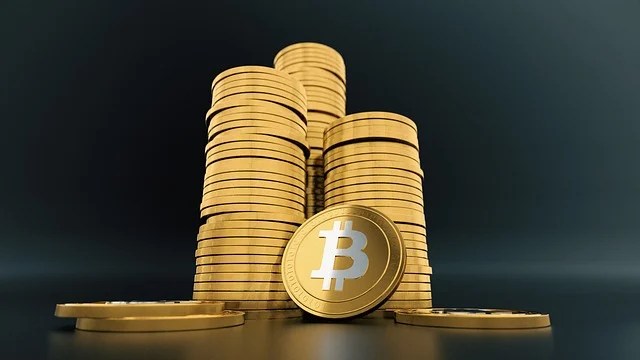
Fig. 1. Bitcoin Stock Image, 2025.

Investor enthusiasm for Bitcoin continues to grow as corporate treasuries ramp up their acquisitions and the U.S. Congress edges closer to passing pivotal cryptocurrency legislation. Starting on 07/14/25, the U.S. House of Representatives will begin reviewing a suite of crypto-related bills during what has been labeled “Crypto Week.” These proposed measures aim to establish a more transparent regulatory framework for digital assets—an initiative long championed by the crypto industry. The policy push has received backing from former President Donald Trump, who has positioned himself as a crypto-friendly leader and is involved in multiple blockchain-related ventures. Among the most closely watched proposals is the Genius Act, which could introduce federal oversight for stablecoins pegged to the U.S. dollar and potentially open the door for private companies to issue digital dollars.

However, on 11/10/10, Bitcoin was trading at roughly $0.23 per coin.(1) If you had invested $2,300 then, you could’ve acquired 10,000 BTC. At the time, that decision would’ve seemed obscure, laughable even, especially compared to buying gold, stocks, or real estate. The real estate market was down then due to the mortgage bubble-induced Great Recession.

But today, with Bitcoin priced at $121,000 per coin (2), that same purchase would now be worth an astonishing $1.21 billion. Your original $2,300 would have grown by over 52 million percent, delivering a profit of $1,209,997,700—yes, that is billions! That’s not just life-changing wealth—it’s generational. Billionaire status, from a sum that’s less than many people’s rent check.


The High-Risk Investment Nobody Believed In:

Despite the reward, a 2010 Bitcoin investment was far from low-risk. Investors at the time faced:

  • Technology Risk: You had to navigate early exchanges like Mt. Gox and use command-line wallets.
  • Security Risk: Wallet hacks and exchange thefts were rampant. There was no FDIC or insurance for crypto losses.(3)
  • Regulatory Uncertainty: Bitcoin was considered the currency of the dark web. Its legal future was murky at best.(4)
  • Volatility: There were frequent 70–90% drawdowns. Many early holders sold at $1, $10, or $100, fearing it would crash back to zero.

To hold 10,000 BTC from 2010 to 2025 required not just foresight—but ironclad conviction and secure digital hygiene.


Three People Who Made (and Kept) Their Bitcoin Fortunes:

1. Erik Finman

In 2011, a teenage Finman bought about 100 BTC with $1,000. By the time he was 18, he had become a millionaire. He parlayed his gains into building educational tech ventures and became a public face for Gen Z crypto success.(5)

2. Roger Ver

Known as “Bitcoin Jesus,” Ver was among the first to promote Bitcoin full-time. He invested heavily when it was under $1, and his early holdings are believed to number in the hundreds of thousands. Though later he championed Bitcoin Cash, his Bitcoin fortune is still substantial.(6)

3. Charlie Shrem

A co-founder of BitInstant, Shrem acquired thousands of Bitcoins in 2011, using them to build infrastructure for Bitcoin access. Though he served prison time due to regulatory issues, his stake made him a multimillionaire.(7)


Is There Another Bitcoin Out There?

It’s easy to dream that another asset might offer Bitcoin-like returns. But we should note:

  • Bitcoin was a first-mover. It’s the only digital asset to go from $0.01 to over $100,000 while maintaining broad global recognition.
  • Markets are now institutionalized. Regulators, hedge funds, and custodians watch the crypto space closely, making “wild west” gains harder to find.
  • Asymmetric bets still exist. AI startups, early-stage biotech, and deep-tech platforms might offer the next moonshot—but with similar volatility and failure risk.

Lessons from the Bitcoin Billionaires:

  1. Be Early—but Stay Invested Timing is only half the story. Holding through crashes (like in 2014, 2018, and 2022) was just as critical.
  2. Protect Your Holdings Many early holders lost everything due to poor key management. Cold wallets and secure backups are vital.
  3. Have Conviction Amid Doubt The biggest returns often come from believing before the crowd does—when the risk feels scariest.

Final Word: From $2,300 to $1.21 Billion:

Had you purchased 10,000 BTC for $2,300 on November 30, 2010, and held it securely for 15 years, you’d now be worth $1.21 billion. Few people made that choice, and even fewer had the resolve to hold. But this extreme example offers a timeless insight: Fortune doesn’t just favor the bold—it favors the bold who are patient, prepared, and just a little bit lucky. One thing is for sure: paper and coin currency are dead, too burdensome, and are declining in use over credit cards.


Footnotes:

  1. CoinMarketCap. (2023). Bitcoin Historical Data – November 2010. Retrieved from https://coinmarketcap.com
  2. Yahoo Finance. (2025, July 14). Bitcoin (BTC-USD) price. Retrieved from https://finance.yahoo.com
  3. Popper, N. (2015). Digital Gold: Bitcoin and the Inside Story of the Misfits and Millionaires Trying to Reinvent Money. Harper.
  4. Greenberg, A. (2014). This Machine Kills Secrets. Dutton.
  5. CNBC. (2017, Dec 14). Teen Bitcoin Millionaire Erik Finman. https://www.cnbc.com
  6. The Guardian. (2017, July 2). Bitcoin’s Evangelist: Roger Ver. https://www.theguardian.com
  7. Wired. (2014, Jan 27). Bitcoin’s First Felon: The Rise and Fall of Charlie Shrem. https://www.wired.com

About the Author:

Jeremy Swenson is a disruptive-thinking security entrepreneur, futurist/researcher, and senior management tech risk consultant. Over 17 years, he has held progressive roles at many banks, insurance companies, retailers, healthcare organizations, and even government entities. Organizations appreciate his talent for bridging gaps, uncovering hidden risk management solutions, and simultaneously enhancing processes. He is a frequent speaker, podcaster, and a published writer – CISA Magazine and the ISSA Journal, among others. He holds a certificate in Media Technology from Oxford University’s Media Policy Summer Institute, an MBA from Saint Mary’s University of MN, an MSST (Master of Science in Security Technologies) degree from the University of Minnesota, and a BA in political science from the University of Wisconsin Eau Claire. He is an alum of the Cyber Security Summit Think Tank , the Federal Reserve Secure Payment Task Force, the Crystal, Robbinsdale and New Hope Citizens Police Academy, and the Minneapolis FBI Citizens Academy. He also has certifications from Intel and the Department of Homeland Security.