
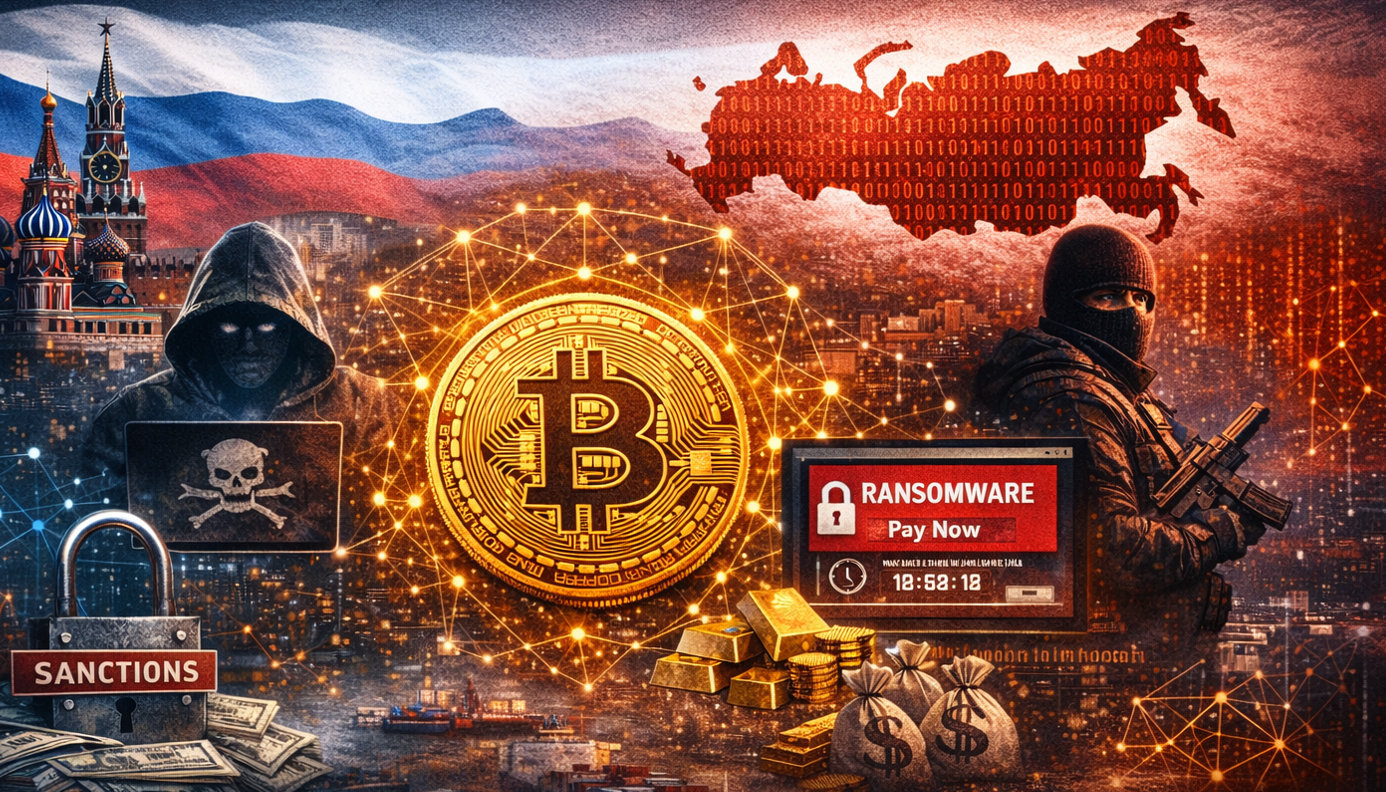
Fig. 1. Russia’s Sanctions-busting Cryptocurrency Empire Infographic, Jeremy Swenson via ChatGPT, 2026.
I. Origins of a Parallel Financial System:
The roots of Russia’s sanctions-busting cryptocurrency ecosystem can be traced to the intersection of geopolitical pressure and technological opportunity. While Russia experimented with cryptocurrency policy ambiguity throughout the 2010s, it was the aftermath of the 2022 invasion of Ukraine—and the subsequent exclusion from key parts of the global financial system, including SWIFT—that triggered a structural change. Lacking dollar liquidity and limited by Western banking restrictions, Russian policymakers and aligned financial actors started rapidly developing alternative methods for cross-border settlement (1).
Early efforts were fragmented, consisting of informal networks of exchanges, darknet markets, and capital flight channels. Platforms such as Garantex, founded in 2019, became foundational nodes in this system, allowing users to convert rubles into stablecoins and move funds internationally while avoiding traditional compliance mechanisms (6). Despite sanctions imposed by the U.S. Treasury in 2022, these platforms adapted rapidly, shifting wallets, rebranding, and integrating with crypto mixers to obscure transaction flows (1).
By 2024, Russia had formally embraced cryptocurrency for international trade, legalizing its use in cross-border transactions while maintaining domestic restrictions. This dual posture—restrict internally, exploit externally—laid the groundwork for a state-tolerated, if not state-enabled, shadow financial architecture that would mature rapidly in the years that followed (9).
II. The Rise of A7A5 and the Industrialization of Evasion:
The emergence of the ruble-backed stablecoin A7A5 marked a turning point from opportunistic evasion to industrial-scale financial engineering. Developed through networks linked to sanctioned Russian financial institutions and offshore intermediaries, A7A5 was designed explicitly to bypass Western oversight by enabling direct conversion from rubles into crypto assets and then into globally usable currencies (6).
Unlike decentralized cryptocurrencies such as Bitcoin, A7A5 represents a hybrid model: centralized issuance combined with decentralized transaction pathways. This design allows Russian actors to maintain monetary control while leveraging blockchain’s opacity and global reach. Within its first year, the token processed tens of billions of dollars in transactions, with some estimates approaching $100 billion in cumulative volume—evidence of rapid adoption across trade networks and sanctions-affected industries (4).
Crucially, this system extended beyond simple financial transfers. It became embedded in supply chain logistics, enabling the procurement of dual-use goods—technology with both civilian and military applications—through intermediaries in regions such as Central Asia and the Middle East. Crypto-enabled payments allowed these transactions to bypass traditional banking scrutiny, effectively creating a parallel trade infrastructure insulated from Western enforcement mechanisms (3).
III. Decentralization as Strategy, Not Ideology:
In Western culture, decentralization is often seen as a libertarian ideal—an escape from centralized power. However, in the Russian sanctions-evasion model, decentralization is not about ideology but strategy. It is used selectively to reduce visibility, make enforcement harder, and spread operational risk.
This system operates as a layered network rather than a single platform. Exchanges such as Bitpapa and others flagged by blockchain intelligence firms function alongside mixers, peer-to-peer marketplaces, and offshore entities, creating a fluid ecosystem in which assets can be rapidly converted, transferred, and obfuscated (7).
Moreover, decentralization enhances resilience. When Western authorities sanction one node—such as Garantex—activity shifts to successor platforms or newly created entities, often staffed by the same personnel. This phenomenon mirrors adaptive systems: disruption leads not to collapse but to evolution. The result is a sanctions-resistant architecture that thrives on redundancy and ambiguity.
Academic research supports this point by showing that sanctions enforcement in crypto is structurally reactive, while illicit actors are fast and adaptive. Studies find that once wallets or platforms are sanctioned, actors quickly shift funds to new addresses, exchanges, or networks—often within hours—well before regulators can complete attribution and enforcement cycles. Because blockchain systems allow unlimited address creation and operate across jurisdictions, enforcement actions tend to disrupt specific nodes rather than the broader network. As a result, the research consistently demonstrates that sanctions evasion persists not despite enforcement, but because the system’s design enables rapid migration and continuity (12).
IV. The Ransomware Nexus: Criminal Infrastructure and State Alignment
At the heart of Russia’s crypto ecosystem lies a symbiotic relationship between cybercriminal groups and financial infrastructure. Ransomware organizations such as REvil and Ryuk-linked networks have long relied on cryptocurrency to receive and launder payments, targeting Western corporations, critical infrastructure, and supply chains (2).
The connection between these groups and sanctioned exchanges is well-documented. Platforms like Garantex have been identified as facilitating transactions tied to ransomware proceeds, effectively serving as financial clearinghouses for cybercrime (5). This relationship extends beyond mere tolerance. Investigations such as Operation Destabilise have uncovered networks in which cryptocurrency exchanges, money laundering operations, and state-linked actors intersect. In some cases, these networks have been used not only for financial gain but also to support espionage activities and strategic objectives aligned with Russian interests (11).
The implication is clear: ransomware is not simply criminal activity but a component of a broader hybrid warfare strategy. By targeting Western institutions and funneling proceeds through crypto networks, these groups generate revenue, disrupt adversaries, and reinforce Russia’s alternative financial ecosystem.
V. Extraction from the West: Mechanisms of Digital Theft:
The Russian crypto-sanctions ecosystem extracts value from the West through multiple channels, blending cybercrime, financial engineering, and trade manipulation. Ransomware attacks represent the most visible vector, with payments often demanded in cryptocurrency and subsequently laundered through exchanges and mixers (2).
However, a less visible but equally significant mechanism is trade-based money laundering facilitated by crypto. Russian entities purchase restricted goods through intermediaries, paying in stablecoins that are difficult to trace. These goods are then re-exported into Russia, effectively bypassing export controls (3).
Additionally, capital flight and asset concealment play a major role. Wealthy individuals and sanctioned entities move funds into crypto assets to protect them from seizure, leveraging decentralized wallets and offshore exchanges. The cumulative effect is a steady outflow of value from regulated Western systems into a shadow economy that operates beyond their reach.
By 2025, illicit cryptocurrency flows had surged dramatically, with tens of billions of dollars linked to sanctions evasion and state-aligned networks (10).
VII. Conclusion: The Future of Financial Warfare:
Russia’s sanctions-busting cryptocurrency empire represents a new phase in the evolution of financial conflict—not simply a workaround, but a scalable model for a decentralized, state-influenced financial system operating beyond traditional controls. What began as a reaction to Western sanctions has matured into a resilient ecosystem that blends state policy, criminal enterprise, and technological innovation. Its strength lies in its hybridity: centralized where control is necessary, decentralized where opacity provides advantage.
For the West, this presents a fundamental challenge. Traditional tools—sanctions, asset freezes, and banking restrictions—are increasingly limited in a world where adversaries can operate outside the formal financial system. Countering this shift requires more than incremental reform; it demands a transition from static enforcement to dynamic, intelligence-driven financial defense.
A central component of this approach is the expansion of blockchain analytics and real-time monitoring. On-chain intelligence has proven effective in tracing illicit flows and identifying high-risk actors, but its true value emerges when integrated into coordinated international enforcement frameworks. Moving beyond periodic sanctions designations toward continuously updated, intelligence-led responses will be critical to keeping pace with adaptive networks (7).
Equally important is targeting the infrastructure that enables liquidity. Cryptocurrency ecosystems depend on exchanges, stablecoin issuers, and fiat on-ramps and off-ramps to function. Coordinated regulation and enforcement against these access points—particularly across jurisdictions that facilitate intermediary flows—can significantly constrain the usability of sanctions-evading assets. While measures such as wallet blacklisting and exchange sanctions have had impact, they must evolve from reactive tools into part of a broader, proactive strategy (1).
At the same time, deterrence must be redefined. Financial penalties alone are insufficient against actors who operate in decentralized and jurisdictionally fragmented environments. Effective deterrence will require a combination of cyber operations, asset seizures, and coordinated disruption of ransomware and illicit financial infrastructure. Public-private collaboration will be essential, as much of the expertise and visibility into these networks resides within the private sector.
Beyond enforcement, the West must also compete. Developing secure, efficient, and transparent alternatives—such as regulated digital payment systems, central bank digital currencies, and compliant stablecoin frameworks—can reduce the relative attractiveness of shadow financial networks. If legitimate systems offer greater speed, cost efficiency, and accessibility, the incentive to rely on illicit alternatives diminishes.
Finally, this issue must be understood in its broader geopolitical context. Russia’s crypto ecosystem is not an isolated case but part of a wider movement toward financial fragmentation, in which states seek parallel systems to reduce dependence on Western institutions. Addressing this trend will require sustained international coordination, including strategic engagement with non-Western jurisdictions that play intermediary roles in these networks (4).
In this evolving landscape, success will not be measured by the elimination of illicit systems, but by the ability to constrain, outpace, and adapt to them. The future of financial warfare will belong to those who can align technological capability with strategic coherence—building financial architectures that are not only secure, but resilient against continuous disruption.
Bibliography:
- U.S. Department of the Treasury. “Treasury Sanctions Cryptocurrency Exchange and Network.” https://home.treasury.gov/news/press-releases/sb0225
- Chainalysis. Crypto Crime Report 2026. https://www.chainalysis.com
- Royal United Services Institute (RUSI). “The Shadow Crypto Economy Feeding Russia’s War Machine.” https://www.rusi.org
- Center for European Policy Analysis (CEPA). “A Crypto River Runs Through Russia.” https://cepa.org
- BankInfoSecurity. “U.S. Sanctions Crypto Exchange Tied to Russian Ransomware.” https://www.bankinfosecurity.com
- TRM Labs. “Garantex, Grinex, and the A7A5 Token.” https://www.trmlabs.com
- Elliptic. “Russia-Linked Crypto Platforms’ Ongoing Sanctions Evasion.” https://www.elliptic.co
- Reuters. “Sanctioned Russian Crypto Exchange Suspends Services.” https://www.reuters.com
- Business Insider. “Russia’s Crypto Shadow Economy.” https://www.businessinsider.com
- Financial Times. “Illicit Crypto Flows Surge to Record Levels.” https://www.ft.com
- National Crime Agency. “Operation Destabilise.” https://www.nationalcrimeagency.gov.uk
- Zola, Francesco et al. “Assessing the Impact of Sanctions in the Crypto Ecosystem.” https://arxiv.org/abs/2409.10031
 Abstract Forward Consulting