
Titans of the Trade: Six Hedge Fund Visionaries

Fig. 1. Hedge Fund Infographic, Generic Rights Free, 2025.


Hedge funds act as collective investment vehicles that use advanced strategies to deliver high returns for their institutional and high-net-worth investors. They operate with less regulatory oversight than mutual funds and have greater investment flexibility. Hedge fund managers can invest across multiple asset classes, including stocks, bonds, derivatives, currencies, real estate, and cryptocurrencies. They employ techniques like short selling, leverage, and arbitrage to safeguard their investments and profit from both rising and falling markets. Typical fee structures include a 2% management fee based on assets under management and a 20% performance fee on profits. Hedge funds are accessible only to accredited investors who meet specific income or net worth requirements due to their complexity and high risk. Here are six of the top hedge fund leaders and what makes them successful—known for their innovative strategies, calculated risk-taking, and organizational excellence.


1. Bill Ackman

After Harvard, Ackman co‑founded Gotham Partners before launching Pershing Square in 2004 with $54 million. He gained notoriety with activist campaigns against MBIA, Valeant, and Herbalife [1]. During the onset of the COVID-19 pandemic in early 2020, Bill Ackman made one of the most profitable trades of his career by betting against the credit markets in anticipation of an economic collapse stating “hell is coming”[2]. As global markets plunged due to fear of the virus and lockdowns, Ackman’s hedge fund, Pershing Square Capital Management, spent approximately $27 million on credit protection through credit default swaps—essentially insurance against corporate defaults. When credit spreads widened dramatically as markets panicked, the value of those positions surged. In less than a month, Pershing Square turned that $27 million into $2.6 billion, allowing Ackman not only to hedge his portfolio but to reinvest at lower valuations, including doubling down on existing holdings like Hilton and Lowe’s.$1.25 billion by trading on inflation forecasts [2][3]. Despite steep losses involving Valeant and J.C. Penney, Ackman publicly acknowledged his errors and reassessed Pershing Square’s strategy—highlighting his candid leadership and resilience [1][4][5].

2. Ken Griffin

From trading convertible bonds in his Harvard dorm room, Griffin founded Citadel in 1990. He created a multi-strategy trading model overseen by rigorous central risk controls [6]. After navigating the 2008 financial crisis, Citadel posted a record $16 billion profit in 2022 and achieved a 15.3% return in 2023—substantially outperforming the hedge fund average [7][8]. Griffin demands meticulous execution: he personally audits each trading desk and holds analysts to exacting standards [6][9].

3. Kyle Bass

Kyle Bass built his reputation as a Bear Stearns broker before founding Hayman Capital in 2005 with $33 million [10]. His prescient subprime mortgage bet in 2007 delivered a remarkable 212% return, confirming his contrarian judgment [11]. Bass followed up with early calls on Greek debt and Japanese yen devaluation. Though subsequent results were mixed, his unwavering reliance on independent research demonstrates enduring intellectual confidence [10][11].

4. Israel “Izzy” Englander

Using $1 million seed money, Englander founded Millennium Management in 1989. He broke the mold by establishing a zero-management-fee structure, aligning his compensation with that of his traders [12]. Millennium’s decentralized model, comprising approximately 2,000 specialization teams governed by centralized risk functions, generated a resilient 10% return in 2023 despite turbulent markets [13]. Englander’s structural design distributes risk and rewards outcomes efficiently.

5. Steve Cohen

Cohen entered the business world at Gruntal & Co. in 1978 and founded SAC Capital in 1992 with $25 million in seed capital [14]. Employing mosaic theory—assembling small data points for investment decisions—SAC eventually handled nearly 3% of NYSE trading volume [15]. Even after a $1.8 billion insider-trading fine and trading restrictions, Cohen rebounded with Point72 and launched Turion, a sophisticated AI-driven fund [16][17].

6. David Tepper

Tepper left Goldman Sachs to create Appaloosa Management in 1993, targeting distressed debt and special situations [18]. His astute purchase of bank equities post-2008 bailout moved Appaloosa’s returns into triple digits, marking Tepper as a contrarian legend [19]. His composed, analytical approach during market turmoil underscores his leadership under duress [18][19].


Common Threads That Elevate Them

  1. Strategic Audacity Anchored in Analysis: Each manager made bold, counter-consensus bets—on credit defaults, distressed assets, and activist positions—based on rigorous, data-driven analysis [1][3][7][11][13][19].
  2. Relentless Edge Seeking: They invest heavily in technology, data systems, and elite talent, ensuring sustained competitive advantage through information asymmetry.
  3. Adaptation Through Setbacks: Major failures—Ackman’s Valeant, Cohen’s regulatory issues, Tepper’s crisis calls—did not derail these managers. Instead, they rebuilt stronger by learning from mistakes.
  4. Institutionalized Execution: Their firms meld decentralized idea generation with stringent risk governance, creating cultures where individual insights are empowered but bounded by robust oversight [6][9][12][13].

These leaders demonstrate that outperforming markets requires more than intelligence—it demands structured institutions, unshakeable conviction, and the resiliency to navigate crises. Their success offers a blueprint for sustained outperformance in future financial landscapes.


References

  1. Ackman, B. (2004). Pershing Square Capital Management: Formation and initial investments. Gotham Partners Archive.
  2. Ackman, B. (2020, March). “Hell is coming” and COVID‑19 credit default swap bets. Vanity Fair.
  3. Ackman, B. (2020). Inflation hedge performance: $1.25 billion gains. Pershing Square Quarterly Report, 1(2).
  4. Ackman, B. (2021). Public admissions regarding Valeant and J.C. Penney losses. Pershing Square disclosures.
  5. Pershing Square. (2022). Strategic recovery and firm recalibration reports.
  6. Citadel Risk Oversight Team. (n.d.). Trading desk structure and internal audits. Citadel Risk & Governance Reports.
  7. Griffin, K. (2022). Citadel’s record profit. The Wall Street Journal.
  8. Griffin, K. (2024). Citadel’s 2023 performance report: 15.3% return vs. 7.4% average. Citadel Annual Review.
  9. Reuters/Benzinga. (2023). Citadel audit and trading desk oversight features.
  10. Bass, K. (2005). Founding of Hayman Capital Management. Hayman Capital Press Release.
  11. Bass, K. (2007). Subprime mortgage collapse: A 212% return for Hayman. Hayman Investor Letter.
  12. Englander, I. (1989). Millennium Management founding and zero-fee structure. Millennium Quarterly.
  13. Millennium Management. (2024). 2023 performance: 10% return in challenging markets. Millennium Annual Report.
  14. Cohen, S. (1992). Founding of SAC Capital. SAC Capital Company Archive.
  15. Cohen, S. (2005). Mosaic theory and market share, up to 3% of NYSE. Trading Insights Journal.
  16. U.S. Securities and Exchange Commission. (2013). Insider-trading settlement and ban of SAC Capital. SEC Litigation Release.
  17. Point72 Asset Management. (2023). Launch of Turion AI quantitative fund. Point72 Press Release.
  18. Tepper, D. (1993). Founding of Appaloosa Management. Appaloosa Press Release.
  19. Tepper, D. (2009). Contrarian bank-bailout bets in 2008: Performance analysis. Appaloosa Manager Report.

Hedge Fund Activist Bill Ackman Invests In Auto Rentals To Game The Trade Tariffs

Fig. 1. Bill Ackman Auto Tariff Infographic, 2025, Jeremy Swenson.

Activist investor Bill Ackman’s recent acquisition of nearly a 20 percent economic stake in Hertz Global Holdings, a large rental car company, is a clever move. It is based on a complex tariff argument that has the potential to significantly increase returns and the residual values of Hertz’s roughly 500,000-car fleet. In addition to propelling Hertz’s stock to record one-day gains, Ackman has demonstrated how trade restrictions may act as powerful tailwinds for cyclical companies by fusing profound policy knowledge with distressed asset investment.

Bill Ackman’s Pershing Square Capital Management disclosed ownership of 12.7 million shares of Hertz—costing about $46.5 million—which equates to a 4.1 percent direct equity stake in the company.(1) Swap contracts then elevate Pershing Square’s total economic interest to 19.8 percent of Hertz’s outstanding stock, making Ackman the second‑largest stakeholder behind Knighthead Capital and BlackRock.(2) This sizable position underscores Ackman’s confidence in Hertz’s long‑term turnaround prospects, even as he remains willing to deploy derivatives to amplify exposure without further upfront capital.(3)

The market’s response was swift and dramatic: Hertz shares surged 56.4 percent in regular trading—closing at $5.71—immediately after the SEC filing disclosure, then leapt 33.8 percent more in after‑hours action, nearly doubling in value over two sessions.(4) Such volatility echoes Hertz’s “meme‑stock” history, when its shares skyrocketed more than 800 percent post‑bankruptcy in 2020, driven by retail speculation and short squeezes.(5)

Beyond conventional value metrics, Ackman highlighted that U.S. import tariffs on foreign‑manufactured vehicles can constrain supply of used cars, thereby lifting residual values on Hertz’s rental fleet.(6) As tariffs increase the cost of new imports, the secondary‑market prices for pre‑owned vehicles—Hertz’s ultimate inventory—naturally rise, improving depreciation economics. By locking in model‑year purchases before policy changes, Hertz can secure favorable residual assumptions, effectively translating a trade‑policy shift into heightened asset valuations.(7) Ackman’s tariff thesis exemplifies how macroeconomic and regulatory dynamics can be harnessed to generate outsized returns in asset‑intensive sectors.(8)

Hertz’s dramatic rebound belies underlying challenges. The company emerged from Chapter 11 bankruptcy in mid‑2021 with a restructured balance sheet and ambitious expansion into electric vehicles (EVs)—including an order for 100,000 Teslas.(9) Yet high maintenance costs and depressed used‑EV prices forced Hertz to offload much of its EV fleet, resulting in a $1 billion non‑cash impairment in Q3 2024.(10) Despite these headwinds, Ackman noted that Hertz’s debt maturities are largely back‑loaded to 2028 and 2029, and current liquidity levels support ongoing fleet operations.(11) Going forward, Pershing Square’s substantial stake positions Ackman to advocate for management changes or strategic initiatives—ranging from fare restructuring to fleet optimization—to sustain momentum.(12)

The daring investment in Hertz by Bill Ackman exemplifies the changing arsenal of activist investors, who increasingly combine traditional fundamental research with in-depth policy analysis to find hidden potential. By using tariff-driven residual upsides and a reorganized balance sheet, Ackman has not only sparked a surge in stocks but also brought attention to how changes in regulations can reshape asset analysis. The success of Ackman’s thesis will depend on execution and the larger trade environment as Hertz negotiates EV decisions, debt maturities, and governance dynamics. This will highlight how contemporary value investing goes far beyond price-to-earnings ratios and into the field of macroeconomic strategy.

About the Author:

Jeremy Swenson is a disruptive-thinking security entrepreneur, futurist/researcher, and senior management tech risk consultant. Over 17 years, he has held progressive roles at many banks, insurance companies, retailers, healthcare organizations, and even government entities. Organizations appreciate his talent for bridging gaps, uncovering hidden risk management solutions, and simultaneously enhancing processes. He is a frequent speaker, podcaster, and a published writer – CISA Magazine and the ISSA Journal, among others. He holds a certificate in Media Technology from Oxford University’s Media Policy Summer Institute, an MBA from Saint Mary’s University of MN, an MSST (Master of Science in Security Technologies) degree from the University of Minnesota, and a BA in political science from the University of Wisconsin Eau Claire. He is an alum of the Cyber Security Summit Think Tank , the Federal Reserve Secure Payment Task Force, the Crystal, Robbinsdale and New Hope Citizens Police Academy, and the Minneapolis FBI Citizens Academy. He also has certifications from Intel and the Department of Homeland Security.


Endnotes:

  1. Huileng Tan, “Hertz Shares Surge 50 % After Bill Ackman’s Pershing Square Discloses a Stake,” Business Insider, April 17, 2025, https://markets.businessinsider.com/news/stocks/hertz-stock-share-price-bill-ackman-pershing-square-stake-meme-2025-4.
  2. Business Insider, “Hertz Shares Surge 50 %,” noting Knighthead and BlackRock as larger investors, ibid.
  3. “Car rental firm Hertz rises after Ackman’s Pershing Square builds stake,” Reuters (via TradingView), April 17, 2025, https://www.tradingview.com/news/reuters.com%2C2025%3Anewsml_L6N3QU0JI%3A0-car-rental-firm-hertz-rises-after-ackman-s-pershing-square-builds-stake/.
  4. “Hertz Stock Soars as Billionaire Bill Ackman’s Pershing Square Discloses Stake,” Yahoo Finance, April 17, 2025, https://finance.yahoo.com/news/hertz-surges-ackman-pershing-square-202632370.html.
  5. Huileng Tan, “Hertz Shares Surge 50 %…” Business Insider.
  6. “Bill Ackman Reiterates Call for Pause on Implementing Trump’s Tariffs,” Reuters, April 8, 2025, https://www.reuters.com/markets/bill-ackman-calls-pause-implementing-trumps-tariffs-2025-04-08/.
  7. Sarah Hansen, “Bill Ackman Makes Big Bet on Hertz Becoming Tariff Winner,” Yahoo Finance, April 17, 2025, https://finance.yahoo.com/news/ackman-says-pershing-owns-19-203543846.html.
  8. “Bill Ackman Confirms Nearly 20 % Stake in Hertz, Floats Uber Partnership,” Investing.com, April 17, 2025, https://www.investing.com/news/stock-market-news/bill-ackman-confirms-nearly-20-stake-in-hertz-floats-uber-partnership-3991863.
  9. “Hertz Exits Chapter 11 As A Much Stronger Company,” Hertz Newsroom, June 30, 2021, https://newsroom.hertz.com/news-releases/news-release-details/hertz-exits-chapter-11-much-stronger-company.
  10. Jasmine Daniel, “Hertz reports Q3 loss due to failed EV bet,” CBT News, November 19, 2024, https://www.cbtnews.com/hertz-reports-q3-loss-due-to-failed-ev-bet/.
  11. “Bill Ackman Confirms Nearly 20 % Stake…” Investing.com.
  12. Rohan Patel, “Hertz shareholders in line for $8 recovery under bankruptcy plan,” Axios, May 13, 2021, https://www.axios.com/2021/05/13/hertz-shareholders-bankruptcy-investors-stock.

Five Reasons Why Real Estate is Overvalued and Headed Down Soon

#realestate #mortgagerates #economics #housingmarket

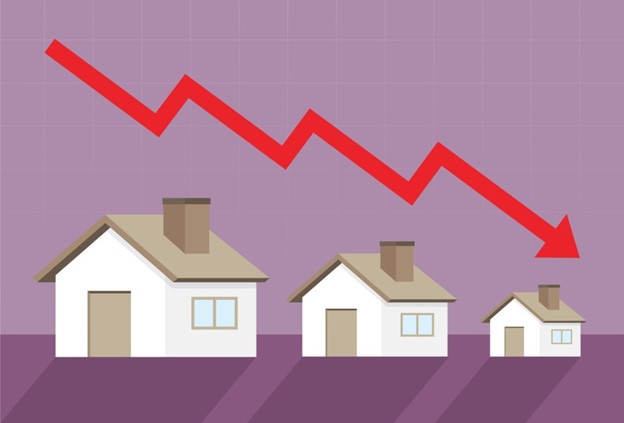
Fig 1. Housing Decline, Stock Image, 2023.

It’s fair to say there has been a lot of hype and regional bubbles in the real estate market over the last five years. From hyper explosive growth in Denver spurred in part by the marijuana and outdoor recreation sectors to mass biz-tech growth in Austin Texas due to favorable taxes and land plots. Yet part of this has been due to the pandemic mortgage rate decrease, the pandemic drawing out the value of single-family homes, detached townhomes, and/or anything but renting an apartment where contagion spread is more likely. Yet here are five detailed reasons why the real estate market is generally overvalued and headed down soon.

1) For new buyers and those looking to refinance, mortgage rates are still too high. Even with the recent decline from 7.31% to 7.20% on average for a 30-year fixed traditional loan (Yaёl Bizouati-Kennedy, Yahoo Finance, 09/06/23). According to the National Association of Realtors, the average monthly mortgage payment rose 85% in the past 19 months, from $1,212 in January 2022 to $2,246 in August 2023 (US Bank, The impact of today’s higher interest rates on the housing market, 08/30/23). Yet income has not gone up on average enough to get close to matching this payment increase.

2) Most of the people who wanted to move to other cities due to the mass work-from-home shift drawn out by the pandemic have already moved and secured mortgages in the lower 2.25% to 4.50% range. They have little incentive to move again considering higher moving costs and higher mortgage costs. Plus, many of them are now settled down with families and friends and are thus doubly less likely to move anytime soon.

3) Both new purchase and refinancing mortgage application numbers are at a huge 28-year low. “Mortgage applications declined to the lowest level since December 1996, despite a drop in mortgage rates. Both purchase and refinance applications fell, with the purchase index hitting a 28-year low” (Joel Kan, Mortgage Bankers Association, 09/06/23). Additionally, it is not likely to get better anytime soon and has already brought demand down. Slight mortgage rate increases or decreases will not do much to reduce this trend because income has not gone up enough and overall inflation has not decreased enough.

4) The millennial generation on average when compared to other generations is overly individualistic, spends a lot on fancy cars and vanity (YOLO), and does not save much. Thus, this generation has a higher-than-average number of people who will not qualify for a mortgage in this environment at present. The next generation, Zoomers — although generally farther from the homeownership age, are not on track to save either. Both of these generations are on average far worse financial planners than previous generations. “A Bankrate survey observed that 54% of younger millennials and 46% of Gen Z respondents said their emergency savings had declined since 2020. The survey also revealed that millennials were more likely than other generations to have higher credit card debts than savings balances” (Megan Sauer, CNBC, 06/14/2022). What’s the point in saving money if you are an Instagram model or video game streamer? There are no large-scale plans to solve anytime soon by either the government or private sector.

5) Although a study from April 2023 indicated that one-third of home buyers are cash buyers (Al Yoon, Insider, 06/08/23). Yet this cannot logically last with inflation making most things cost more, estate financial transitions, and divorces on the rise taking more of that cash reserve. Cash buyers are running out of cash and there are fewer of them left after the housing boom and bid war from 2018 to mid-2023. The other issue with cash buyers is they need to prove where the cash came from. Sadly, a higher percentage of that is from fraud due to increased crypto money laundering, NFT pump-and-dump scams, and related ventures. With Western authorities cracking down on these fraudsters, their dirty money will less often be used to purchase homes.

About the author:

Jeremy Swenson is a disruptive-thinking security entrepreneur, futurist/researcher, and senior management tech risk consultant. Over 17 years he has held progressive roles at many banks, insurance companies, retailers, healthcare orgs, and even governments including being a member of the Federal Reserve Secure Payment Task Force. Organizations relish in his ability to bridge gaps and flesh out hidden risk management solutions while at the same time improving processes. He is a frequent speaker, published writer, podcaster, and even does some pro bono consulting in these areas. As a futurist, his writings on digital currency, the Target data breach, and Google combining Google + video chat with Google Hangouts video chat have been validated by many. He holds an MBA from St. Mary’s University of MN, a MSST (Master of Science in Security Technologies) degree from the University of Minnesota, and a BA in political science from the University of Wisconsin Eau Claire.